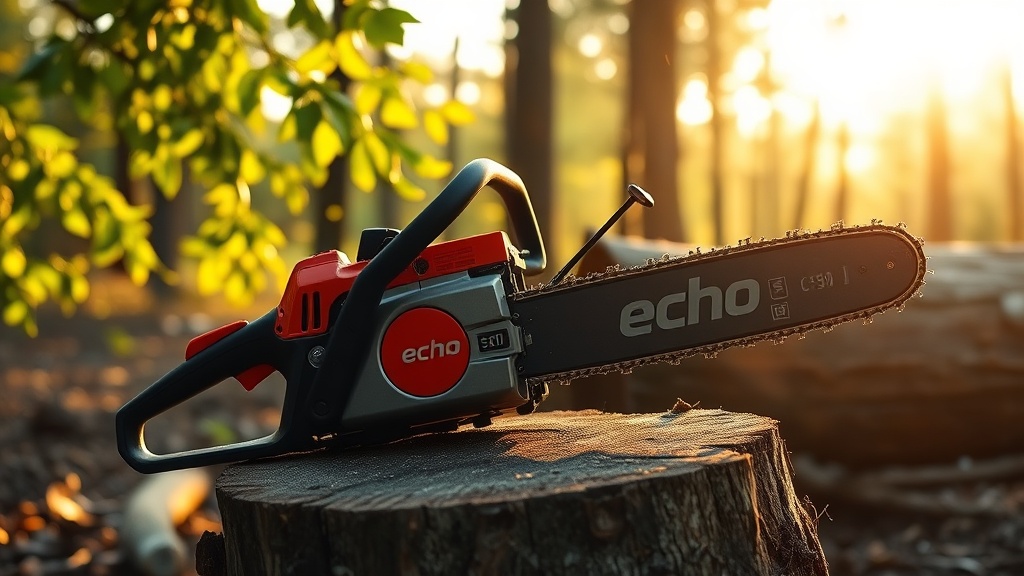
Echo CS-590 vs Hiring a Pro: Which is Better?
When a tree needs to come down, the first question is often whether to buy a serious saw like the Echo CS‑590 or call an arborist. The answer isn’t simple; it depends on tree size, experience, and what you’re willing to risk. This article compares the Echo CS‑590 against professional tree removal across cost, safety, skill requirements, and the results you can realistically expect.
Can an Echo CS‑590 Match a Pro Arborist’s Cutting Power?
The Echo CS‑590 packs a 59.8 cc engine with a 20‑inch bar, producing about 4.3 horsepower. That’s enough for trees up to 24 inches in diameter if you know what you’re doing. A professional crew, however, uses a mix of saws—often a 70–90 cc saw for the main cut and a smaller saw for precision work. The CS‑590 can make the same felling cut as a pro’s large saw, but the pro brings years of muscle memory, sharpening skill, and a crew to manage the fall zone. If your tree is bigger than 24 inches at chest height, the CS‑590 will struggle, and a pro with a bigger saw is the safer bet.
From a power perspective, the CS‑590 is fine for most residential trees—oak, maple, pine. But power alone doesn’t guarantee a clean fall. The pro’s advantage is not raw horsepower; it’s the ability to read lean, weight distribution, and wind. Even with a CS‑590 in top tune, a weekend user can get pinched or bar‑snapped if the tree is off‑balance. If you’re on flat ground with an upright tree and a clear drop zone, the CS‑590 is adequate. On a slope, near a house, or over a fence—hire the pro.
How Much Money Can You Save With a CS‑590 vs a Pro?
An Echo CS‑590 costs about $480–$550 new, depending on current pricing and sales. You’ll also need a good combo of safety gear: a helmet with face screen, chainsaw chaps, and steel‑toed boots—roughly $200–$250 total. Then there is fuel, bar oil, and a couple of sharpening files (another $50). One mistake—like hitting a rock or a piece of rebar—can cost you a chain (about $30) or a bar (around $90). Total initial outlay: about $780–$890 to be safe and effective for one tree.
Hiring a pro for a typical 40–60 foot single tree removal runs $700–$1,500, including topping, felling, limbing, and cleanup. If the tree is near a house or power lines, that rises to $2,000–$4,500. For one tree, you often come out ahead with a pro. For three or more trees over a few years, the CS‑590 plus your labor probably pays for itself after the second tree. But you also have storage, maintenance, and disposal costs (stump grinding or hauling). A pro includes removal of debris; with a CS‑590, you have to cut and haul all that wood yourself.
| Cost Factor | DIY with Echo CS‑590 | Hiring a Pro Arborist |
|---|---|---|
| Saw purchase | $480–$550 | $0 (included) |
| Safety gear | $200–$250 | $0 |
| Consumables (fuel, oil, files) | $50–$80 per tree | $0 |
| Cleaning / disposal | Your time and truck | Included in quote |
| Stump removal | $200–$400 extra | Often quoted separately |
| Typical total for 1 tree (40–60 ft) | $780–$1,380 (first tree) | $700–$1,500 |
What’s the Skill Gap Between a First‑Time User and a Pro With a CS‑590?
A pro arborist has likely felled thousands of trees, using the same model saw in different conditions. They know how to make a precise notch (conventional or open‑face), how to set a proper back cut, and how to handle a tree that starts to twist or barberchair. A beginner with a CS‑590, even after watching a few videos, often struggles with these basics. The saw itself is heavy (about 13.4 lbs dry), and handling it at height or on a ladder (not recommended) is a recipe for injury.
The bigger issue is reading the tree. A pro can spot a dead limb, a rot pocket, or a heavy lean from 50 feet away. They also know when to use a rope to guide the fall. If you lack that experience, the CS‑590 becomes a dangerous tool in your hands. The Echo CS‑590: Recommended Safety Gear for Beginners guide covers the must‑have kit, but gear won’t teach you felling math. I’ve seen new users cut through a hinge wood too quickly and lose control of the fall direction. Pros rarely make that mistake. For a simple, straight tree on flat ground, a motivated DIYer can succeed. For anything else, leave it to the pro.
When Should You Absolutely NOT Use an Echo CS‑590 Yourself?
Certain situations demand a pro regardless of your saw. If the tree is within 10 feet of a house, garage, fence, or utility line, the risk of property damage is high. A pro carries insurance for that. With a CS‑590, any mistake means you pay for repair or replacement out of pocket. If the tree is over 70 feet tall with a significant lean toward your home, even a perfect felling cut may not prevent it from hitting something. A pro uses ropes, pulleys, and sometimes a crane—gear you don’t have with just a saw.
Another red flag: if the tree has dead branches hanging overhead (widow‑makers), or if there’s internal decay visible (mushrooms at the base, hollow sounds when tapped). These trees can break unpredictably during cutting, and a CS‑590 user on the ground can’t predict where limbs will fall. Also avoid using the CS‑590 on a tree that’s already leaning more than 15 degrees off vertical toward a target, or any tree that requires a chainsaw + ladder combination. Echo CS‑590 Felling Basics for Tall Trees covers the only safe DIY scenarios. If your situation doesn’t match those, call a pro.
What About Tree Size—Where Does the CS‑590 Stop Being Practical?
The Echo CS‑590’s 20‑inch bar can handle a tree that’s about 18–20 inches in diameter at the cut height (that’s roughly 24 inches DBH, diameter at breast height). For a pine or a softwood, that’s a tree 50–60 feet tall. For oak or maple, you’re looking at 35–50 feet tall at that diameter. When the trunk gets past 20 inches, the saw loses leverage and you have to bore cut or use wedges—advanced techniques. A pro will use a bar of 28–36 inches for those situations.
For pines, the CS‑590 can handle a 60‑foot tree if the trunk is straight, because pine is lighter and tends to cut cleanly. Our guide on Echo CS‑590 for Pine Tree Removal: Tips & Techniques has specifics on making clean cuts in softwood. For hardwoods, 40 feet is about the maximum for a manageable cut. If you have a large oak or maple, 60 feet tall and 28 inches DBH, the CS‑590 will feel underpowered. In that case, hire a pro with a bigger saw, or at least a bigger bar. There’s a difference between what the saw can do technically and what you can do safely in your first few tries.
What Do Owners Say About Using the CS‑590 vs Hiring a Pro?
“I used my CS‑590 to take down three dead pines on my rural lot—each about 35 feet tall. Saved about $1,200 compared to quotes I got. But the first one scared me. I spent an hour watching videos and setting up ropes. Next time I have a 50‑foot near the garage, I’m calling a pro. The saw is great, but I’m not a pro.”
“My CS‑590 paid for itself after the second tree. But it’s not just the saw—I also bought chaps, a helmet, and a good wedge set. If you only have one tree, just hire someone. If you have wooded property, it makes sense to own one. For big trees (over 24 inches), I still call the tree service because I don’t trust my cuts on a hard lean.”
Both owners agree: the CS‑590 is a capable saw for the money, but it does not replace the judgement and insurance of a pro when the tree is risky. If you have the land, the time, and the willingness to learn felling technique, start on small trees (under 18 inches) with clear drop zones. Use a pro for anything over 20 inches or near structures.
Frequently Asked Questions
Q: Can a beginner use an Echo CS‑590 safely for tree removal?
A: Yes, but only on small, straight trees (under 18 inches diameter) on flat ground with a clear drop zone. Beginners must wear full safety gear and learn proper notch and back‑cut techniques first. For anything larger or near structures, hire a pro.
Q: How much does it cost to hire a pro compared to buying a CS‑590?
A: Buying a CS‑590 plus gear costs about $780–$890 initially. Hiring a pro for one tree is typically $700–$1,500. For a single tree, hiring often costs less or about the same. For multiple trees, DIY with a CS‑590 saves money after the second tree.
Q: What tree size is too big for an Echo CS‑590?
A: Trees over 20 inches in diameter at chest height (or over 24 inches DBH for pines) are too large for safe DIY felling with a 20‑inch bar. For hardwoods, keep it under 18 inches diameter, or 40 feet tall for inexperienced users.
Q: What safety gear do I need for DIY tree removal with the CS‑590?
A: You need a chainsaw helmet with face screen, ear muffs, chainsaw chaps or pants, steel‑toed boots, and chainsaw gloves. A first‑aid kit and a cellphone for emergencies are also essential. See our safety gear guide for details.
Q: Can I use an Echo CS‑590 to fell a tree near a house?
A: No, not safely. Trees within 10 feet of a structure require professional rigging and directional felling techniques. A DIYer with a CS‑590 risks damage to the house. Hire a licensed, insured arborist for any tree near buildings or utility lines.
Q: How long does it take to learn proper felling technique with a CS‑590?
A: Most beginners can learn the basics (notch, back cut, escape path) in one to two hours with practice on small logs. However, reading a tree’s lean and weight distribution takes months of experience. Start on small, simple trees and progress slowly.