The Echo CS-590 is a popular choice among landowners and tree care enthusiasts, but dropping tall timber requires more than just pulling the starter cord. This guide covers the specific techniques, cuts, and safety considerations for using the CS-590 on trees exceeding 60 feet in height, helping you plan and execute a controlled felling.
Does the Echo CS-590 Have Enough Power for Tall, Large-Diameter Trees?
Yes, the Echo CS-590’s 59.8cc professional-grade engine produces 4.2 horsepower, which is sufficient for most tall trees with diameters up to about 30 inches at breast height (DBH). The power-to-weight ratio is excellent, meaning you can make long, consistent bore cuts and back cuts without the saw bogging down. However, for trees over 36 inches in diameter or extremely dense hardwoods like oak or hickory, you may need to make two passes on the back cut or consider a larger saw. The key is matching your chain sharpness and raker depth—sharp chain is non-negotiable for tall timber felling.
What Is the Correct Felling Technique for Tall Trees With the CS-590?
For trees taller than 60 feet, you must use the conventional notch and back cut method, but with added emphasis on hinge wood management and escape route planning.
Step 1: Assess Lean and Hazards
Stand 100 feet away and sight down the trunk to determine natural lean. For tall trees, even a 2-degree lean off your target direction will cause the tree to fall several feet sideways. Use a felling wedge (plastic, never metal) if you need to push the tree against its lean.
Step 2: Cut the Notch
Cut a open-faced notch (60–70 degrees) facing your desired fall direction. The notch should be one-third of the tree’s diameter deep. For a 24-inch oak, cut 8 inches deep. The CS-590’s 20-inch bar can handle this depth on most trees, but for larger diameters, you may need to bore cut the notch from both sides.
Step 3: Make the Back Cut
Start the back cut 1 to 2 inches above the bottom of the notch, leaving a hinge of uncut wood (about 10% of the diameter) to guide the fall. On tall trees, leave a slightly thicker hinge (12–15%) to prevent the tree from kicking back as it goes over. The CS-590’s stable idle and chain brake make this step safer when you’re standing on the left side of the saw.
Step 4: Use Wedges for Compliance
If the tree does not start moving, use plastic felling wedges driven into the back cut with a mallet. The CS-590 has enough torque to cut through wedges if you accidentally hit them, so always keep the bar clear of wedges when the chain is spinning.
How Do You Plan the Escape Route for Tall Tree Felling With the CS-590?
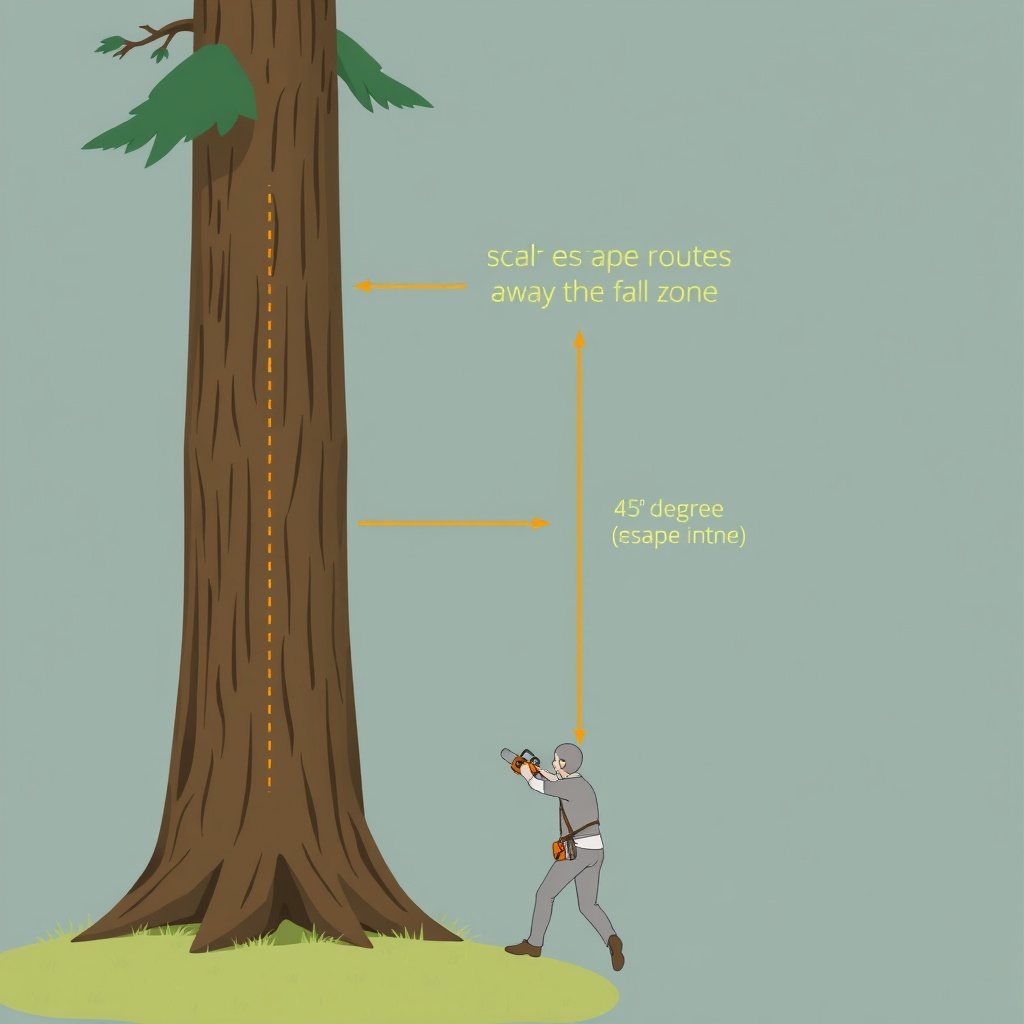
For trees over 80 feet tall, the escape route must be at a 45-degree angle away from the planned fall direction, not straight back. The reason: tall trees can “barber chair” (split upward) or bounce sideways if they hit adjacent limbs. Follow these rules:
- Clear two escape paths (a primary and secondary) 10–15 feet long, free of tripping hazards.
- Position yourself on the left side of the saw (if right-handed) to keep the chain brake within reach.
- Never turn your back on the falling tree. Watch the top and plan to move at a 45° angle from the hinge.
- Keep the CS-590 idling until you are behind a large, standing tree at least 20 feet away.
What Bar Length and Chain Should You Use on Tall Timber?
The CS-590 comes standard with a 20-inch bar, which is fine for most tall trees up to 28 inches DBH. For trees 28–34 inches thick, upgrade to a 24-inch bar (Echo part number 688360-52065). The saw will still have enough power if you keep the chain sharp and maintain proper chain tension.
Chain recommendation: Use a full-skip chain (e.g., Oregon 91PX) for tall hardwood felling because it clears sawdust faster and reduces friction. Standard chain is acceptable for softwoods like pine, but skip-tooth chain lets the CS-590 cut faster without overheating.
For more on cutting specific species, see Echo CS-590 for Pine Tree Removal: Tips & Techniques.
How Does the CS-590 Compare to a Professional Service for Tall Trees?
Deciding between using the CS-590 yourself and hiring an arborist for tall timber felling depends on three factors: tree height, property obstacles, and your experience level. For a tree under 70 feet tall with clear fall zones and no power lines, the CS-590 is capable in the hands of a careful owner. However, if the tree is over 80 feet, leans toward structures, or has dead branches (widow-makers), professional service is safer.
A typical pro tree service charges $500–$1,500 for a single tall tree removal in the US, depending on crane access. Your CS-590 costs about $500 retail. So one tree removal can pay for the saw, but only if you have the skill and physical stamina to handle the work safely. For a detailed cost comparison, read Echo CS-590 vs Hiring a Pro: Which is Better?.
| Severity Level | Scenario with CS-590 |
|---|---|
| Usually Not Urgent | Tree is under 70 feet tall, straight, with a clear drop zone away from buildings and roads. You have experience with bore cuts and wedges. You can take a weekend to fell, limb, and section the trunk. |
| Needs Attention Soon | Tree is over 80 feet, shows a lean toward a structure, or has significant dead wood in the crown. The CS-590 is still powerful enough, but you need professional evaluation first. Also urgent if you have not practiced felling cuts on smaller trees. |
What Owners Say About Felling Tall Trees With the Echo CS-590
Experienced owners who have used the CS-590 on tall timber consistently highlight three points:
- “The power surprised me.” Most owners running 20-inch bars on white pines and tulip poplars report no stalling even in full-bore cuts. The saw’s large muffler and good air filtration help it maintain power on hot days.
- “You must sharpen often.” Several reviewers note that the standard Oregon chain dulls quickly in dirty or sandy soil near the base. They recommend carrying a sharpening file and checking the chain after each tree to maintain felling speed.
- “Start with smaller practice trees.” Many advise new owners to fell a few 12–20 inch trees before tackling a 30-inch tall oak, because the CS-590’s weight (13.2 lbs dry) can fatigue your arms during multiple back cuts.
Frequently Asked Questions
Q: Can the Echo CS-590 handle a 30-inch diameter oak tree that is 90 feet tall?
A: Yes, but you will need a 24-inch bar and a full-skip chain. Make two passes on the back cut if the bar is too short to reach the hinge. Use wedges early to prevent the tree from settling on the bar.
Q: Do I need a special felling technique for leaning tall trees with the CS-590?
A: For trees leaning off your intended direction, use a bore cut to establish the hinge first, then finish the back cut from the opposite side. The CS-590’s torque allows you to bore straight into the trunk without bogging.
Q: What safety gear is essential when using the CS-590 for tall timber felling?
A: Minimum: chain saw chaps, forestry helmet with face shield, hearing protection, steel-toed boots with chainsaw protection, and a first aid kit. For detailed recommendations, see Echo CS-590: Recommended Safety Gear for Beginners.
Q: How do I prevent the CS-590 from binding in the back cut on a tall tree?
A: Drive a plastic felling wedge into the back cut as soon as the bar enters the wood. The wedge keeps the kerf open and prevents the tree from pinching the bar. Never use a metal wedge—it can damage the chain.
Q: Will the CS-590’s 20-inch bar reach through a 28-inch pine?
A: Yes, because the bar length is measured from the tip to the body, not the cutting length. The effective cutting path is about 19 inches, so on a 28-inch pine, the notch and back cut will meet as long as the notch is cut one-third deep (about 9 inches).
Q: Should I use a different chain pitch for tall hardwood versus pine?
A: The .325-inch pitch that comes on the CS-590 works well for both. Keep the same pitch but switch to a full-skip chain for hardwoods; standard chain is fine for pines. Always use the 7-pin sprocket for maximum torque.