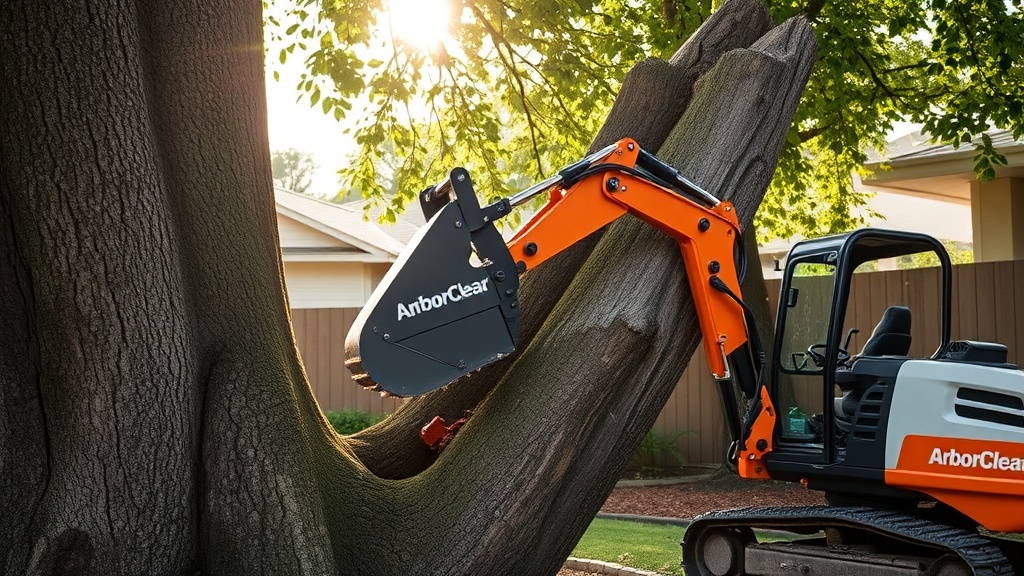
ArborClear Tree Shear Attachment: Eucalyptus Removal Techniques for Tall Trees
Eucalyptus trees present unique challenges for arborists due to their rapid growth, brittle wood, and tendency to develop lean under their heavy canopies. The ArborClear Tree Shear Attachment, combined with proper technique, offers a controlled method for sectioning tall eucalyptus specimens without the risk of barber chair failures or unpredictable falls. This article details species-specific removal strategies using the ArborClear shear, focusing on mitigating hazards common to eucalyptus in urban and rural settings.
What Makes Eucalyptus Removal Different from Other Tree Species?
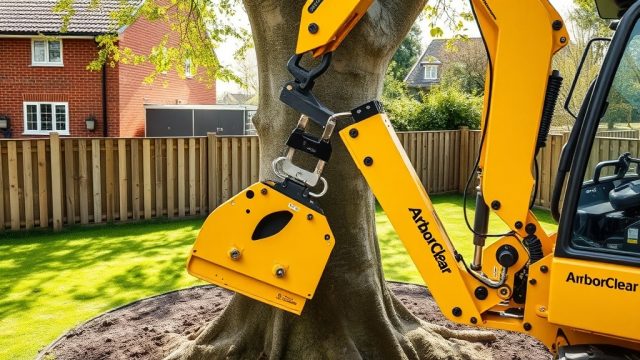
Eucalyptus wood is fibrous, dense, and often contains internal tension that can cause splitting during cutting. Unlike pine or cottonwood, eucalyptus has a high silica content that dulls standard chainsaws rapidly. The ArborClear Tree Shear Attachment uses a hydraulic guillotine-style blade that severs fibers cleanly without the vibration or torque that can induce splitting. For tall specimens, the shear’s ability to make precise cuts at awkward angles—such as on leaning trunks—reduces the need for risky climbing operations.
Additionally, eucalyptus bark is often loose and fibrous, which can interfere with conventional cutting methods. The shear’s wide opening accommodates trunks up to 24 inches in diameter, and its sharp blade minimizes bark tear. When removing tall eucalyptus, arborists should always assess the tree’s lean and any structural defects before attaching the shear to an excavator or skid steer. Common hazards include hanging dead limbs (known as “widow makers”) and hollow trunks from insect infestation.
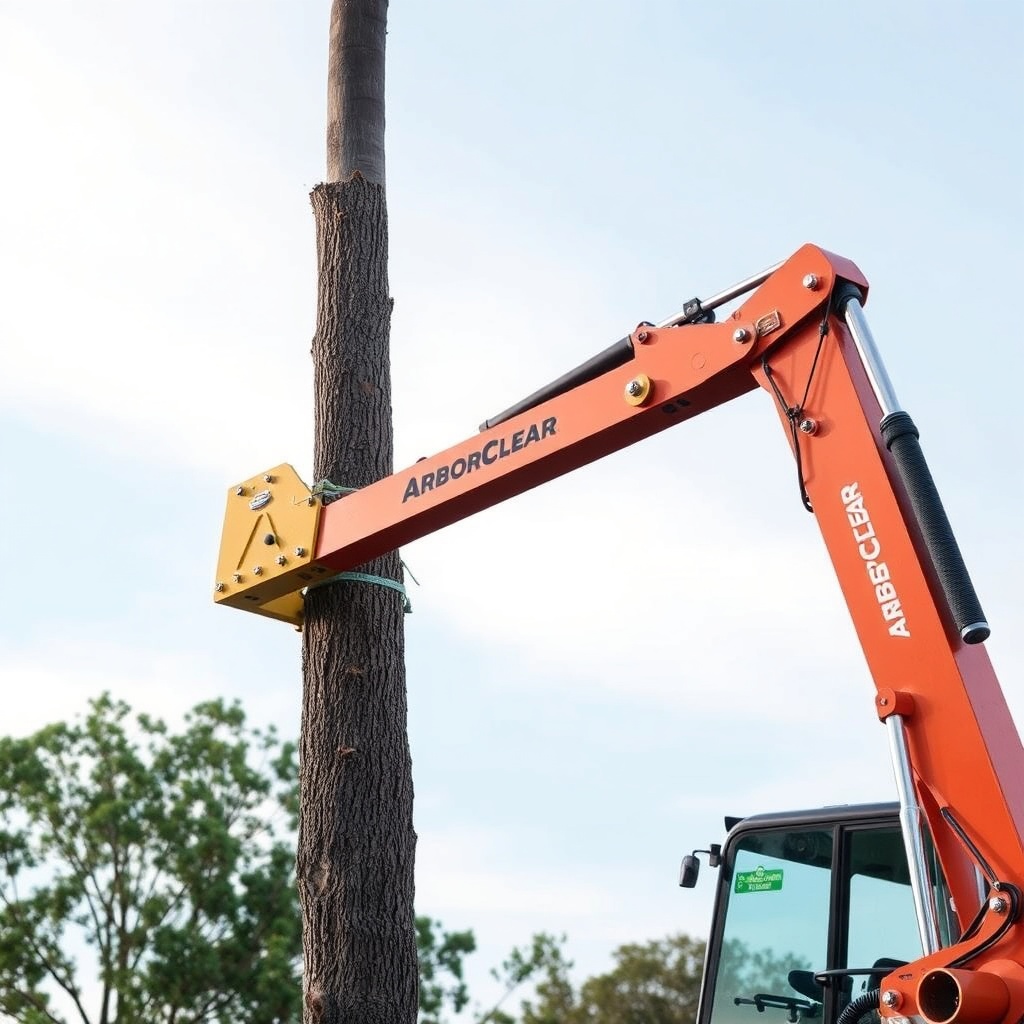
How to Prepare a Tall Eucalyptus for Shear-Assisted Felling
Before engaging the ArborClear shear, the arborist must complete a thorough site assessment. For eucalyptus over 15 meters tall, consider the following preparation steps:
- Identify lean direction: Use a clinometer to measure the tree’s natural lean. Eucalyptus often leans toward light or away from prevailing winds. The shear can make a face notch cut to guide fall direction, even on unstable ground.
- Remove lower limbs first: Use the shear to clean out branches up to 8 inches in diameter from the base. This reduces weight and improves access. For dense canopies, consider using the ArborClear Tree Shear Attachment: Limb Management for Small Properties to manage debris without multiple passes.
- Assess decay: Probe the trunk with a sounding hammer. Eucalyptus with internal decay may require a more gradual removal sequence. The shear’s hydraulic pressure can be adjusted to avoid crushing rotten sections.
- Plan drop zone: Clear a path at least 1.5 times the tree’s height. Eucalyptus can fall unpredictably if wood fibers snap under tension.
Once preparation is complete, the shear can be positioned to make a horizontal cut at the base, or a series of stepped cuts if the tree is near structures. For trees leaning toward buildings, refer to ArborClear Tree Shear Attachment: Safe Removal Techniques for Trees Near Foundations for guidance on controlled directional felling.
Step-by-Step Cutting Sequence for Tall Eucalyptus with the ArborClear Shear
The following sequence works for eucalyptus with trunk diameters from 12 to 24 inches. Always wear appropriate PPE and use a spotter when operating the shear near power lines or streets.
- Make a face notch: Using the shear, cut a 45-degree notch on the intended fall side. The notch should be about one-third of the trunk diameter. For eucalyptus, this cut reduces the risk of back-splitting.
- Back cut: From the opposite side, make a horizontal back cut above the notch. The shear’s blade should penetrate slowly to avoid hydraulic kickback. Stop cutting when approximately 10% of the trunk remains as a hinge.
- Control fall: Once the hinge is formed, the tree should begin to fall. If the eucalyptus remains standing, use the shear to gently push it in the desired direction. Do not apply excessive force, as brittle wood may snap.
- Sectional removal: For trees over 20 meters, consider top-down sectional removal. Use the ArborClear Tree Shear Attachment: Pine Tree Removal Techniques for Resinous Wood approach for managing heavy upper sections, adapting for eucalyptus’ higher density.
- Stump removal: After felling, use the shear to cut the stump as low as possible. Eucalyptus stumps can regrow vigorously; apply herbicide immediately to prevent coppicing.
Comparison of Shear Models for Eucalyptus Over 20 Inches
| Model | Max Cut Diameter (inches) | Hydraulic Flow Required (GPM) | Weight (lbs) | Ideal for Eucalyptus Height | Price (USD) |
|---|---|---|---|---|---|
| ArborClear AC-18 | 18 | 20–30 | 450 | Up to 12 m | $8,200 |
| ArborClear AC-24 | 24 | 30–40 | 620 | 12–20 m | $11,500 |
| ArborClear AC-30 (heavy duty) | 30 | 40–50 | 850 | Over 20 m | $15,800 |
The AC-24 is the most versatile for standard tall eucalyptus removal. For beetle-damaged or storm-battered trees, consider the ArborClear Tree Shear Attachment: Ash Tree Removal Techniques for Beetle-Infested Trees for similar brittle wood handling steps.
What Owners Say About Using the ArborClear Shear on Eucalyptus
“We had a 90-foot eucalyptus leaning over a driveway. The ArborClear AC-24 made a clean notch cut, and the tree fell exactly where we planned. No chainsaw needed for the main trunk—saved us three hours and avoided dangerous climbing.” — Samuel G., Certified Arborist, Santa Cruz, CA
“The shear’s blade held up well against eucalyptus wood, which usually eats chainsaw chains. We removed 12 tall gums in a weekend without a single barber chair. The hydraulic system is reliable, but make sure your excavator has enough flow.” — Linda M., Tree Service Owner, Melbourne, Australia
“I used it to remove a eucalyptus that had grown into a fence line. Being able to cut at an angle without repositioning the machine saved time. The only issue was the bark getting jammed in the pivot—but a quick blast of compressed air fixed it.” — David R., Landscaper, Portland, OR
For cottonwood, which shares eucalyptus’ tendency to split, the ArborClear Tree Shear Attachment: Specialized Removal Techniques for Cottonwood Trees offers similar cutting strategies.
Frequently Asked Questions
Q: Can the ArborClear shear handle eucalyptus with a trunk diameter over 24 inches?
A: Yes, the AC-30 model handles up to 30 inches. For larger diameters, make multiple overlapping cuts or use the shear for limbing first, then fell in sections.
Q: How do I prevent the shear blade from dulling on eucalyptus?
A: Regularly inspect the blade for nicks. Eucalyptus silica accelerates wear; sharpen after every 20 cuts. Use water cooling if the shear runs hot during extended use.
Q: Is the shear safe for eucalyptus near power lines?
A: Yes, but maintain a minimum 10-foot clearance from lines. The hydraulic system isolates the operator from the cutting zone. Consider using a spotter and insulated booms for extra safety.
Q: Can I use the shear to remove eucalyptus stumps that have regrown?
A: Yes. Cut coppice shoots to ground level with the shear, then apply glyphosate to the stump. Repeat as needed. The shear can crush the stump to accelerate decomposition.
Q: What’s the maximum height eucalyptus can be felled with the shear in one cut?
A: For trees over 20 meters, sectional removal is recommended. The shear can make top cuts if the tree is accessible via bucket truck. For storm-damaged eucalyptus, refer to ArborClear Tree Shear Attachment: Emergency Pine Removal After Wildfire for stepwise removal protocols.
Q: How do I dispose of eucalyptus cuttings after using the shear?
A: Eucalyptus wood is dense and burns hot. Chip the branches for mulch or sell as firewood. The shear produces clean cuts that minimize splinters, making handling easier.