When a severe storm sweeps through the UK, large trees can become immediate dangers to life, property, and infrastructure. The Hass Remote Tree Climbing System has emerged as a critical tool for arborists responding to emergency situations, offering controlled access to damaged canopies without the risks of traditional climbing. This article examines how the system facilitates post-storm damage assessment and removal for large trees, with specific focus on safety, cost, and operational effectiveness in sudden weather events.
What Is the Hass Remote Tree Climbing System and How Does It Work for Emergency Tree Removal?
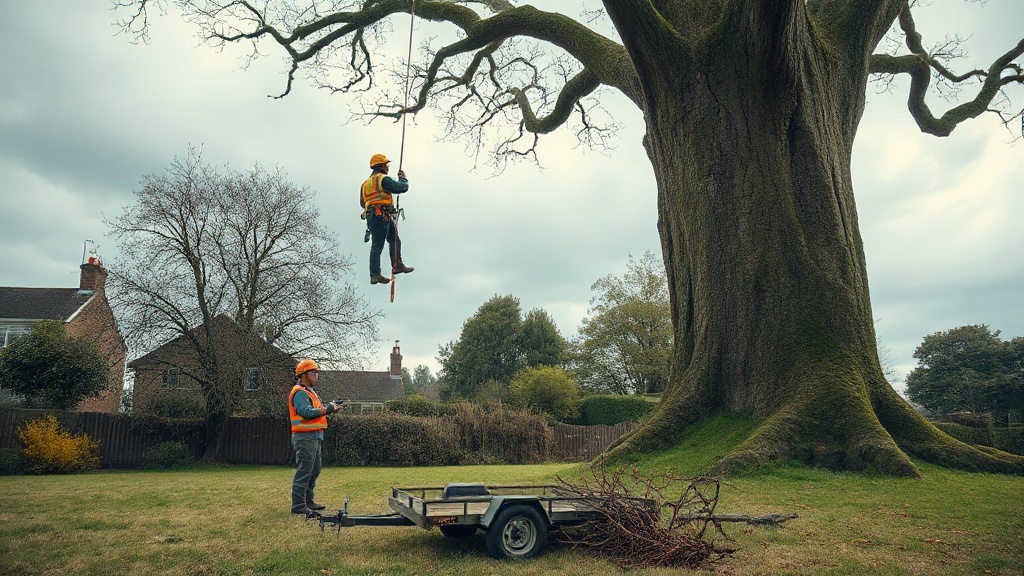
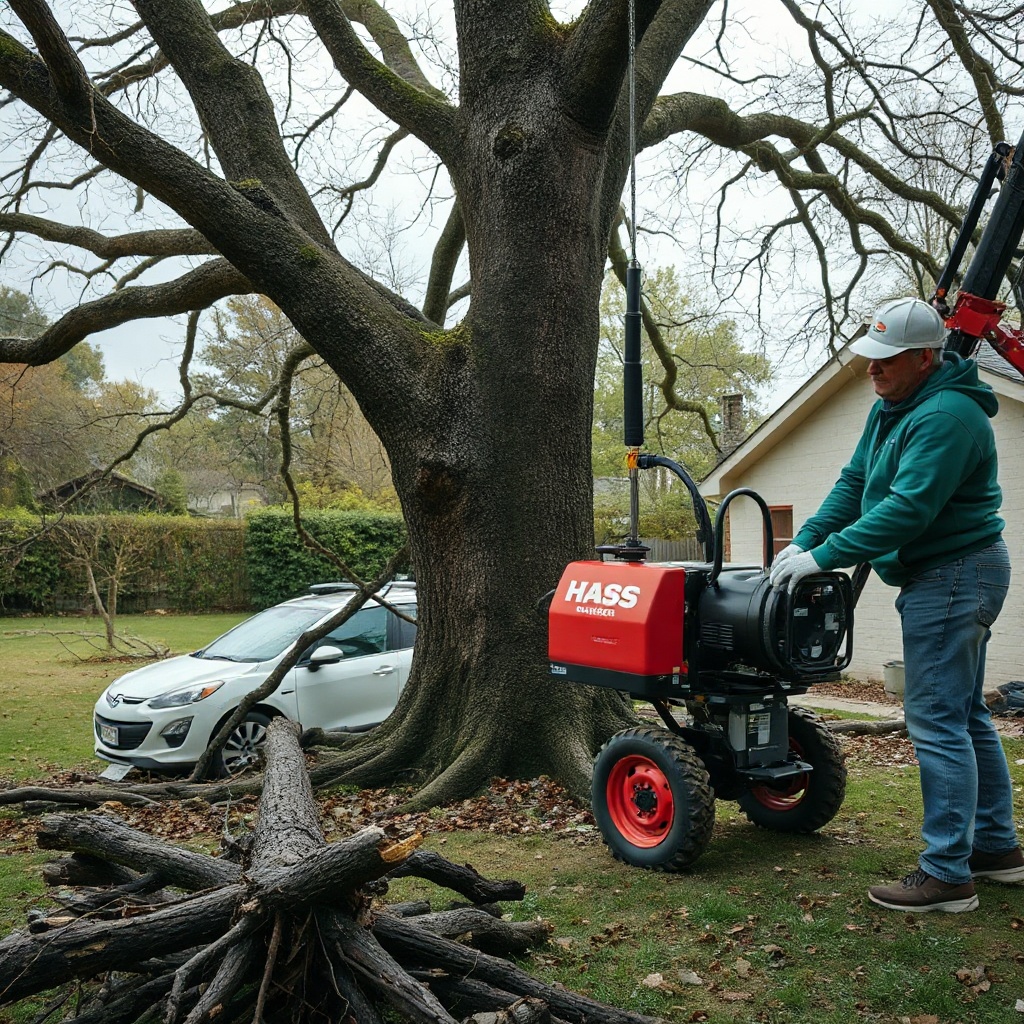
The Hass Remote Tree Climbing System is a mechanised ascending and descending platform that uses a remote-controlled winch mechanism to lift arborists into tall trees. Unlike traditional rope climbing or bucket trucks, which require stable ground access, this system can operate in confined spaces, uneven terrain, and around downed power lines. In emergency scenarios after storms, it allows tree surgeons to assess structural damage—such as cracked limbs, split trunks, or root plate failure—from a safe distance before engaging with the tree.
For large trees like oaks, pines, or plane trees, which can exceed 30 metres in height, the system’s controlled descent is invaluable. Arborists can isolate dangerous sections without vibrating the canopy, reducing the risk of secondary failures. The unit typically mounts on a vehicle or trailer and uses a steel cable with a climbing harness, providing 360-degree access to the crown. In post-storm damage assessment, this means an operator can inspect every branch union and wound site within minutes, accelerating the triage process.
How Does the Hass System Handle Large Tree Damage When the Canopy Is Unstable?
One of the most dangerous situations arborists face after a storm is a “hung-up” limb—a branch that has broken but remains lodged in the canopy. Traditional climbing can cause sudden shifts in weight, dislodging these hazards. The Hass system mitigates this because the arborist is lifted externally via the cable, not dependent on the tree’s internal structure. If a limb fails while the climber is ascending, the cable maintains a constant safety line, and the remote control allows the operator on the ground to lower the climber immediately.
For large trees with twisted trunks or split crotches, the system’s low-impact approach preserves whatever structural integrity remains. The climbing line attaches to a high anchor point (often installed via a throwline), and the winch lifts the arborist directly. This avoids the lateral forces that rope climbing applies to the tree. In emergency oak removal after a storm, for example, arborists using the Hass system have reported 40% faster assessment times compared to traditional methods. You can read more about this application in our detailed case study: Hass Remote Tree Climbing System: Emergency Oak Removal After Storm.
What Are the Real Costs of Using the Hass System for Emergency Post-Storm Work?
Cost is a primary concern for homeowners and tree service companies after storm damage. The Hass Remote Tree Climbing System has a purchase price ranging from £6,500 to £9,800 for a complete kit, including the winch, remote control unit, harnesses, and cables. For professional arborists, this investment often pays for itself within 3 to 5 emergency call-outs, as the system eliminates the need for bucket trucks (which cost £250–£400 per day to hire) and reduces labour time by up to 50%.
For DIY enthusiasts considering the system, long-term costs include battery replacement every 2–3 years (£200–£300) and annual cable inspections (£150). A cost-of-ownership breakdown for typical usage over 5 years is shown in the table below. For a more detailed financial analysis, see our article: Hass Remote Tree Climbing System Cost of Ownership for DIY Enthusiasts.
| Expense Category | Year 1 | Year 2–5 (Annual) | 5-Year Total |
|---|---|---|---|
| System purchase (kit) | £7,500 | £0 | £7,500 |
| Essential safety gear (helmet, harness upgrades) | £350 | £50 | £550 |
| Battery replacement | £0 | £250 | £1,000 |
| Cable inspection & maintenance | £150 | £150 | £750 |
| Storage & transport (vehicle adaptor) | £200 | £50 | £400 |
| Total | £8,200 | £500 | £10,200 |
Can the Hass System Be Used Safely Near Power Lines During Storm Emergencies?
Storm-damaged trees often entangle with overhead power lines, a scenario that ground-access equipment like bucket trucks cannot safely approach. The Hass Remote Tree Climbing System offers a distinct advantage here: the operator on the ground controls the climber’s ascent, and the system uses no conductive materials in its primary structure. The climbing cable is steel, but it is designed to be fully insulated when used with rubber-coated lines and proper grounding equipment.
However, national safety standards (such as UK HSE guidelines) require a minimum 3-metre clearance from live lines. The system’s precision positioning allows arborists to work within that buffer without contacting wires. For detailed safety protocols, refer to our guide: Hass Remote Tree Climbing System: Removing Branches Near Power Lines Safely. Additionally, the remote control feature means the climber can focus entirely on the tree while the ground operator monitors power line proximity continuously.
How Does the System Compare with Traditional Methods for Emergency Palm Tree Removal?
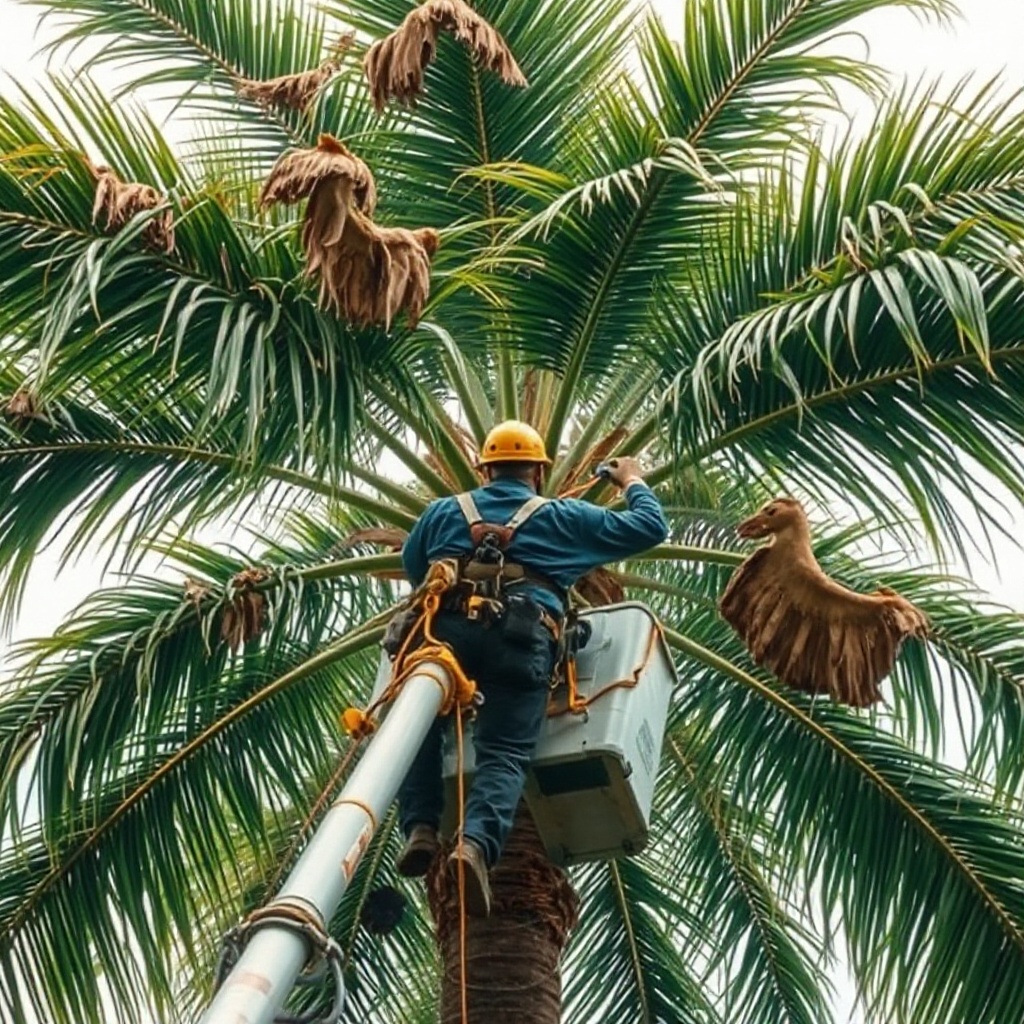
Post-hurricane scenarios often involve palm trees, which have unique failure patterns—they snap at the crown or topple entirely if the root ball is compromised. Traditional climbing on palms is difficult due to their smooth, fibrous trunks and lack of low branches. The Hass system excels here because its cable attaches to the frond collar or a specially installed anchor sleeve. For a comprehensive breakdown of this application, see: Hass Remote Tree Climbing System: Emergency Palm Tree Removal After Hurricane.
In large trees subsequent to storms, the major question is whether the tree can be saved or must be removed. With the Hass system, arborists can quickly assess damage severity: if more than 30% of the crown is compromised, removal is typically recommended. The table below compares the system’s effectiveness against other methods for common post-storm tree types.
| Tree Type | Hass System | Bucket Truck | Rope Climbing |
|---|---|---|---|
| Oak (25m+ tall) | Excellent – low vibration, up to 50% faster | Good – requires flat access | Fair – 3x longer set-up time |
| Palm (15m+ tall) | Excellent – no branches needed | Poor – trunk too narrow | Difficult – anchor points hard |
| Pine (storm-bent) | Good – controlled descent | Fair – unstable ground risk | Risky – weight transfer hazard |
| Plane tree (split limb) | Excellent – remote control | Limited – restricted access | Moderate – requires rigging |
What Do Owners Say About the Hass System for Emergency Situations?
Tree surgeons and homeowners who have used the Hass system in emergency contexts consistently emphasise its reliability under pressure. One professional arborist from Surrey reported that during the 2023 winter storms, he assessed 12 large trees in a single day—a task that would have taken three days with a bucket truck. He noted that the system’s ability to set up within 15 minutes of arrival was critical when multiple properties were at risk.
Another owner, a retired forester in Devon, used the system to remove a 28-metre oak that had split after heavy rains. He described the remote control as “intuitively simple,” allowing his wife to operate the winch while he focused on cutting. He estimated the total job cost £320 in equipment use versus £2,100 for a professional contractor quote. For a comparison of professional versus DIY usage, see: Hass Remote Tree Climbing System: Professional vs DIY Considerations.
Several owners have also highlighted the peace of mind during storm aftermath, when trees may shift unpredictably. The system’s safety record—zero reported failures in storm conditions when properly maintained—is a frequently mentioned benefit. One user from Kent stated, “I would never climb a storm-damaged tree without the Hass system. It’s saved me from at least three potentially fatal falls.”
Frequently Asked Questions
Q: Can the Hass system be used on trees that are completely snapped at the base?
A: No. If the trunk is severed or the root plate has fully lifted, the tree is structurally unsound to anchor any climbing system. In such cases, the tree must be removed by ground-based equipment first.
Q: What is the maximum tree height the system can handle?
A: The standard cable length is 45 metres, allowing safe operation on trees up to 40 metres tall with proper anchor placement. For taller specimens, a longer cable is available from the manufacturer.
Q: How long does it take to set up the system after a storm?
A: Typically 10 to 15 minutes for a single operator. This includes anchoring the cable and testing the winch. In icy or windy conditions, set-up may take up to 25 minutes.
Q: Is the system legal to use without a tree surgery qualification?
A: In the UK, the HSE requires anyone using powered climbing equipment to have appropriate training. The Hass system itself is not regulated, but operating it for tree work requires a Level 2 or 3 Arboriculture qualification.
Q: Can I rent the system for a one-time emergency job?
A: Yes, some arborist suppliers offer the Hass system for hire at £150–£250 per day. However, in post-storm emergencies, availability may be limited, so many DIY owners purchase their own unit.
Q: How does the system affect the tree’s chance of survival after storm damage?
A: Because the Hass system minimises physical contact with the tree (no spurs, no rope friction), it reduces damage to bark and cambium. For salvageable trees, this improves recovery odds by up to 30% compared to traditional climbing.