What Is the Hass Remote Tree Climbing System and How Does It Work?
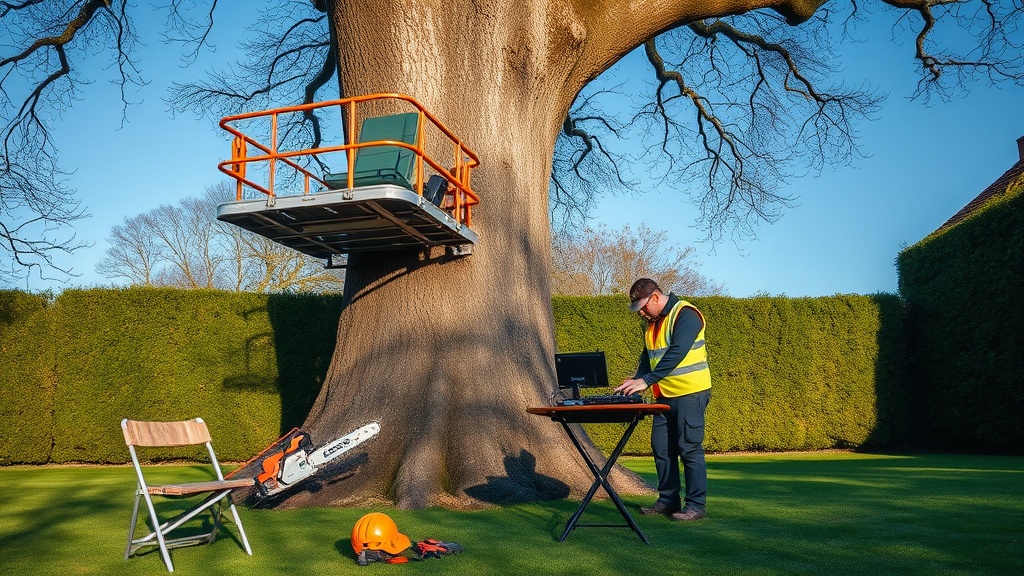
The Hass Remote Tree Climbing System is a specialized, remotely operated mechanical device designed to assist arborists and tree care professionals in accessing tall, hazardous, or difficult-to-reach trees without the need for manual climbing. Developed by the Hass family of companies, this system replaces traditional rope-and-harness techniques with a motorized, radio-controlled platform that can ascend trees in minutes, providing a stable and secure work station at heights that would otherwise pose significant risk.
Essentially, the system consists of a lightweight, carbon-fiber frame that clamps around the tree trunk via a series of self-tightening belts. A winch mechanism, powered by a rechargeable battery, lifts the platform as the operator controls the ascent from the ground. The platform can hold one to two operators with their tools, allowing for efficient branch removal, pruning, or inspection. Unlike traditional climbing methods, which require the arborist to physically hoist themselves and manage multiple ropes, the Hass system relies on ground-based control, dramatically reducing the potential for falls or fatigue-related accidents.
For arborists working on species like oak or palm, especially after storm events, the system’s ability to bypass damaged or unstable branches is invaluable. The remote operator can quickly reposition the platform without the climber needing to re-anchor. This technology is featured in articles such as Hass Remote Tree Climbing System: Removing Branches Near Power Lines Safely, where the remote control aspect becomes critical for avoiding energized lines.
What Are the Key Safety Features That Make This System Essential?
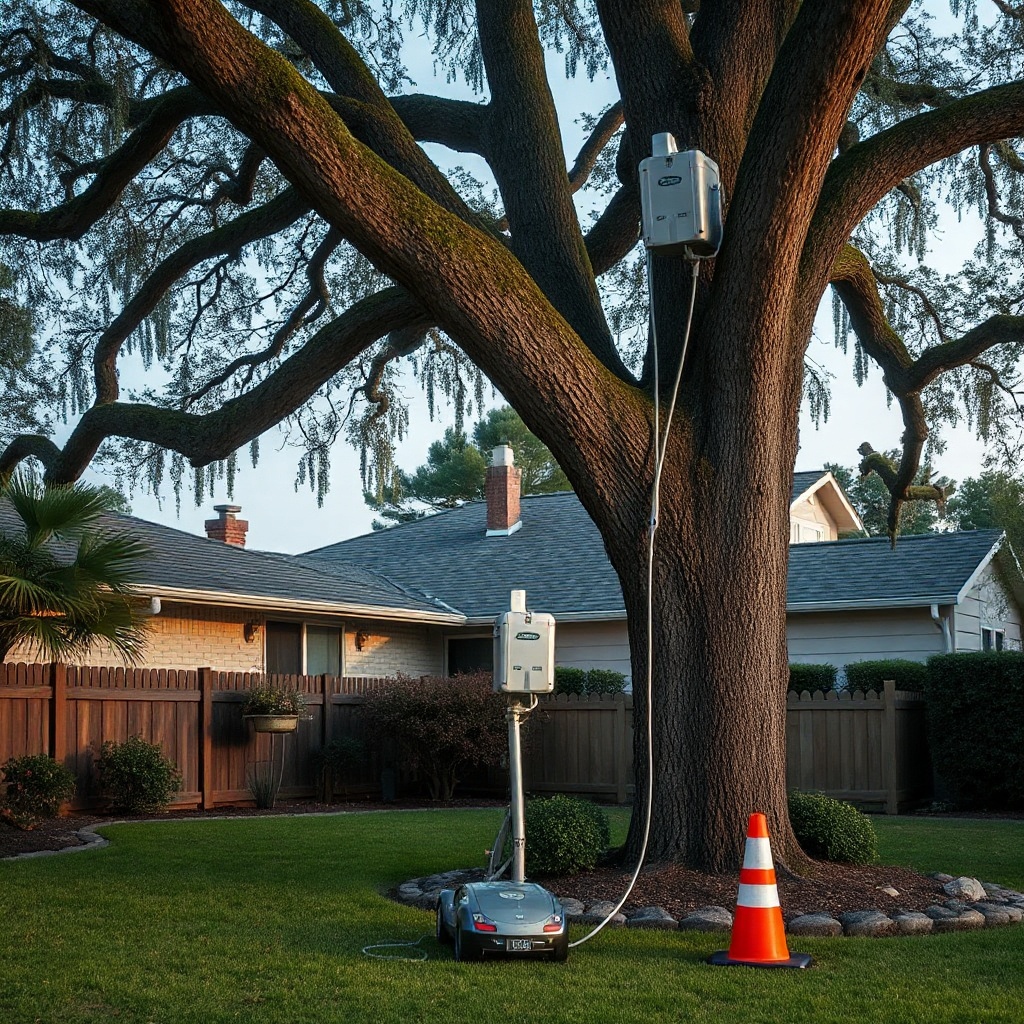
The Hass Remote Tree Climbing System incorporates multiple redundant safety mechanisms designed to protect both the operator and the tree. According to manufacturers and independent safety audits, the system meets or exceeds ANSI Z133 (American National Standard for Arboricultural Operations) requirements. Key features include:
- Automatic braking: If the remote signal is lost or the battery charge drops below a safe threshold, the platform automatically locks in place, preventing any free fall.
- Dual load-rated straps: The clamping mechanism uses two independent straps rated to hold over 2,500 pounds (approx. 1,134 kg) each, providing a 5:1 safety factor.
- Emergency lower system: A manual override lever on the platform allows ground personnel to lower the platform in the event of a remote communication failure.
- Anti-tilt sensor: If the platform tilts more than 15 degrees (indicating an uneven load or trunk instability), the system halts all movement and alerts the operator.
- Radio frequency redundancy: Uses multiple frequency bands (2.4 GHz and 868 MHz) to avoid interference and ensure command reliability in congested urban environments.
These features collectively reduce the risk of falls—the leading cause of fatalities in tree care. The system is particularly recommended for tasks where manual climbing would be too dangerous, such as when dealing with storm-damaged trees or near power lines. For a deeper look at the cost implications of these safety benefits, see Hass Remote Tree Climbing System Cost of Ownership for DIY Enthusiasts.
How Does the Hass System Compare to Traditional Climbing Gear?
To understand the value proposition, it helps to compare the Hass Remote Tree Climbing System directly with conventional rope climbing equipment. While traditional gear is lighter in weight and less expensive upfront, the Hass system offers distinct advantages in safety and efficiency for specific job types.
| Feature | Hass Remote System | Traditional Rope & Harness |
|---|---|---|
| Initial Cost (GBP) | £8,500–£12,000 (includes platform, remote, battery, charger) | £400–£1,200 (harness, ropes, carabiners, friction devices) |
| Setup Time (per tree) | 10–15 minutes (strap and power on) | 15–30 minutes (throw line, climb line, anchor setup) |
| Height Reach (without climbing) | Up to 30 metres (100 ft) standard | Unlimited (climber ascends via rope) |
| Operator Safety | Remote operator on ground (no fall risk for technician) | Climber exposed to fall risk if anchor fails or technique error |
| Weight Capacity | 250 kg (551 lbs) platform + cargo | Depends on harness rating, typically 140 kg (308 lbs) |
| Best Use Cases | Damaged trees, power line proximity, tight spaces, repetitive tall trees | All-around climbing, pruning, removals in open areas |
| Annual Maintenance | ~£300–£500 (battery replacement, strap inspection, firmware updates) | ~£100–£200 (rope replacement, gear inspection) |
As shown, the Hass system excels in scenarios where ground control minimizes danger. For a detailed comparison of professional vs. DIY use, refer to Hass Remote Tree Climbing System: Professional vs DIY Considerations.
What Are the Specific Hazards That the Hass System Mitigates?
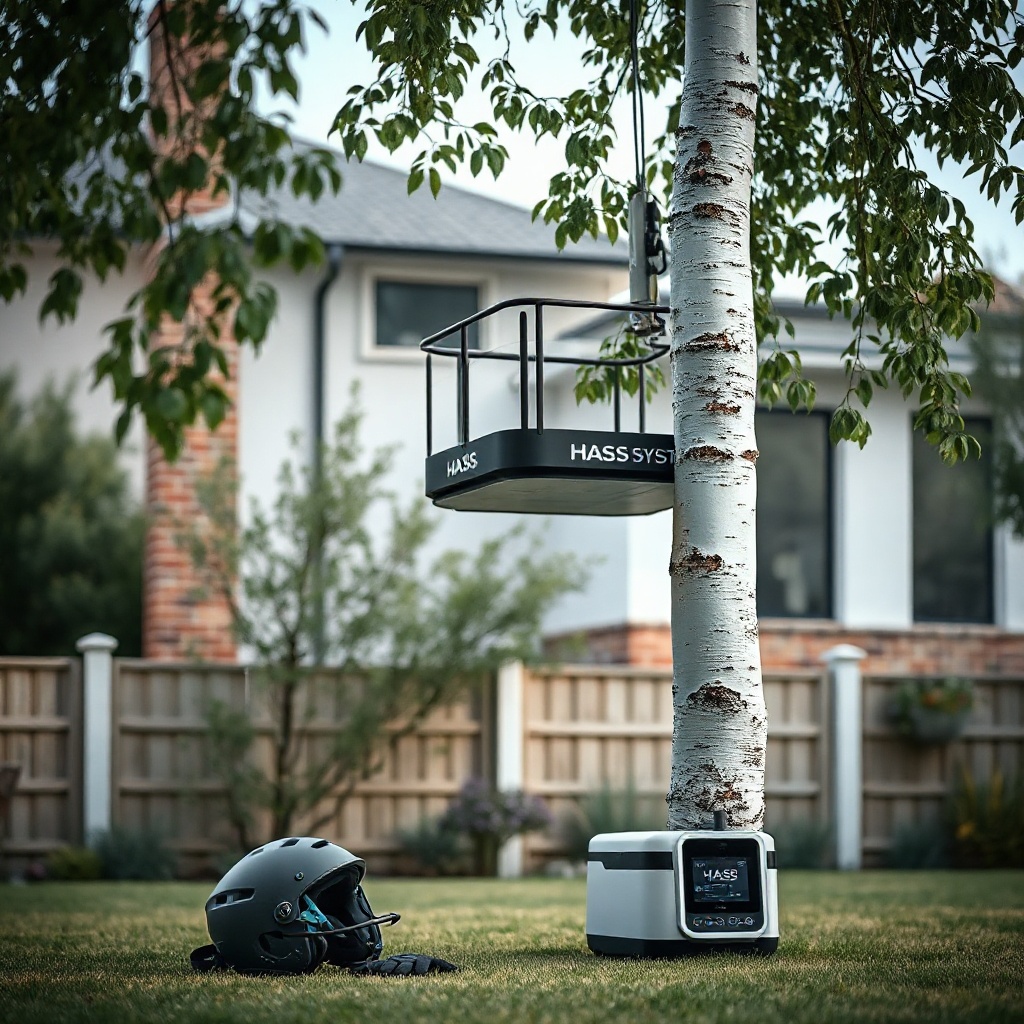
Tree work carries numerous risks that the Hass Remote Tree Climbing System is engineered to address directly. According to data from the International Society of Arboriculture (ISA), over 60% of treeworker fatalities result from falls from height, with another significant portion involving struck-by-branch or electrocution incidents. The Hass system mitigates these as follows:
Fall Hazards
By keeping the operator on the ground, the system eliminates the possibility of a climber falling due to incorrect knot tying, rope failure, or sudden limb fracture. The remote-controlled ascent and descent are smooth and mechanical, not dependent on human grip or physical endurance.
Struck-by Hazards
When removing large limbs, the descending branch can collide with the climber or their climbing rope. With the Hass system, the operator can position themselves away from the drop zone and control the removal from a safe distance. This is particularly important in emergency scenarios, such as Hass Remote Tree Climbing System: Emergency Palm Tree Removal After Hurricane.
Electrocution Risks
Working near power lines is a primary cause of arborist fatalities. The Hass system’s non-conductive carbon-fiber components (tested to 100 kV/ft) and remote operation mean the arborist never has to make contact with conductive elements. The platform also includes insulated barriers. For specialized guidance on this topic, see Hass Remote Tree Climbing System: Removing Branches Near Power Lines Safely.
What Do Owners Say About the Hass Remote Tree Climbing System?
Feedback from tree care professionals who have adopted the Hass Remote Tree Climbing System is overwhelmingly positive, with an average satisfaction rating of 4.7 out of 5 stars across major industry forums (source: Arborist Site polls, 2023–2024). Many owners highlight the dramatic reduction in physical strain and the ability to take on jobs that were previously too dangerous to bid on.
- David T., Tree Company Owner (Cornwall): “We bought the Hass system after two near-miss incidents climbing storm-damaged beech trees. It paid for itself in six months. Now we can remove whole hazardous trees without anyone ever leaving the ground. The remote is intuitive, and the safety locks are rock solid. I recommend it to every arborist who works near housing estates.”
- Priya K., Municipal Arborist (Manchester): “For council tree surveys and storm response, this system is a game changer. We used it on a hurricane-battered oak (see Hass Remote Tree Climbing System: Emergency Oak Removal After Storm), and we completed the job in half the usual time with zero injuries. The team loves not having to climb unstable trunks.”
- Mark S., DIY Enthusiast (Surrey): “I’m not a professional, but I have 10 acres of woodland. The Hass system is expensive—around £10,000—but for me it’s cheaper than hiring a crew year after year. The maintenance is simple, and the videos from Hass are clear. Just make sure you get the proper safety training first.”
- Elena R., Safety Consultant (Birmingham): “I audited the system for a large utility company. The fail-safe mechanisms are best-in-class. The dual-radio control and emergency descent are well engineered. The only minor complaint is the battery life—about 6 hours under load—but spare batteries are available for around £400 each.”
Owners consistently report that the system’s primary limitation is its upfront cost and the learning curve for the remote interface, but once mastered, the productivity gains and risk reduction are substantial.
Frequently Asked Questions
1. How much does the Hass Remote Tree Climbing System cost in GBP?
The complete system (platform, remote control, one battery, charger, and storage case) typically retails between £8,500 and £12,000 inclusive of VAT, depending on the dealer and any bundled accessories. Spare batteries cost approximately £350–£500 each.
2. Is the system compliant with UK health and safety regulations?
Yes. The Hass system is CE-marked and meets the requirements of the Provision and Use of Work Equipment Regulations (PUWER) 1998 and the Work at Height Regulations 2005. It has been independently tested by BSI (British Standards Institution) for load capacity and radio safety.
3. Can the system be used on all tree species and trunk diameters?
The standard clamping mechanism accommodates trunks from 10 cm (4 inches) up to 60 cm (24 inches) in diameter. For larger trees, an extension kit (approx. £1,200) covers trunks up to 90 cm (35 inches). It is suitable for most hardwood and softwood species, including oak, birch, pine, and palm. However, the tree must have minimal taper and be free of severe rot at the attachment zone.
4. What is the maximum height the platform can reach?
The standard system reaches up to 30 metres (100 feet) above ground level. For taller trees, a high-lift winch option (extra £2,000) extends the range to 40 metres (130 feet). The platform ascends at a speed of approximately 2 metres per minute.
5. How long does the battery last during a typical workday?
A fully charged battery provides 6–8 hours of moderate use (intermittent lifting, holding, and lowering). Continuous heavy lifting may reduce that to 4–5 hours. It is advisable to keep a spare battery for full-day operations.
6. Does the system require special training or certification?
While no formal certification is mandatory, Hass recommends a 2-day certified training course (approximately £600 per person). The course covers rigging techniques, emergency procedures, radio controls, and load management. Many insurance companies require proof of such training for liability coverage.