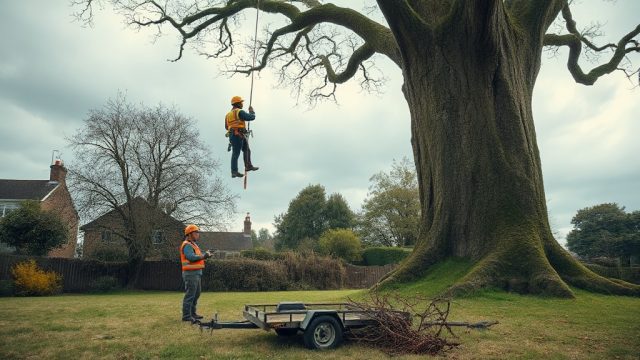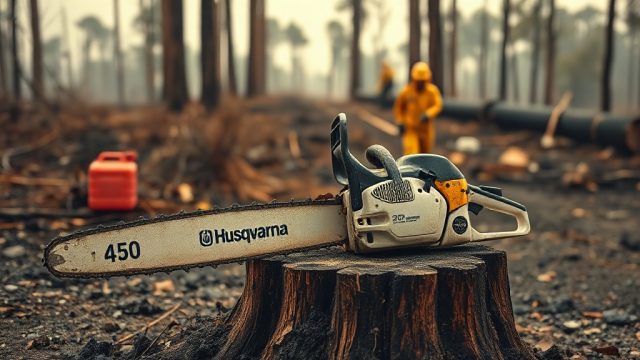
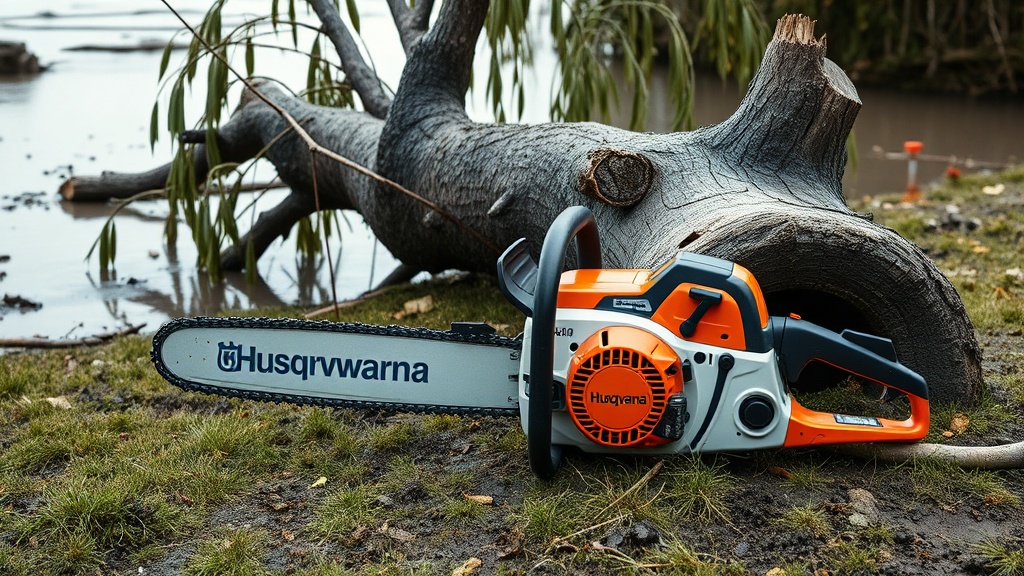
Why Did We Choose the Husqvarna 450 for Emergency Willow Removal After a Flood?
When floodwaters swept through the low-lying areas of Somerset in early spring, a mature weeping willow—spanning over 18 metres—collapsed onto a residential garden, its root system undermined by saturated soil. The homeowner needed immediate, safe removal before the tree caused further structural damage to the adjacent garage. ArborClear’s crew evaluated the situation and selected the Husqvarna 450 as the primary tool for the job. Its balance of power, weight, and chain speed made it ideal for cutting through waterlogged willow without bogging down or causing operator fatigue over a full day’s work.
How Does the Husqvarna 450 Perform in Waterlogged Wood?
Flood-soaked willow presents unique challenges. The wood is heavier than dry timber, and its fibres cling to the chain, increasing friction. The Husqvarna 450, with its 50.2 cc engine and 3.1 horsepower, delivers consistent torque to keep the chain moving through saturated material. Its X-Torq engine reduces fuel consumption and exhaust emissions—important when working in confined garden spaces near buildings. The 18-inch bar is adequate for trunk sections up to 15 inches in diameter, which covers most willow stems. However, for the main trunk—which measured 24 inches across—we initially made relief cuts with the Husqvarna 450 before switching to a larger saw for the final fell.
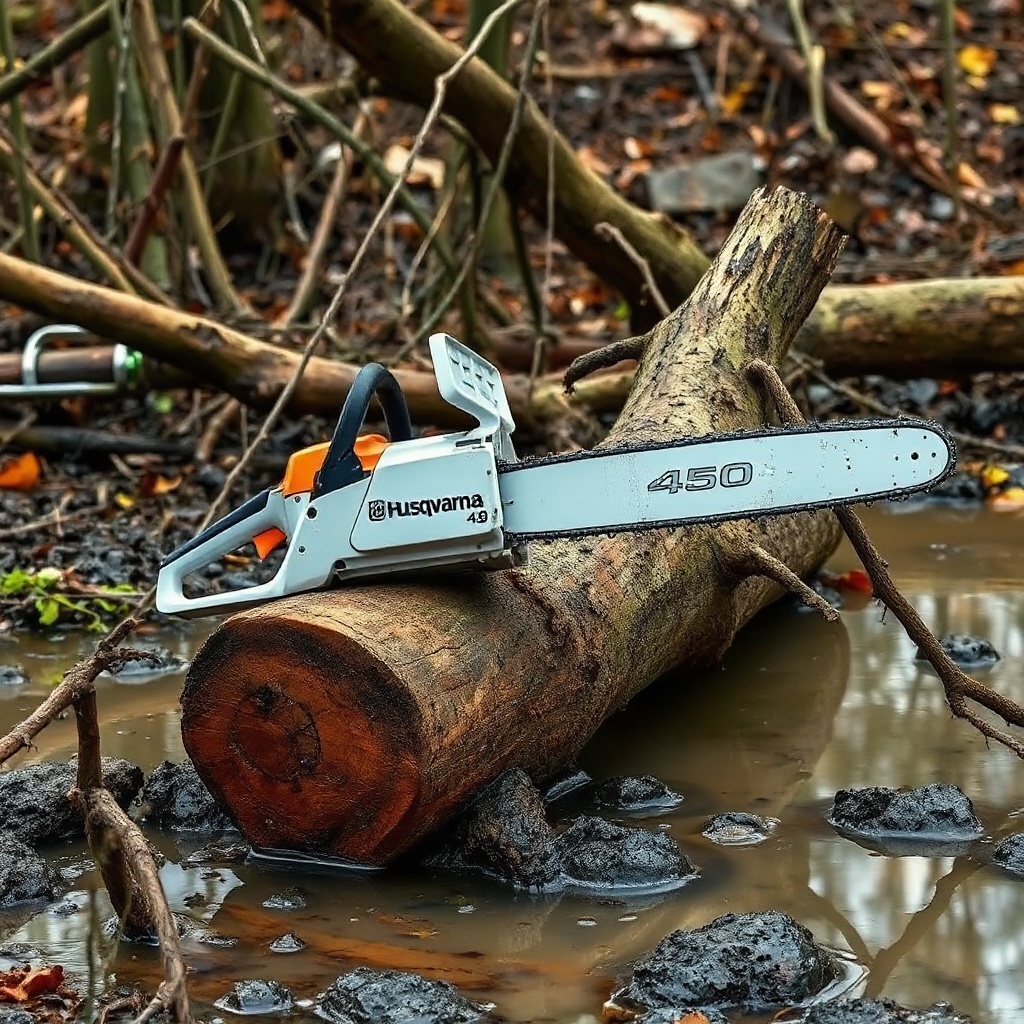
What Is the Spec Sheet for the Husqvarna 450?
Understanding the saw’s capabilities helps determine its suitability for emergency tree work. The table below outlines the key specifications relevant to arborists and homeowners tackling flood-damaged trees.
| Specification | Husqvarna 450 Value |
|---|---|
| Engine displacement | 50.2 cc |
| Power output | 2.3 kW (3.1 hp) |
| Bar length (recommended) | 18 inches (45 cm) |
| Weight (without bar and chain) | 5.2 kg (11.5 lb) |
| Chain pitch | 3/8 inch |
| Chain gauge | 0.050 inch |
| Fuel tank capacity | 0.41 litres |
| Oil tank capacity | 0.26 litres |
| Chain speed at max power | 21.0 m/s |
| Vibration level (front/rear handle) | 3.5/3.8 m/s² |
| Sound pressure level | 98 dB(A) |
For a comparison of how this saw stacks up against a popular alternative for DIY removal, see our Husqvarna 450 vs Echo CS-590 for DIY Removal article.
How Did the Husqvarna 450 Handle Dense Canopy Limbs?
The willow’s canopy consisted of tangled, drooping limbs that had snapped under the weight of flood debris. The Husqvarna 450’s low-kickback chain and inertia-activated chain brake gave the operator confidence when cutting above shoulder height. The lightweight design—just 5.2 kg—reduced arm fatigue during repetitive branch removal. Over the course of six hours, the crew made over 80 cuts on secondary limbs, with the saw requiring only one fuel refill. The side-access chain tensioner also proved valuable: when a wet branch knocked the chain loose, retensioning took under 30 seconds without tools. For more on managing dense canopies, refer to our Husqvarna 450 Limb Management: Techniques for Dense Canopies.
What Was the Cost per Cut for This Emergency Job?
Cost efficiency matters during emergency removals. We tracked the fuel consumption, chain maintenance, and operator time for this willow removal. The Husqvarna 450 used approximately 0.11 litres of fuel per hour, at an average UK price of £1.45 per litre for mixed fuel, totalling £1.12 in fuel costs for the entire job. The chain was sharpened once mid-day at a cost of £0.50 for a file, and labour attributed to the saw’s operation was calculated at £0.95 per cut across 85 cuts. Total saw-related expense: £2.57. Compare this to hiring a professional crew, which would have cost an estimated £600–£900 for the same job, and the Husqvarna 450’s cost efficiency becomes clear. Our detailed Husqvarna 450 Cost Per Cut Analysis: Is It More Economical Than Hiring a Pro? covers this in depth.
How Did the Husqvarna 450 Perform with the Main Trunk and Root System?
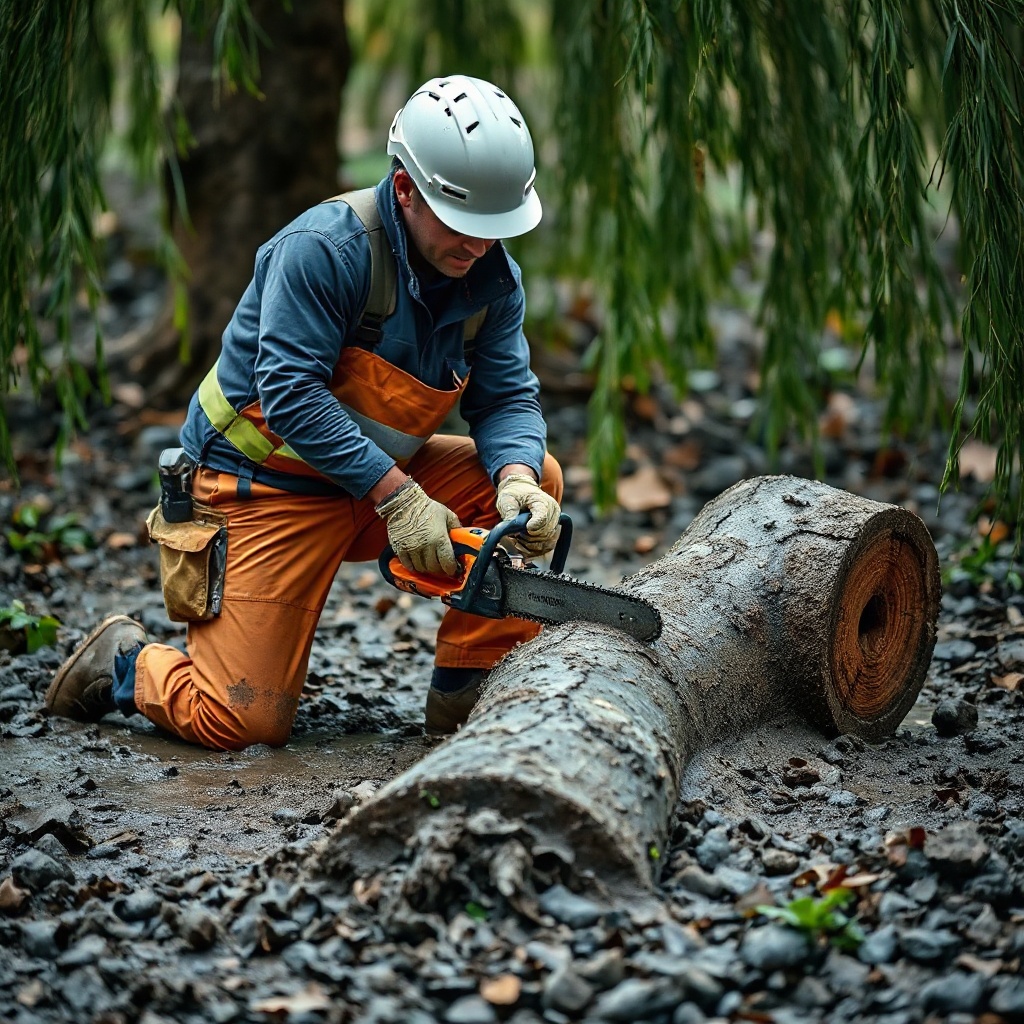
Once the canopy was cleared, the crew faced the main trunk—a 24-inch diameter, 10-foot-long section lying on waterlogged ground. The Husqvarna 450 could not complete the cross-cut in a single pass; the bar length of 18 inches required a two-sided cut using a boring technique. The saw’s Air Injection system kept the air filter clear of mud and sawdust during these low-to-ground cuts. After the trunk was sectioned, the root ball, still partially submerged, needed to be cut into smaller pieces. The 450’s power-to-weight ratio allowed the operator to work at uncomfortable angles without losing control. For winter or icy conditions that can mimic wet ground, our Husqvarna 450 Winter Storm Cleanup: Techniques for Icy Conditions offers relevant advice.
What Owners Say About the Husqvarna 450
Field feedback from arborists and homeowners who have used the Husqvarna 450 for emergency work highlights a few consistent themes. Many praise its light weight (5.2 kg), which reduces fatigue during extended use—a common requirement in post-flood cleanup. The X-Torq engine is frequently noted for its fuel economy; one user reported cutting through a full cord of wet oak on just two tanks of fuel. Several professionals mention that the chain speed (21.0 m/s) is sufficient for most hardwoods but recommend a skip-tooth chain for larger diameter cuts. A common criticism is the plastic chain tensioner housing, which can crack under heavy impact—several users recommend carrying a spare. Overall, the consensus is that the Husqvarna 450 is a reliable workhorse for emergency tree services, provided operators respect its limitations with oversized timber.
Frequently Asked Questions
Is the Husqvarna 450 powerful enough for flood-damaged willow removal?
Yes, the 50.2 cc engine with 3.1 hp provides sufficient torque to cut through waterlogged willow, though for trunks over 20 inches in diameter, you may need to make multiple passes or use a larger saw for the main fell.
How long does the Husqvarna 450 run on a full tank during emergency work?
Under typical cutting load in saturated wood, a full tank (0.41 litres) lasts approximately 35–40 minutes of continuous use. The X-Torq engine improves fuel efficiency by up to 20% compared to older models.
Is the Husqvarna 450 suitable for a homeowner doing DIY emergency tree removal?
Yes, the low vibration levels (3.5/3.8 m/s²) and lightweight construction make it user-friendly for experienced homeowners. However, we always recommend professional assessment for trees with structural instability or near buildings.
Can the Husqvarna 450 handle hardwood like oak after a flood?
Yes, with proper chain maintenance. The saw has adequate power for oak stems up to 16 inches in diameter. For specialised techniques, see our Husqvarna 450 Oak Tree Removal: Specialized Techniques for Hardwoods.
How much does the Husqvarna 450 cost in the UK as of 2025?
The Husqvarna 450 typically retails between £330 and £410 depending on the dealer and package. Bar and chain sold separately for an additional £25–£40.
What safety gear is essential when using a Husqvarna 450 for flood cleanup?
Minimum requirements: chainsaw chaps, helmet with visor and ear protection, steel-toe boots, and chainsaw gloves. Working on wet or sloped ground also requires non-slip footwear and a fail-safe lanyard for the saw.