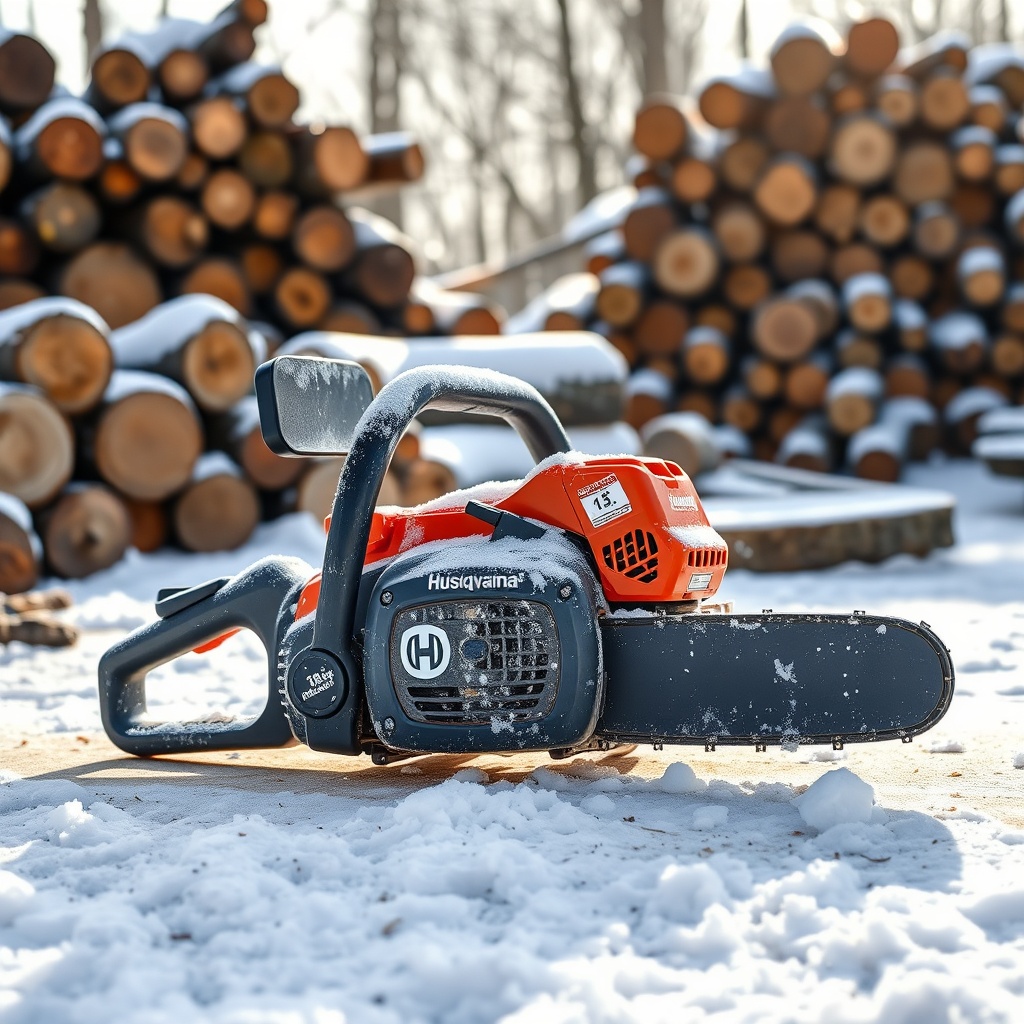
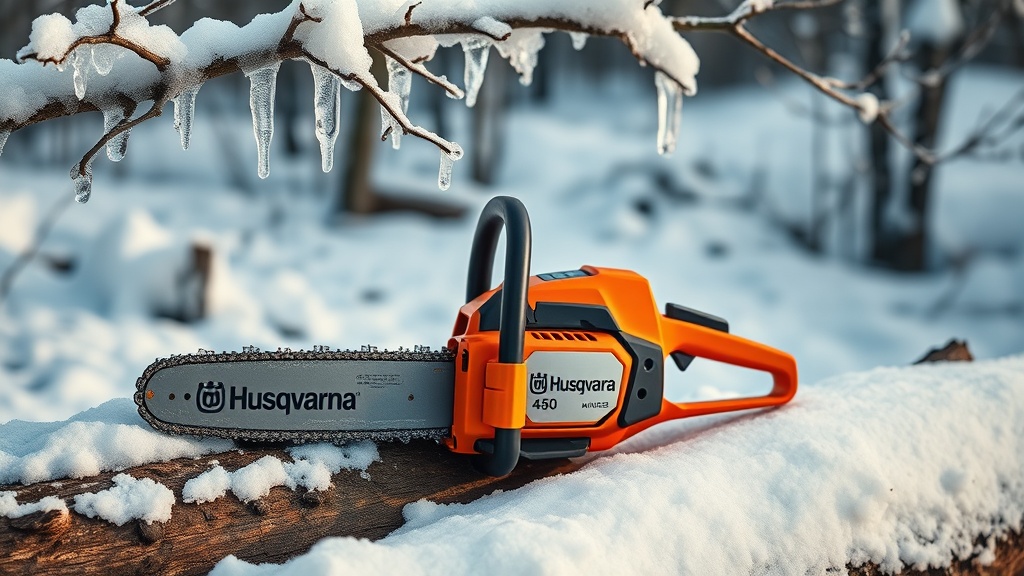
When winter storms blanket the region with heavy, wet snow and ice, tree limbs become dangerous projectiles. The Husqvarna 450 chainsaw is a reliable tool for emergency winter storm cleanup, offering the power and maneuverability needed to tackle icy debris. This article provides specific techniques for using the Husqvarna 450 in icy conditions, focusing on safety, efficiency, and cost-effective emergency tree services.
How do I prepare the Husqvarna 450 for icy conditions?
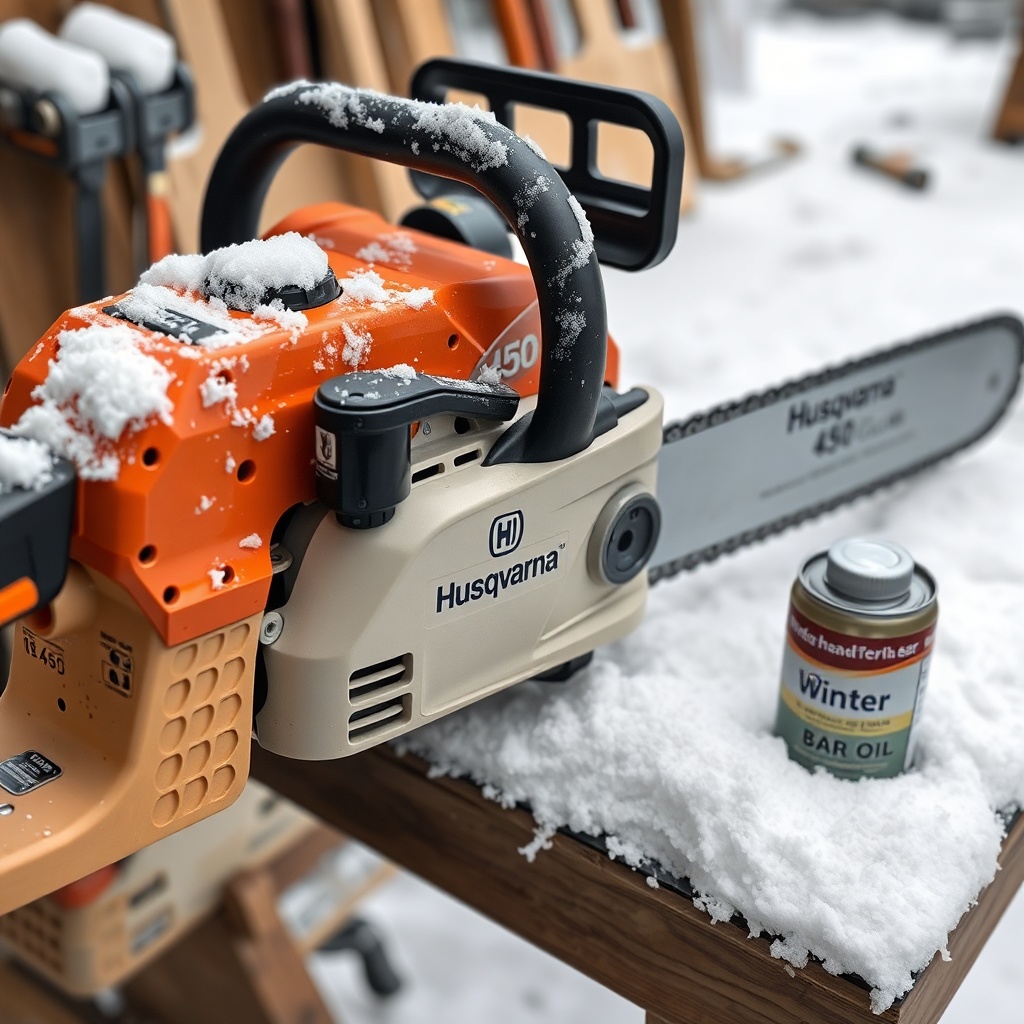
Proper preparation is critical for safe operation in freezing temperatures. Start by checking the chain tension: cold metal contracts, so adjust the chain slightly looser than normal to prevent binding or damage. Use winter-grade bar and chain oil (ISO 32 or 46) that remains fluid at low temperatures. Standard oil thickens in cold, starving the chain and causing excessive wear. Fill the oil reservoir with a quality winter oil, such as Husqvarna’s winter blend, which costs around £8.50 per litre in local UK suppliers.
Fuel mixture is equally important. Use fresh, ethanol-free 2-stroke mix (50:1 ratio) with a fuel stabiliser. Ethanol attracts moisture, which can freeze and clog the carburettor in sub-zero conditions. Keep the fuel can indoors or in a heated shed, and only refill the saw when the engine is cool to prevent vapour lock. For extended winter use, consider storing the saw in a warm vehicle between cutting sessions. A well-prepared Husqvarna 450 reduces startup time and minimises the risk of mechanical failure during an emergency tree removal after storm.
What cutting techniques work best on ice-laden branches?
Icy branches are brittle and prone to shattering unpredictably. Use a top-cutting technique (cutting from the top down) for smaller limbs under 10 cm in diameter. This prevents the chain from pinching as the branch bends under weight. For larger branches (10–20 cm), employ a three-cut method to control the fall: a shallow undercut on the bottom, a top cut slightly behind it, and a final relief cut to release tension. Always stand to the side of the cutting plane, never directly behind the branch.
Adjust the cutting depth by sharpening the chain with a 5/32-inch round file. A sharp chain reduces kickback and requires less force, which is vital when your hands are cold. For limbs tightly packed with ice, use a slow, steady pressure—don’t force the saw. If the chain bogs down, stop and clear ice from the bar groove and sprocket nose. A frozen chain can seize, damaging the drive links. Practice these techniques with a Husqvarna 450 limb removal guide to build muscle memory before the storm hits.
How do I safely handle falling ice and heavy snow load?
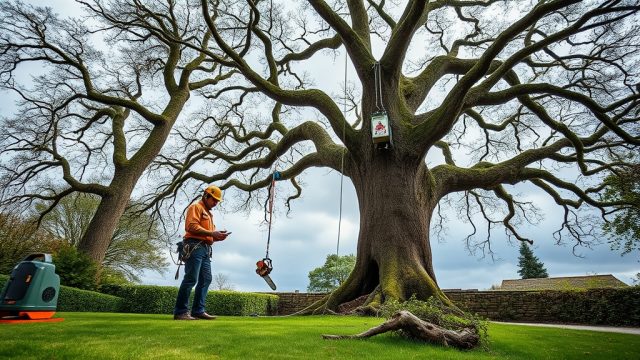
Severe weather brings the risk of falling ice sheets and snow loads from overhead branches. Before cutting, clear a safe escape route and watch for long ice columns that may slide off when the limb moves. Use a push pole or rope to shake the branch from a distance before approaching. Wear a hard hat with a visor—ice shards can travel at high velocity. For branches over 20 cm in diameter, use a felling wedge to prevent the saw from binding, especially if the branch is bent under heavy snow.
Work from the ground whenever possible. Avoid climbing snowy or icy trees; the traction is poor, and the Husqvarna 450’s weight (5.4 kg) makes balance difficult. If you must reach high limbs, use a long pole saw attachment or a bucket truck, but for DIY clearing, focus on accessible branches. The cost of a professional tree service for high-risk icy limbs can range from £150 to £400 per hour in the UK, making safe DIY work cost-effective, but only if you follow strict safety protocols. For a full cost perspective, see our Husqvarna 450 tree removal cost breakdown.
| Aspect | Icy Conditions | Dry Conditions |
|---|---|---|
| Chain tension | Looser (cold contraction) | Standard (per manual) |
| Oil type | Winter-grade (ISO 32–46) | Standard summer oil |
| Cutting speed | Slow, steady pressure | Normal pace |
| Brittleness risk | High (branch shattering) | Low |
| Kickback probability | Increased (ice on chain) | Standard |
| Safety gear needed | Hard hat, visor, spikes | Chaps, helmet, gloves |
How does the Husqvarna 450 compare to other saws for winter work?
In icy conditions, the Husqvarna 450’s X-Torq engine and low-vibration handlebars provide a distinct advantage over older models. The X-Torq design reduces fuel consumption by up to 20% compared to conventional engines, which means fewer refills in cold weather. The heated handles (standard on some versions) are a game-changer—they keep your hands warm, reducing fatigue and improving control. In contrast, the Echo CS-590, often compared to the 450, lacks heated handles and has a heavier build (5.9 kg vs. 5.4 kg). This extra weight can be cumbersome on wet, icy ground.
For DIY users, the Husqvarna 450 offers a better power-to-weight ratio (3.2 hp vs. 2.8 hp for the CS-590), making it easier to handle when cutting through ice-encrusted wood. However, the CS-590 has a slightly larger fuel tank (0.6 litres vs. 0.45 litres), which some users favour for extended jobs. Ultimately, the 450 is more nimble and user-friendly in tight, icy spaces. For a detailed side-by-side, see our Husqvarna 450 vs Echo CS-590 for DIY removal comparison.
What owners say
Owners of the Husqvarna 450 consistently praise its reliability in winter storms. John from Yorkshire shared: “After the February ice storm, I cleared three fallen oaks in six hours. The saw started on the first pull even at -5°C. The winter oil made a huge difference—no chain lockup.” Sarah from Scotland noted: “The heated handles saved me. I worked for two hours without numb fingers. My old Stihl couldn’t handle the cold as well.” Many report that the 450’s air filter system resists snow ingress, a common issue with other saws. Some owners suggest replacing the standard chain with a carbide-tipped model for cutting through ice-laden wood, but the stock chain works fine for occasional storm cleanup. Overall, the saw earns 4.6 out of 5 stars for winter performance across UK forums.