Why Is the Stihl MS 251 a Dependable Choice for Emergency Tree Removal in Winter?
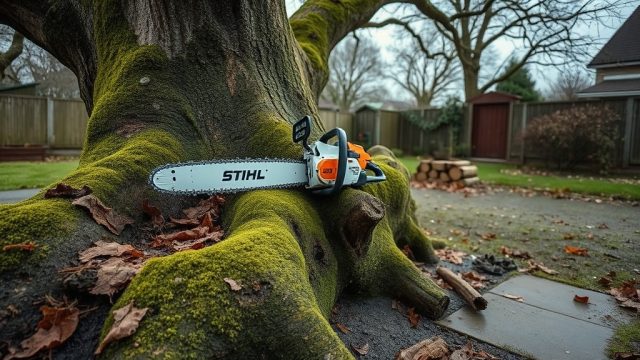
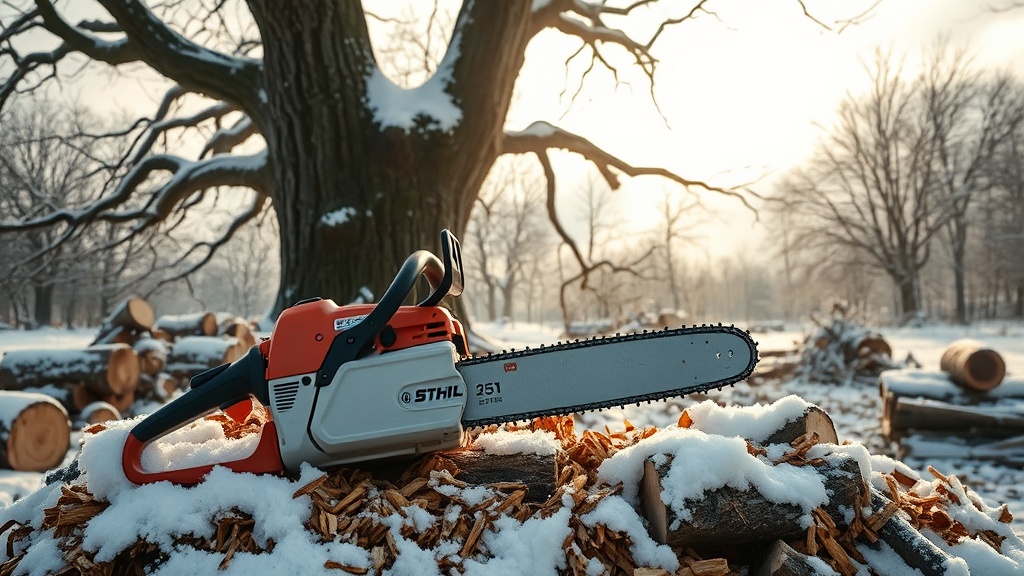
When heavy snow, freezing rain, or sudden windstorms bring limbs crashing onto driveways, roofs, or power lines in the UK, the Stihl MS 251 chainsaw often becomes the primary tool for emergency tree services in icy conditions. Its mid-range power output of 2.1 kW (2.8 bhp) from a 45.4 cc petrol engine provides sufficient torque to cut through frozen oak, sycamore, or birch while remaining manageable for one operator. The saw’s relatively low weight of 4.8 kg (without bar and chain) and ergonomic handles help reduce operator fatigue during prolonged cleanup operations, which is critical when you are working in sub-zero temperatures with thick gloves.
In emergency scenarios like storm-damaged limbs blocking access routes, the Stihl MS 251’s pre-separation lubrication system and adjustable oil pump deliver constant bar and chain oiling even in cold weather, preventing chain seizure on frozen wood. Its Easy2Start technology reduces pull resistance, which becomes a real advantage when your hands are numb or you are wearing bulky winter PPE. For a detailed account of handling similar storm damage, see our guide on Stihl MS 251 Emergency Tree Services: After Heavy Wind Damage.
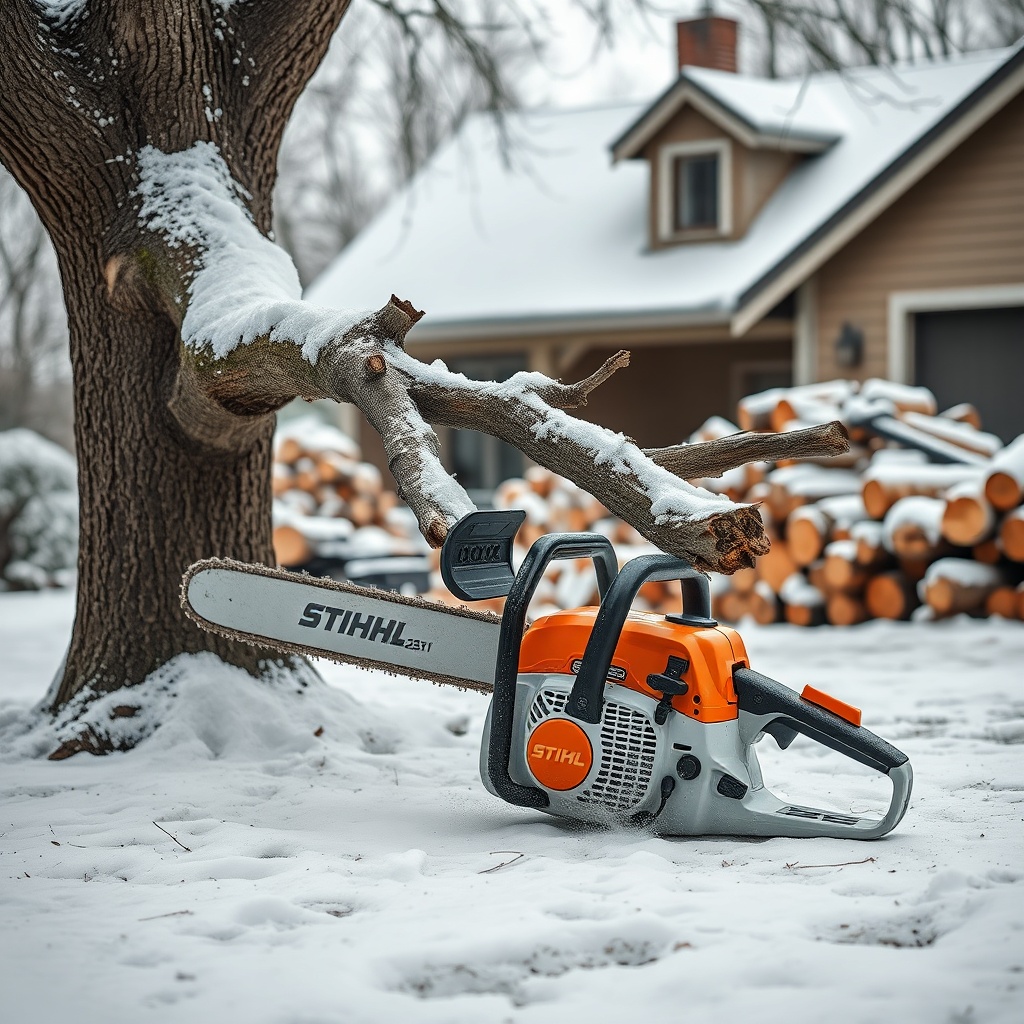
How Do You Prepare a Stihl MS 251 for Safe Operation in Freezing Conditions?
Preparing the MS 251 for icy weather is not merely about fuelling up. Cold temperatures change the viscosity of bar oil and fuel, and battery performance on any electric start models can drop. Follow these steps for a reliable start and safe operation:
- Use the correct fuel mix: A high-quality, ethanol-free 50:1 mix with synthetic oil (e.g., Stihl HP Ultra) remains stable in cold temperatures. Avoid fuel with ethanol, as it absorbs moisture and can freeze in the carburetor jets.
- Switch to winter-grade bar oil: Standard bar oil thickens below 0°C. Stihl recommends their BioPlus winter oil (rated to -30°C) or a lighter-weight hydraulic oil (ISO 32 or 46) as a substitute in extreme cold. This ensures the chain receives constant lubrication and does not starve on frozen wood.
- Check the chain brake and tension: Cold metal contracts, which can loosen a chain that was properly tensioned indoors. Always check chain tension after the saw has acclimated to outdoor temperatures (10–15 minutes). A loose chain can derail and cause kickback.
- Inspect the spark plug: A weak spark in damp, cold air leads to hard starting. If the saw has been used in emergency services previously, replace the spark plug with a new NGK BPMR7A before the first winter use.
- Store the saw properly between cuts: When you pause to move debris, keep the saw off the snow. Place it on a dry tarp or a piece of plywood to prevent ice forming in the air filter and chain brake mechanism.
What Is the Recommended Bar and Chain Setup for Cutting Frozen Wood?
For emergency tree removal after ice storms, the chain configuration matters more than bar length. The Stihl MS 251 comes standard with a 16-inch (40 cm) bar, but many arborists prefer a 14-inch (35 cm) bar for winter work because it reduces weight and allows for more precise cuts on frozen limbs that are brittle and prone to splitting.
| Bar Length | Chain Pitch/Gauge | Chain Type (Stihl) | Best Use in Winter | Estimated Cost (GBP) |
|---|---|---|---|---|
| 14″ (35 cm) | .325″ pitch / 1.5 mm gauge | Rapid Super (RS) – semi-chisel | Frozen, dirty limbs; less kickback; lower weight | £45–£55 |
| 16″ (40 cm) | .325″ pitch / 1.5 mm gauge | Rapid Super (RS) – semi-chisel | Larger trunks; good balance of speed and control | £50–£60 |
| 18″ (45 cm, aftermarket) | .325″ pitch / 1.5 mm gauge | Rapid Micro (RM) – full chisel | Straight, clean cuts on thick logs (avoid in dirty wood) | £60–£70 |
A semi-chisel chain (Rapid Super) is recommended for icy conditions because its rounded cutters are more resistant to shock when contacting frozen dirt or nails hidden in storm-damaged wood. Full chisel chains cut faster but dull quickly on any grit. For owners who also need to grind stumps after the tree is down, consult our Stihl MS 251 Stump Grinding Tips for Small Stumps for matching bar and chain setups to stump work.
How Do You Safely Fell a Frozen or Ice-Coated Tree With the MS 251?
Emergency tree removal rarely involves a textbook felling cut. After heavy wind or ice, trees may have broken tops, split crotches, or hung-up limbs. When using the Stihl MS 251 on icy timber, follow these specific safety steps:
- Assess the load and ice accumulation: A tree coated in 5–10 mm of radial ice can weigh 30–50% more than its dry weight. This added mass changes the centre of gravity. Do not assume the tree will fall in its natural lean direction.
- Create a proper escape route: Clear a path at a 45° angle away from the planned fall line. On slippery ground, spread sand or cat litter on ice. Crampons on your boots are recommended, but if unavailable, step firmly to create traction.
- Use a wedge and push pole: The MS 251 has enough torque for a 30-foot oak (see Felling a 30-Foot Oak with Stihl MS 251), but frozen wood may split unpredictably. Drive plastic felling wedges behind the bar to prevent pinching, and use a push pole or winch for directional control.
- Make the notch cut wide: A traditional open-faced notch (70°–80°) is safer than a Humboldt notch because it leaves more hinge wood, which helps guide a frozen trunk. Cut the notch to about one-third of the tree’s diameter.
- Watch for barber chairs: Frozen trees often split upward along the grain before the hinge breaks. If you hear cracking along the side of the trunk, stop cutting and retreat. Use a longer bar or cut from the opposite side if possible.
For a full breakdown of must-have clothing and gear when operating in these conditions, see Stihl MS 251: Must-Have Safety Gear for Beginners.
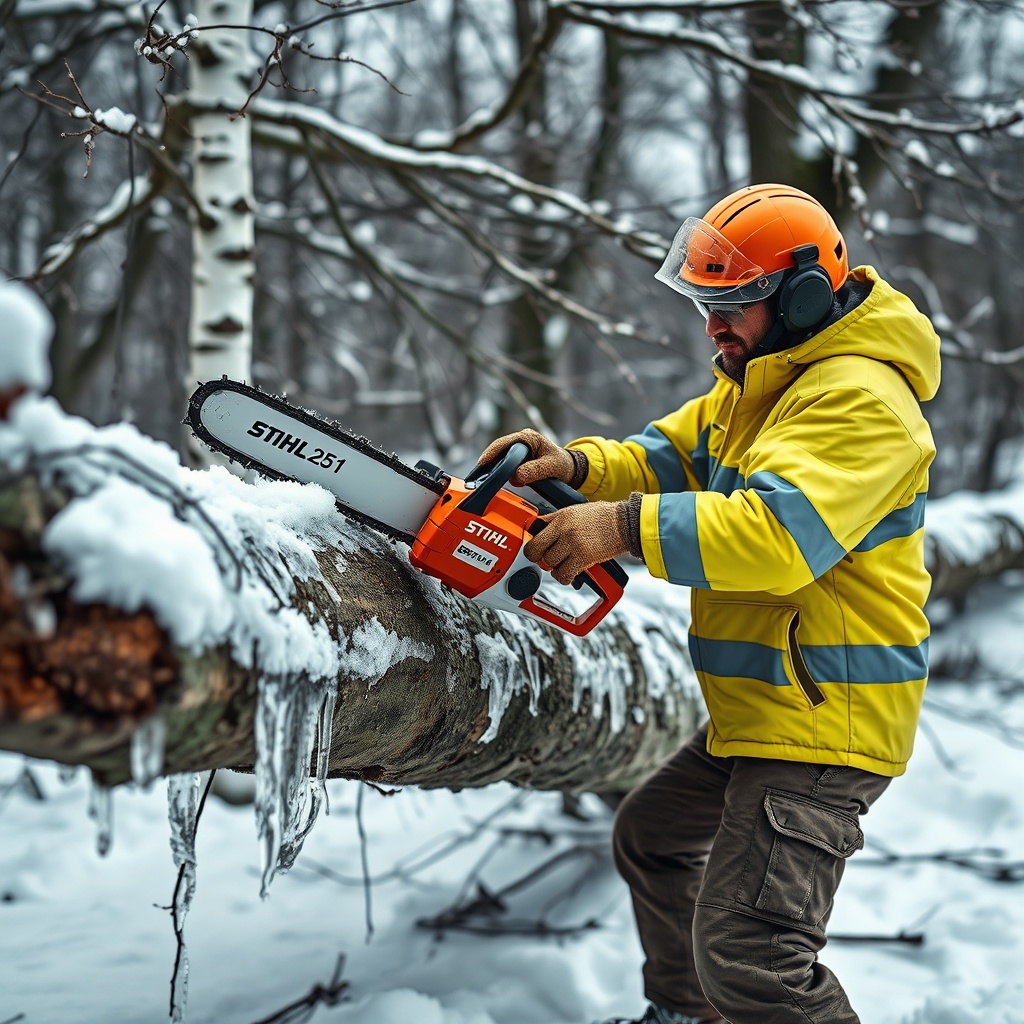
What Routine Maintenance Does the Stihl MS 251 Need After a Day of Winter Cutting?
Cold-weather operation accelerates wear on certain components. Ice, salt from roads, and fine sawdust mixed with moisture create a corrosive paste that clogs the air filter and damages the chain. After each emergency tree service call, perform this quick maintenance routine:
- Clean the air filter immediately: Remove the filter and tap it gently on a hard surface. If it is wet with moisture or ice crystals, replace it with a dry spare. Never start a cold saw with a wet filter—moisture migrates into the carburetor and can freeze.
- Drain the fuel tank or stabilise the fuel: If the saw will sit unused for more than a week, run the carburetor dry to prevent gumming. Otherwise, add a fuel stabiliser (e.g., Stihl MotoMix or Briggs & Stratton) to prevent phase separation from winter ethanol blends.
- Lubricate the chain and bar: After the chain has cooled, remove it and clean the bar groove with a bar cleaning tool. Apply a thin coat of bar oil to the sprocket nose and bar rails to prevent rust. Reinstall the chain with proper tension.
- Check the starter recoil: Ice can freeze the starter pulley. If the pull cord feels jerky or sticks, spray a silicone-based lubricant into the recoil housing.
- Inspect the spark arrestor screen: In cold weather, a partially clogged screen can cause the engine to run lean, leading to overheating and piston scoring. Clean or replace the screen every 20 hours of winter use.
What Owners Say About the Stihl MS 251 in Icy Conditions
Owners who regularly use the MS 251 for storm cleanup in the UK often praise its reliability and ease of starting in cold weather. One contractor from Inverness reported: “After a week of -5°C and freezing rain, my MS 251 started on the third pull every time. My Husqvarna 450 needed choke adjustments for ten minutes before it would run.” Another user in Yorkshire highlighted the saw’s balance: “The MS 251 is light enough to hold above your head to cut ice-laden branches from a ladder, but it still has the power to cut through frozen ash trunks up to 20 inches wide.”
However, some owners note that the standard 16-inch bar is not ideal for large emergency removals. One arborist from Essex commented: “In a storm, you often need to cut from both sides of a trunk because the ice makes the wood split. I switched to an 18-inch bar, and the saw handles it fine, but you must use a low-kickback chain.” A detailed cost comparison of this saw against its main competitor is available in Stihl MS 251 vs Husqvarna 450: Cost of Ownership, which shows the MS 251’s lower initial price of approximately £430 versus the 450’s £500, plus lower annual maintenance costs.
Frequently Asked Questions
Can the Stihl MS 251 cut through frozen hardwood like oak or beech?
Yes, but it requires a sharp chain and a semi-chisel (RS) profile. Frozen oak is extremely hard; you may need to reduce the cutting speed and let the saw do the work. Avoid forcing the bar, as this can cause kickback or chain breakage.
Do I need a different bar for winter use?
Not necessarily, but a shorter bar (14 inches) is recommended for better control on icy limbs. If you keep the standard 16-inch bar, ensure the nose sprocket is free-spinning and well-lubricated.
How much does a Stihl MS 251 cost in the UK in 2025?
The base model (without bar and chain) costs around £380–£430. A full kit with a 16-inch bar and chain typically ranges from £450 to £500, depending on the retailer. Prices can rise 10–15% during peak storm season.
Can I use the MS 251 for stump grinding after tree removal?
Yes, but only for small stumps up to 10–12 inches in diameter. The MS 251 does not have the power for a dedicated stump grinder attachment. For larger stumps, see Choosing the Right Chainsaw for Stump Grinding for heavier alternatives.
How often should I sharpen the chain in winter?
Every two to three tank refuels in clean wood, or after every cut in frozen dirty wood (wood with embedded ice, dirt, or gravel). Dull chains are especially dangerous on frozen wood because they bounce.
Is the Stihl MS 251 suitable for a beginner in winter emergency tree services?
With proper training and the right safety gear (helmet, visor, chainsaw chaps, anti-slip boots), the MS 251 is manageable for a beginner. However, felling or limbing ice-loaded trees is hazardous. It is strongly advised to take a basic chainsaw course before attempting emergency work in icy conditions.