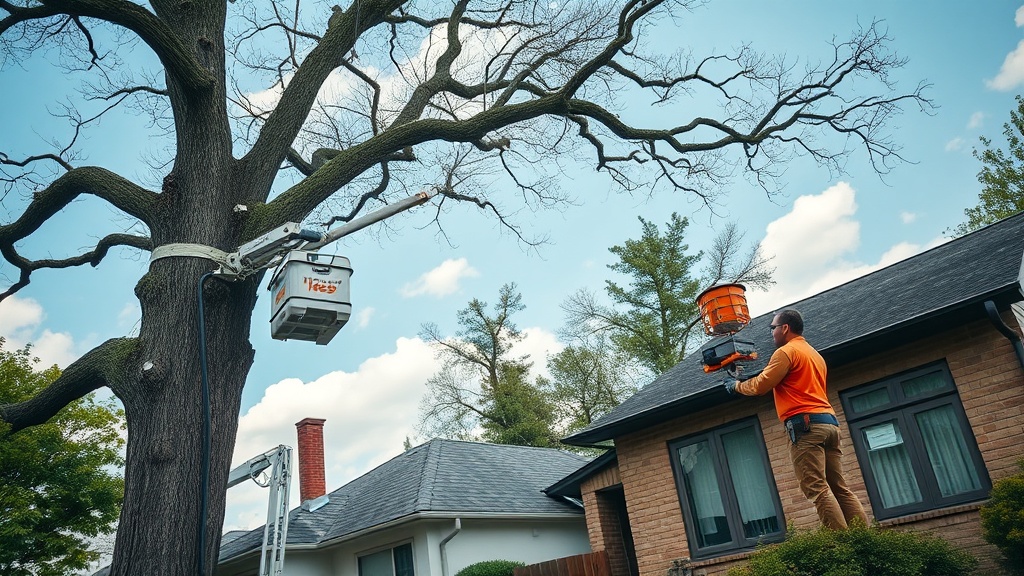
Hass Remote Tree Climbing System: Emergency Oak Removal After Storm
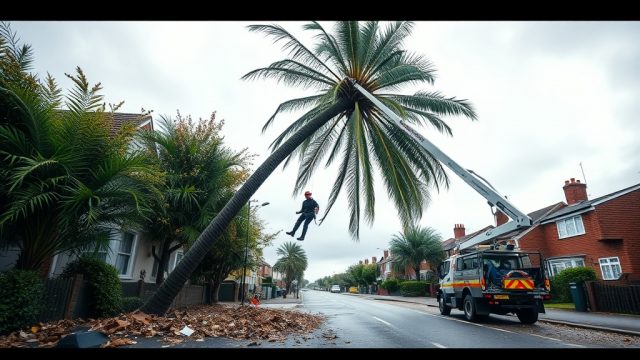
When a severe storm topples a century-old oak onto a home or roadway in the United Kingdom, time is the most critical factor. The Hass Remote Tree Climbing System offers a revolutionary approach to emergency tree services, allowing arborists to remove large, hazardous limbs without ever leaving the ground. This article examines how the system is deployed in high-stakes emergency oak removals, from initial assessment through final cleanup.
What Makes the Hass System Essential for Emergency Oak Work?
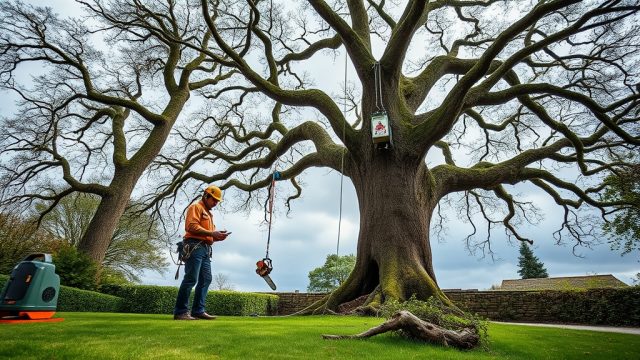
Emergency oak removals present unique challenges. Mature oaks can exceed 30 metres in height with trunk diameters over 1.5 metres, and their dense, heavy timber often becomes entangled with power lines, roofs, or other structures after a storm. The Hass Remote Tree Climbing System eliminates the need for a climber to ascend a compromised tree, drastically reducing risk. By using a remote-controlled carriage that travels up a static line, the operator can cut limbs from a safe distance, controlling the descent of each section with precision. This is particularly vital for storm-damaged oaks where structural integrity is unknown, as the system allows the arborist to remain on the ground while performing cuts that would otherwise require a risky ascent.
The system’s hydraulic cutting head can handle limbs up to 600 mm in diameter, and the remote control provides fine adjustment for angle and depth. In emergency contexts, this speed and accuracy can mean the difference between a same-day clearance and a multi-day operation that leaves a property exposed to further damage. For species-specific challenges like oak, the system’s ability to make clean, directional cuts is invaluable for controlling where heavy limbs fall, especially when working near buildings or infrastructure.
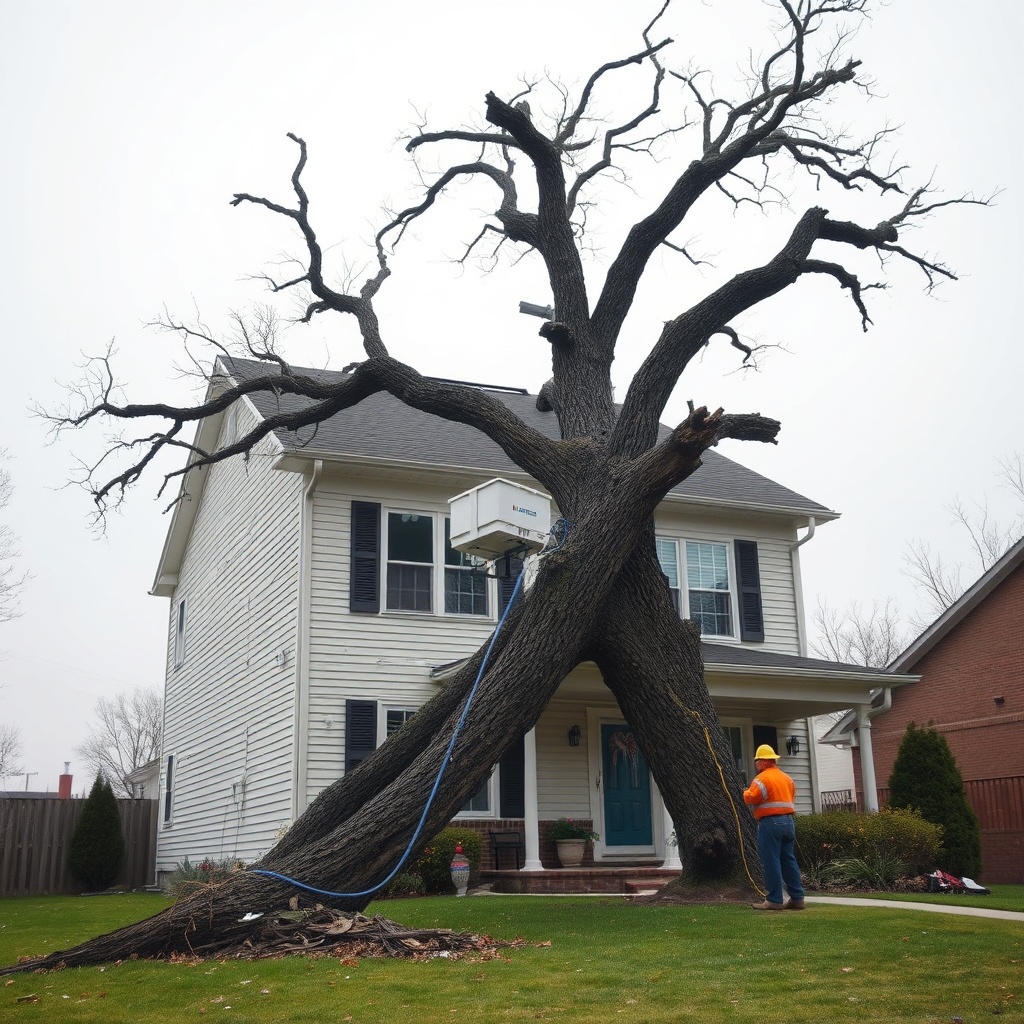
How Is the System Deployed in a Storm Response Scenario?
Deployment begins with a rapid site assessment. The arborist evaluates the tree’s lean, the location of hazards (utility lines, structures, people), and the condition of the root plate. For a storm-damaged oak, the priority is often to remove weight from the leaning side before any tension can cause a catastrophic failure. The Hass system requires two primary static lines: a climbing line for the carriage and a rigging line for lowering cut sections. These are installed using a throw line and weight, typically from a bucket truck or by a ground-based arborist using a pole saw to clear a pathway. Once the lines are set, the remote carriage is attached to the climbing line and connected to the hydraulic power unit on the ground.
The operator then uses the remote control to move the cutting head up the tree, stopping at each branch or section. For oak limbs under tension, the system’s articulating saw head allows for precise cuts that release stored energy gradually. Each cut section is lowered using the rigging line, with the ground crew guiding it away from hazards. The entire operation is managed from a single control station, allowing one arborist to focus on the cut while another manages the lowering line. This coordinated workflow is far safer than traditional methods where a climber must rely on memory and hand signals.
A typical emergency oak removal using the Hass system reduces ground crew size by up to 40% compared to manual climbing, and the operation can be completed in half the time for trees up to 25 metres. For larger oaks, the time savings are even more pronounced. The system also eliminates the need for a ground-based climber to ascend the tree, which is a significant safety advantage when the tree is unstable.
| Tree Parameter | Manual Climbing (hours) | Hass System (hours) | Cost Saving* |
|---|---|---|---|
| Oak, 20 m, storm-damaged, single limb lean | 6-8 | 3-4 | £400-£600 |
| Oak, 30 m, multiple limbs, near house | 10-14 | 5-7 | £800-£1,200 |
| Oak, 15 m, uprooted, on garage roof | 8-12 | 4-6 | £600-£900 |
*Estimated based on average UK arborist hourly rate of £60-£80. Savings include reduced crew size and shorter job duration.
Which Hazards Does the System Mitigate in Emergency Oak Removal?
Storm-damaged oaks often exhibit multiple hazards simultaneously. The most common include hung-up limbs (branches caught in other branches), split crotches, and root plate failure. Traditional climbing methods require the arborist to be physically present in the hazard zone, exposing them to falling debris, sudden limb drops, or the tree itself rolling or shifting. The Hass Remote Tree Climbing System mitigates these risks by keeping the operator at a distance. The remote control allows cuts to be made from up to 100 metres away, and the system’s camera provides a clear view of the cutting area on a handheld screen. This means the arborist never has to stand under the limb being cut.
Another critical hazard is stored kinetic energy in bent or twisted limbs. The Hass system’s hydraulic saw can make plunge cuts, which carefully release tension without causing the limb to snap unpredictably. For example, a limb that is bent under another branch can be cut from the inside out, allowing the energy to release slowly along the saw’s path. This is far safer than using a chainsaw from the ground, which typically requires cutting from the outside and can lead to bar pinch or kickback. Additionally, the system’s rigging line can be used to take the weight of a limb before the cut is completed, ensuring a controlled descent even if the limb breaks unexpectedly.
For oak trees that have partially uprooted, the system allows the arborist to work from the safe side of the hinge. The cutting head can be positioned on the opposite side of the trunk from the root plate failure, allowing the tree to be dismantled section by section without forcing the operator to work in the danger zone. This capability is a game-changer in emergency services, where every second counts and safety margins are thin. For professionals looking to deepen their understanding of these techniques, advanced felling techniques that complement the Hass system are well-documented.
What Are the Operational Costs for Emergency Response?
The Hass Remote Tree Climbing System represents a significant capital investment for any tree care business, with a complete setup (carriage, remote control, hydraulic power unit, saw head, rigging lines) costing between £12,000 and £18,000 depending on the model and accessories. For emergency services, however, the return on investment can be rapid. The system’s ability to complete jobs faster means more emergency calls can be handled per day, and the reduced crew size (typically one less ground worker) saves approximately £200-£300 per day in labour costs.
Operational costs per job include fuel for the hydraulic power unit (petrol or diesel, approximately £15-£30 per day of use), maintenance of the cutting chain (sharpening every 2-3 hours of cutting, £20-£40 per job), and occasional replacement of wear items like spur gears and bearings (annual cost around £500-£800). Insurance premiums may be slightly higher for businesses using remote cutting systems, but many insurers offer discounts for the reduced injury risk. Overall, a business that handles 2-3 emergency oak removals per month can recoup the investment in 12-18 months. For a detailed breakdown, see cost of ownership for professionals.
Effective limb management is also essential for efficiency. For tall pines, the system’s approach differs slightly, but the principles of remote cutting and controlled lowering remain the same. For those interested in adapting these techniques for other conifers, efficient limb management for tall pines offers valuable insights. In the context of emergency oak work, the ability to quickly clear a blocked driveway or roof access is often the metric by which clients judge a service, and the Hass system delivers consistently.
What Owners Say About the Hass System in Emergencies
Tree surgeons and emergency service managers who have used the Hass system for storm-damaged oaks universally praise its safety and speed. Marcus R., a tree surgeon from Kent, reports: “We had a 25-metre oak leaning over a primary school playground after a winter storm. Traditional climbing was out of the question—the root plate was lifting. With the Hass, we dismantled the tree in four hours, working from the safe side. The ground crew was half the usual size, and we didn’t need a cherry picker. The school reopened the next day.” Sarah L., who manages emergency tree services for a county council, adds: “We’ve used the system for three major storm events now. The reduction in manual handling injuries alone has been noticeable. The operators feel much more secure, and the public sees a professional, controlled operation. It’s worth every penny.”
Another common theme among owners is the reduction in property damage. When a large oak limb is cut manually, the risk of it swinging into a structure is ever-present. The Hass system’s ability to lower each section vertically eliminates this. David P., an independent arborist in Devon, comments: “I’ve done dozens of emergency oaks the old way. After using the Hass, I’d never go back. The control you have over each cut is unbelievable. We removed a massive limb that was wedged into a conservatory—not a single piece of glass broke. The client was ecstatic.” However, some owners note that the system requires regular maintenance and a solid understanding of rigging physics. It is not a plug-and-play tool; operators must be trained in mechanical advantage and load distribution. Still, those who make the investment find it indispensable for high-value emergency work, especially when combined with effective post-removal site management, such as stump grinding after tree removal.
Frequently Asked Questions
1. How quickly can the Hass system be set up for an emergency call?
Most arborists can set up the system within 15-20 minutes on site if the tree is accessible. This includes installing the static lines, connecting the hydraulic power unit, and calibrating the remote control. For storm-damaged oaks, additional time may be needed to ensure the area is cleared of debris and that no hidden hazards (e.g., power lines were not visible initially) are present.
2. What is the maximum limb diameter the Hass saw head can handle?
The standard Hass saw head can cut limbs up to 600 mm (approximately 24 inches) in diameter. Specially configured models can handle up to 750 mm with extended bar and chain, but these are less common due to increased weight and reduced maneuverability. For oaks, this covers nearly all emergency removal scenarios involving individual limbs.
3. Does the system require a ground-based climber as backup?
No, one of the primary advantages of the Hass system is that it eliminates the need for a climber to ascend the tree. However, a ground crew is still needed to manage the rigging lines and guide cut sections. The system is designed for a two-person team: one operator and one ground assistant. In very complex situations (e.g., multiple hung limbs), an additional ground worker may be helpful but not required.
4. Can the system be used for trees that are completely uprooted?
Yes, but with caution. For a tree that has fallen entirely onto a structure or the ground, the system can be set up by attaching lines to the trunk or major limbs that remain attached. The remote carriage can then traverse the fallen tree, allowing the operator to cut it into manageable sections from a safe distance. This is often faster and safer than using a chainsaw on the ground, as the operator can avoid the unstable sections of the tree.
5. What training is required to operate the Hass system?
Manufacturer training typically takes 1-2 days and covers system assembly, operation, maintenance, and emergency shut-down procedures. Additionally, operators must have a solid foundation in tree rigging and arboricultural techniques. Many professional arborists complete a specific advanced felling techniques course to maximize the system’s potential. Certification is recommended but not legally required in the UK for remote cutting systems.
6. How does the system perform in wet weather, which is common during storms?
The Hass system is weather-resistant, with sealed electronics and a waterproof remote control. However, wet wood can be more difficult to cut, requiring slower chain speeds and more frequent sharpening. The system’s hydraulic power unit should be kept dry and, if possible, operated under a temporary canopy. Arborists should also exercise extra caution with rigging lines in wet conditions, as knots can slip more easily. Overall, the system remains fully functional in rain, but cutting efficiency may decrease by 10-20% in very wet wood.