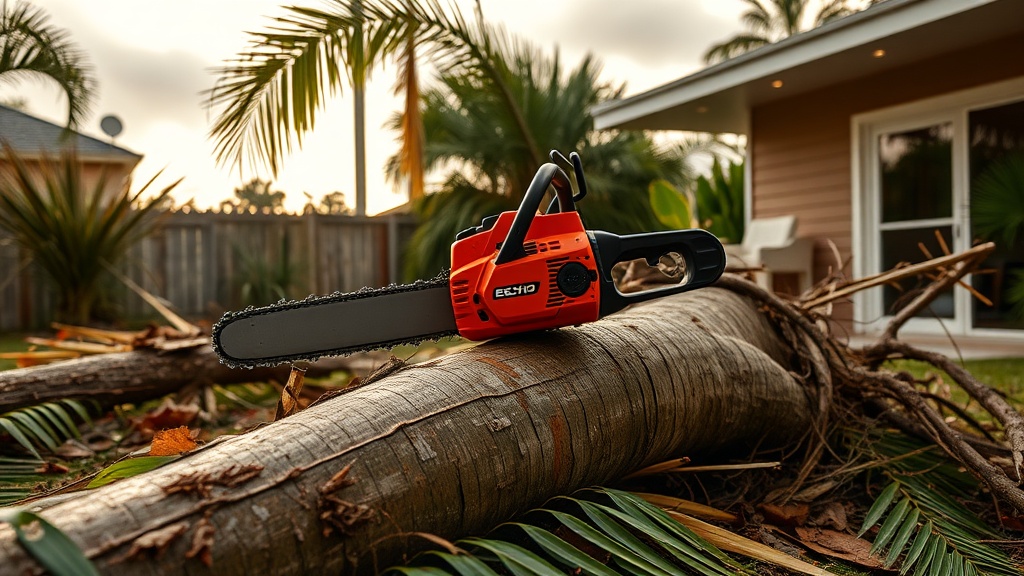
Echo CS-590: Removing Palm Trees Safely After a Storm
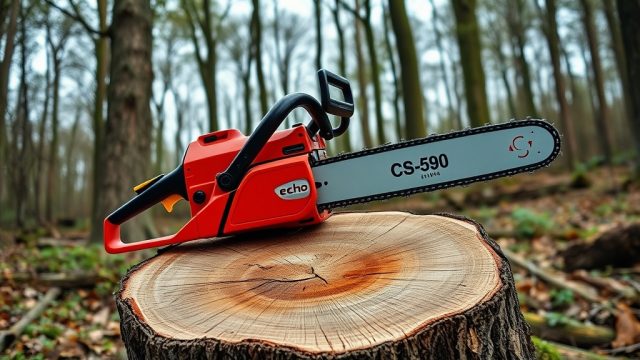
When a severe storm strikes, palm trees can become hazardous, with broken fronds, snapped trunks, or uprooted root balls. The Echo CS-590 chainsaw offers the power and reliability needed to handle storm-damaged palms efficiently. This article provides a species-specific guide to safely removing palm trees, using the CS-590, with a focus on post-storm scenarios.
Palm trees present unique challenges compared to hardwood species: their fibrous, water-laden trunks require specific cutting techniques. The Echo CS-590, with its 59.8 cc engine and 20-inch bar, is a capable tool for this job, but proper preparation and safety protocols are essential. Let’s explore the key considerations for using this saw in palm removal after a storm.
Why Is the Echo CS-590 Suitable for Storm-Damaged Palm Removal?
Storm-damaged palms often have compromised structural integrity, making cutting unpredictable. The Echo CS-590 delivers sufficient torque to slice through dense, wet palm fiber without bogging down. Its 3.5-horsepower engine ensures consistent chain speed, while the 20-inch bar length is ideal for most palm trunk diameters (typically 12–18 inches for common species like Washingtonia or Queen palms).
Key features that benefit palm removal include the i-30 starting system for quick restarts (useful when clearing multiple storm-fallen trees) and the side-access chain tensioner for rapid adjustments after hitting soil or debris. However, the saw’s weight (12.9 lbs without bar and chain) requires good physical conditioning, especially when working overhead or in awkward positions. For beginners, refer to Echo CS-590: Recommended Safety Gear for Beginners for proper protective equipment recommendations.
How Should You Assess a Storm-Damaged Palm Before Cutting?
Before activating the Echo CS-590, conduct a thorough risk assessment. Palm trunks are not solid wood; they consist of a thin outer shell and a soft, fibrous interior with vascular bundles. After a storm, these trunks may be cracked, split, or leaning dangerously. Look for these warning signs:
- Fractured Crown: A palm crown that is partially severed indicates the tree is ready to fall unpredictably.
- Leaning at Over 15 Degrees: A storm-damaged palm leaning more than 15 degrees from vertical may have broken root-stem connections.
- Hanging Fronds: While not part of the trunk, heavy, water-laden fronds can fall suddenly and cause injury.
- Adjacent Hazards: Power lines, fence posts, or structures can complicate removal.
For leaning palms, consider the wind direction and gravity’s pull. Use a forward lean (toward the intended fall path) to your advantage. If the palm is on a slight slope, its weight may cause a rapid shift. Always plan two escape routes (45-degree angles away from the fall path).
What Is the Correct Cutting Technique for Palm Trunks With the Echo CS-590?
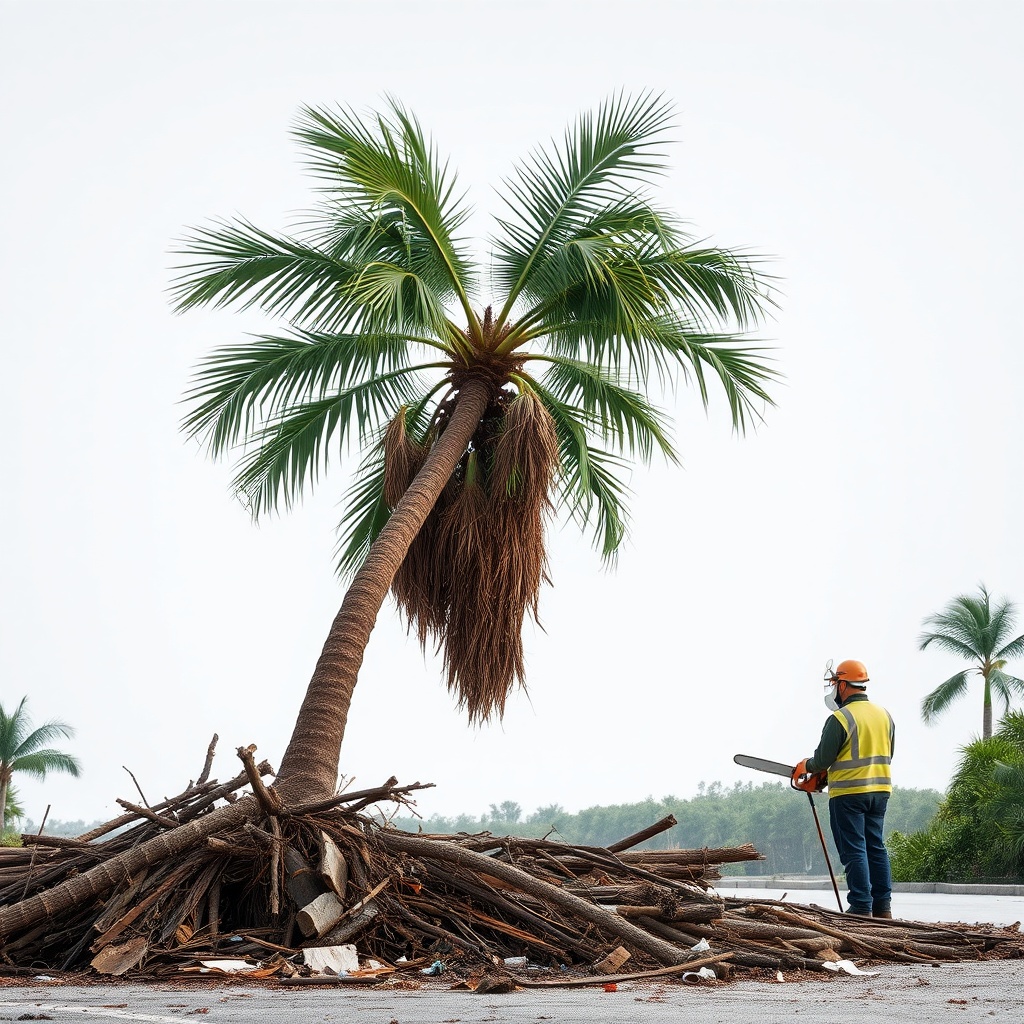
Palm trunks require a different felling method than hardwoods. Due to their fibrous nature, palms do not split or hinge like oak or maple. Instead, they tend to crush or splinter under compression. Use the following step-by-step approach with your Echo CS-590:
- Step 1: Clear the Work Area – Remove loose fronds and debris around the base. The saw’s chain can catch on palm thatch, so clear a 3-foot radius.
- Step 2: Make a Horizontal Undercut – Cut a notch about one-third into the trunk diameter, on the side you want the palm to fall. Keep the chain moving steadily; do not let the saw drop into the fiber.
- Step 3: Perform a Back Cut – From the opposite side, cut slightly above the undercut’s level. Leave a small hinge of fiber (about 1–2 inches) to guide the fall.
- Step 4: Use a Wedge if Needed – For palms that lean away from the fall path, insert a plastic or aluminum wedge into the back cut and tap it in gently while cutting. Avoid metal wedges with the Echo CS-590, as they can dull the chain.
- Step 5: Retreat Quickly – As the palm starts to fall, move away along your escape route. The trunk will drop straight down or tilt, often with minimal rotation compared to hardwoods.
After felling, cut the palm into manageable sections (3–4 feet long) for removal. The Echo CS-590 can handle this easily. For storm damage recovery involving multiple fallen palms, see Echo CS-590 Storm Damage Recovery: Safe Practices for additional protocols.
What Safety Hazards Are Specific to Palm Removal After a Storm?
Palm removal after a storm introduces hazards beyond typical tree work. Here are the primary risks and how to mitigate them with the Echo CS-590:
| Hazard | Description | Mitigation with Echo CS-590 |
|---|---|---|
| Wet, Slippery Fronds | Storm-soaked fronds hang low and can fall onto operator. | Use a pair of long-handled loppers or a pole pruner to remove fronds first; avoid cutting above shoulder height with the chainsaw. |
| Buried Debris | Twigs, stones, or metal objects may be embedded in trunk after storm. | Inspect trunk visually; use a stump grinder or spade to clear base before cutting. Replace chain if damaged. |
| Spring-Back from Fiber | Palm fibers can compress and snap back when cut, throwing debris. | Stand to one side of the cut; wear full protective gear including face mesh and hearing protection. |
| Irregular Fall Path | Storm damage may cause palm to fall sideways or rotate. | Use a rope if necessary; for large palms, consult a professional arborist. |
Additionally, the Echo CS-590’s chain brake should be engaged whenever moving between cuts. Storm-damaged palms can have hidden cracks that release suddenly, causing kickback. Always ensure the chain is sharp and tensioned correctly—dull chains increase the risk of binding in fibrous wood.
How Should You Dispose of Palm Waste Safely After Cutting?
Once you have felled the palm and cut it into sections with the Echo CS-590, disposal requires careful handling. Palm trunks weigh significantly more than hardwood due to their high water content—a 20-foot Queen palm section can weigh 400–600 lbs (180–270 kg). Here are best practices:
- Segregate Fronds and Trunk Pieces: Fronds can be chipped or bundled for green waste collection. Trunk sections may require splitting with a splitter or long-term drying.
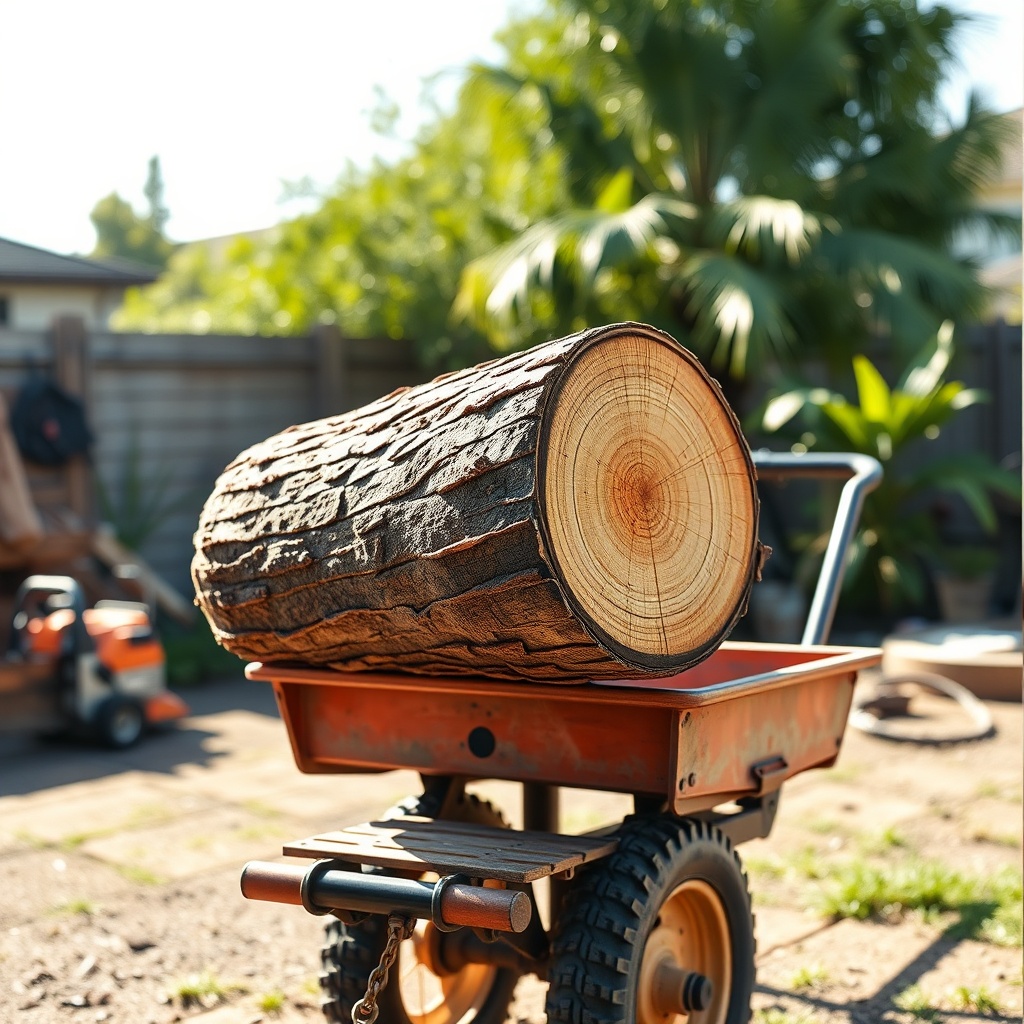
- Use a Hand Truck or Dolly: For moving trunk rings, use a sturdy hand truck. Do not rely on carrying them alone.
- Consider Stump Grinding: After removal, the palm stump (if left) can be ground out. For tips on this, see Echo CS-590 Stump Grinding Tips for Smooth Removal.
- Check Local Regulations: Some municipalities require special disposal for palm waste due to pest risks (e.g., palm weevils).
If the storm damage is extensive, renting a chipper specifically designed for palm fibers may be beneficial. The Echo CS-590 can cut palm into small enough pieces for standard yard waste bins, but consider the weight of each piece—aim for 18–24 inch lengths to keep each segment below 50 lbs (23 kg).
What Do Owners Say About Using the Echo CS-590 for Palm Removal?
User feedback on platforms like ArboristSite and chainsaw forums highlights the Echo CS-590’s suitability for palm work. Many owners praise its reliability in wet conditions (common after storms) and its ability to cut through dense palm fiber without overheating. One reviewer from Florida noted: “Four storm-fallen palms in one morning, no issues with the CS-590. The 20-inch bar handles the largest trunks I’ve encountered—Washingtonias up to 18 inches.” Another owner from Texas emphasized the importance of sharpening: “Palm fiber dulls the chain faster than pine. I keep a flat file in my truck for quick touch-ups between cuts.”
Common negatives include the saw’s weight when used for extended periods and the need for regular air filter cleaning due to palm debris. For winter conditions (like oak removal in icy zones), one user found the CS-590 less ideal, preferring a lighter saw for overhead cuts; see Echo CS-590: Winter Oak Removal Techniques for Icy Conditions for comparison. Overall, owners rate it 4.5 out of 5 stars for storm recovery.
Frequently Asked Questions
1. Can the Echo CS-590 cut through a palm tree with a 24-inch diameter trunk?
Yes, but with limitations. The 20-inch bar can reach through most 24-inch trunks if cut from both sides. For larger palms, a longer bar (up to 24 inches) is available, but this may reduce torque. Always make a shallow notch first.
2. How often should I sharpen the chain when cutting storm-damaged palms?
Every 1–2 tank refills. Palm fiber contains silica and dirt, which accelerate chain wear. Use a file guide and inspect the chain visually after each cut. A dull chain increases fuel consumption and risk of kickback.
3. Is the Echo CS-590 safe for cutting leaning palms near houses?
Only with proper planning. The saw’s power allows for precise hinge cuts, but leaning palms require rope guidance or professional assistance if they are within two tree-lengths of a structure. Never cut while standing directly under the lean.
4. What is the cost of hiring a professional palm removal service versus using the Echo CS-590?
Professional removal for a single storm-damaged palm costs $250–$600 AUD (£150–£350 GBP / $175–$425 USD) depending on height and danger. The Echo CS-590 retails for about $429 USD (£340 GBP). If you remove 2–3 palms, the saw pays for itself. See our cost analysis for details.
5. Should I remove the fronds before felling a storm-damaged palm?
Yes, ideally. Heavy fronds can cause the trunk to twist or become unbalanced during cutting. Use a pole pruner or ladder and pruners to remove fronds, working from ground level upward. Do not climb the tree with a chainsaw.
6. Can the Echo CS-590 be used for palm stump grinding?
No, the chainsaw is not designed for grinding. After felling, cut the stump as low as possible (2–4 inches above ground) and consider using a dedicated stump grinder or renting one. For tips, see our stump grinding guide.