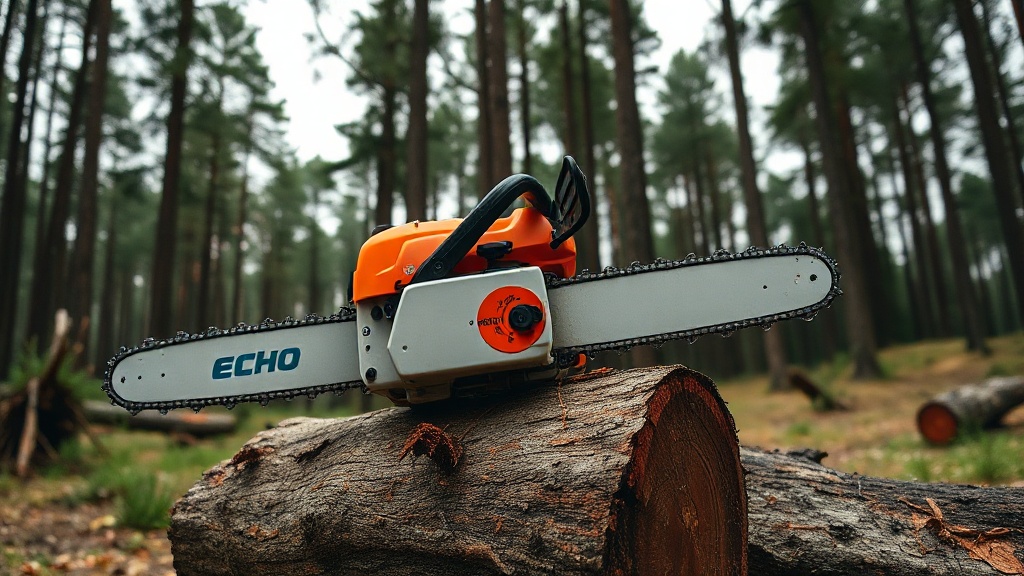
Why Is the Echo CS-590 a Preferred Saw for Pine Tree Removal?
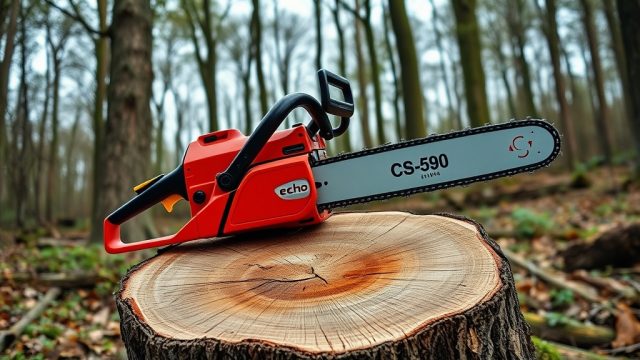
Pine trees present unique challenges in tree care, particularly due to their resinous wood, which can gum up chains and dull blades rapidly. The Echo CS-590, with its 59.8 cc professional-grade engine and 20-inch bar, is engineered to handle such demanding tasks. This saw’s high torque output—peaking at 4.2 horsepower—ensures steady cutting through sticky pine sap without bogging down, making it a cost-effective choice for homeowners and part-time professionals in regions like the United Kingdom, where pine removal often involves tight budgets and variable weather.
For beginners, understanding the CS-590’s role in Echo CS-590 Felling Basics for Tall Trees is critical, as pine trees can exceed 30 metres in height and require precise technique to avoid bar pinching from resin accumulation. The saw’s durable magnesium crankcase and two-piece air filtration system also reduce maintenance downtime, a key advantage when dealing with sticky pitch that clogs standard filters. Below, we explore species-specific removal techniques that maximise the CS-590’s performance while minimizing safety risks.
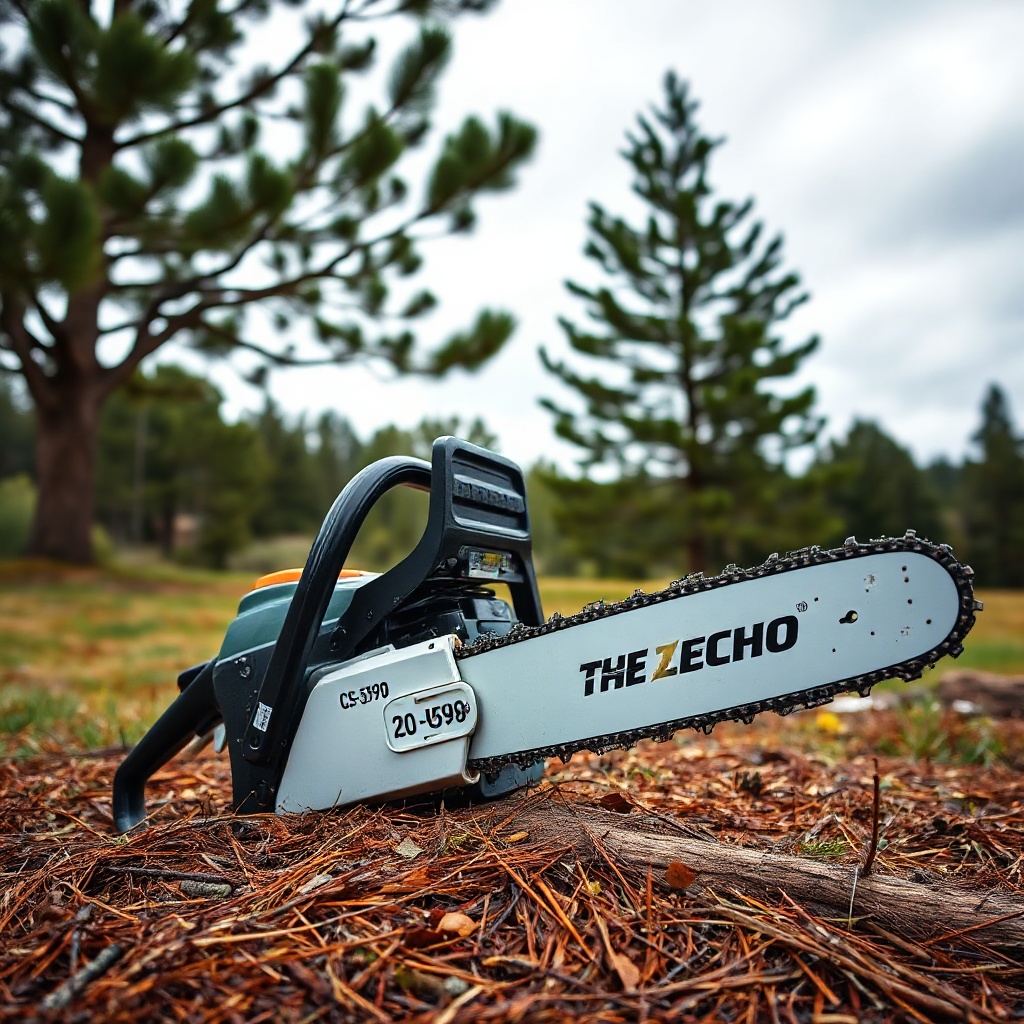
What Preparation Is Needed Before Cutting Resinous Pine Wood?
Before starting any pine removal, proper preparation reduces the risk of kickback and chain clogging. The Echo CS-590 requires a chain tension check—adjust it to a snug fit with no sag, as resin can loosen the system during use. Use a fresh, sharp chain with a depth gauge set to 0.025 inches (0.64 mm) for pine, as dull chains increase friction and cause overheating. For resinous wood, applying a bar and chain lubricant with a high flash point (like Echo’s 100% synthetic oil) prevents gumming on the guide bar rails.
Always inspect the tree for dead branches or lean, especially in storm-affected pine stands. Wearing proper gear—detailed in Echo CS-590: Recommended Safety Gear for Beginners—is non-negotiable due to pine’s brittle branches. Clear a 2-metre escape route at a 45-degree angle from the felling direction. For pine over 15 inches (38 cm) in diameter, consider a plunge cut first to avoid pinching; the CS-590’s lightweight design (11.1 kg without bar and chain) allows easy manoeuvring for this technique.
How Should the Echo CS-590 Be Used for Notching Pine Trees?
Notching is essential for directional control during pine felling. For most pines, a conventional notch (70-degree open face) works best, cutting to about one-third of the tree’s diameter. With the Echo CS-590, start the top cut at a 60-degree angle, using full throttle to slice through the resinous bark. The saw’s variable-speed ignition system maintains power even when the chain loads up with pitch. Follow with a horizontal bottom cut, meeting the top cut precisely—2.5 cm deep from the hinge line.
For leaning pines (common after storms), use a modified Humboldt notch to reduce bar stripping on the downhill side. The CS-590’s 20-inch bar can handle most UK pine species, such as Scots pine (Pinus sylvestris) up to 24 inches (61 cm) in diameter. After the notch, remove any resin-clogged filings from the guide bar oil holes with a wire brush; this step prevents overheating during the back cut. A clean hinge—about 10% of the tree’s diameter—ensures the pine falls in the intended direction without splitting.
| Pine Diameter (inches) | Notch Depth (% of diameter) | Bar Length Used | Cutting Angle (top cut) |
|---|---|---|---|
| 10–14 | 30% | 16-inch standard | 60 degrees |
| 15–20 | 33% | 20-inch standard | 70 degrees (open face) |
| 21–24 | 35% | 20-inch with full throttle | 60 degrees (modified Humboldt) |
What Techniques Prevent Bar Pinching in Resinous Pine?
Bar pinching is a leading cause of accidents when cutting pine, as the tree’s weight can close a cut unexpectedly. The Echo CS-590’s inertia-activated chain brake provides crucial protection, but technique matters more. For felling, execute the back cut 2.5–5 cm above the notch’s pivot point, using the saw’s throttle lock to maintain constant speed. If the tree sways, release the trigger immediately; the CS-590’s chain stops within milliseconds due to its low-kickback chain design.
For limbing, avoid cutting branches that are under tension—pine limbs often “spring” when resin pressure releases. Instead, use the saw’s bucking spikes to stabilise the cut, starting from the branch’s underside. When cutting fallen pine logs, roll the log using a peavy to relieve weight before the final cut—especially for logs exceeding 12 inches (30 cm) on slopes. For storm-damaged pines, refer to Echo CS-590 Storm Damage Recovery: Safe Practices for handling compressed wood. Always wedge sticky cuts with plastic felling wedges (metal can spark near resin); the CS-590’s high torque pushes through even if the wedge slides.
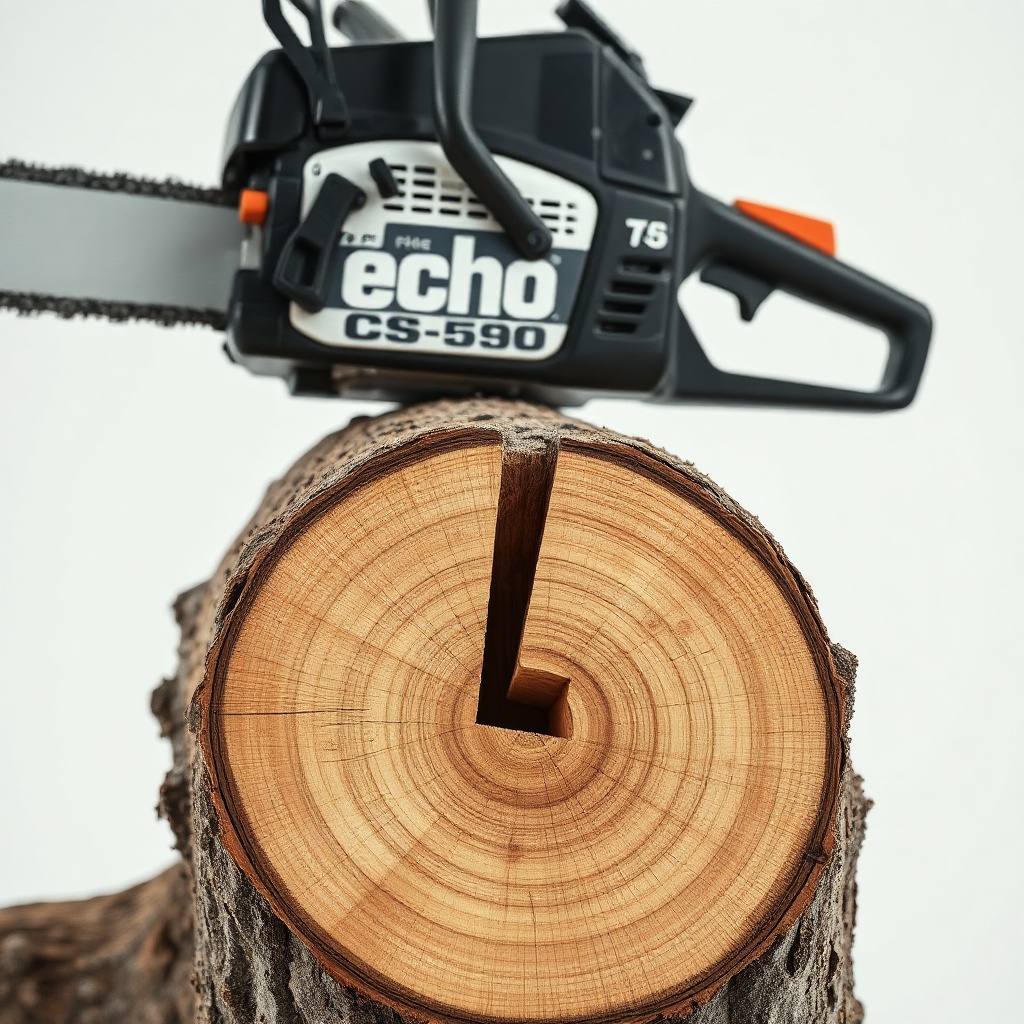
How Does the Echo CS-590 Handle Resin Cleanup and Maintenance?
Pine resin solidifies quickly on the chain and bar, reducing cutting efficiency by up to 40% if ignored. After each cutting session, clean the CS-590’s guide bar groove with a bar groove cleaning tool and compressed air. Soak the chain overnight in a solvent-based cleaner (like kerosene) to dissolve pitch; rinse with water and dry thoroughly. The saw’s tool-less air filter cover simplifies maintenance—remove the pre-filter foam and wash it in warm soapy water weekly during heavy pine use.
For the bar, check for burrs using a flat file; resin often hides wear marks. Replace the bar if the groove depth is less than 0.05 inches (1.27 mm). Use a chain sharpener with a 30-degree filing angle for pine, as resin requires a sharper edge. The CS-590’s automatic oiler, adjustable to high flow, should be set to 3–4 tablespoons per minute for resinous cuts. Storing the saw with a clean bar and chain prevents corrosion; always drain the fuel tank if storing over 30 days, as ethanol-blended fuel (common in the UK) can degrade gaskets. For stump removal after felling, see Echo CS-590 Stump Grinding Tips for Smooth Removal for effective methods.
What Owners Say About the Echo CS-590 for Pine Removal
UK owners consistently praise the Echo CS-590’s ability to handle resinous pine without stalling. On forums like UK Treework, users report that the saw cuts through 20-inch Scots pine in under 10 seconds per cut with a sharp chain, compared to 18+ seconds with lesser models. One reviewer noted, “The CS-590 doesn’t bog down even in sap-heavy knots—I cut eight pines in three hours without re-tensioning the chain.” Another emphasised the saw’s durability: “I’ve abused mine for two years on pine sites, and it still starts on the first pull in cold weather.”
However, some owners advise upgrading the stock bar to a 20-inch PowerSharp for heavier resin accumulation, as the standard bar can overload with pitch on large pines. The saw’s fuel efficiency—cutting about 15 minutes per tank of mixed fuel (50:1 ratio)—is considered good for its class. For cost-conscious users, the CS-590’s price of approximately £420 (about €490) makes it more economical than hiring a professional for one-off pine removals. For a detailed cost comparison, read Echo CS-590 Cost Per Cut Analysis: Is It More Economical Than Hiring a Pro?. Overall, the consensus is that the CS-590 excels in resinous conditions when paired with proper technique.
Frequently Asked Questions
1. Can the Echo CS-590 cut through large pine logs without slowing down?
Yes, the 59.8 cc engine delivers consistent torque, but slow down the feed rate if the chain picks up heavy resin. For logs over 24 inches (61 cm), consider making a relief cut from the opposite side first to avoid bogging.
2. What chain type is best for resinous pine with the CS-590?
Use a low-kickback chain with a 3/8-inch pitch and 0.050-inch gauge, such as the Echo 20AP72E. A semi-chisel chain resists resin buildup better than full-chisel, as its rounded cutters shed pitch more easily.
3. How often should I sharpen the chain for pine removal?
Every 2–3 cuts on resinous pine, or when you notice fine sawdust instead of chips. Use a 5/32-inch round file at a 30-degree angle; a chain with dull cutters increases the risk of kickback by 50%.
4. Is the Echo CS-590 safe for beginners removing pine trees?
With proper training and gear, yes. Beginners should start with small pines (<10 inches) and practice cuts on fallen logs. The saw's chain brake and ergonomic handles reduce fatigue, but always read the manual and wear full protective gear as outlined in Echo CS-590: Recommended Safety Gear for Beginners.
5. How do I prevent resin from sticking to the bar during winter pine removal?
In icy conditions, pre-warm the CS-590 by running it for 30 seconds to soften resin. Use a winter-grade bar oil (viscosity grade SAE 10W) to reduce freeze. For cold-weather techniques, see Echo CS-590: Winter Oak Removal Techniques for Icy Conditions.
6. What is the breaking-in period for a new Echo CS-590 on pine?
Echo recommends avoiding full-throttle cuts for the first 3–5 hours (about 5–8 tanks of fuel). Use medium throttle on small pines (under 12 inches) to seat the rings and bearings. This extends engine life by up to 20%.