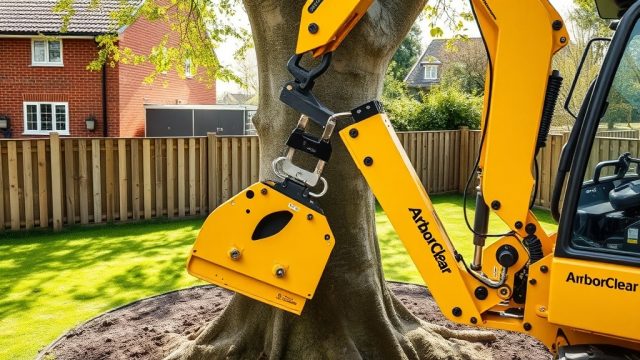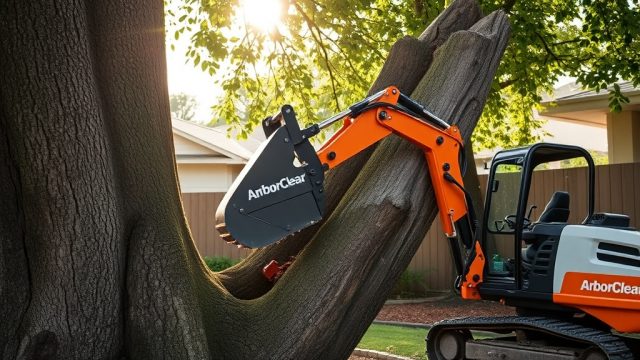
Why Use the ArborClear Tree Shear Attachment for Winter Oak Removal?
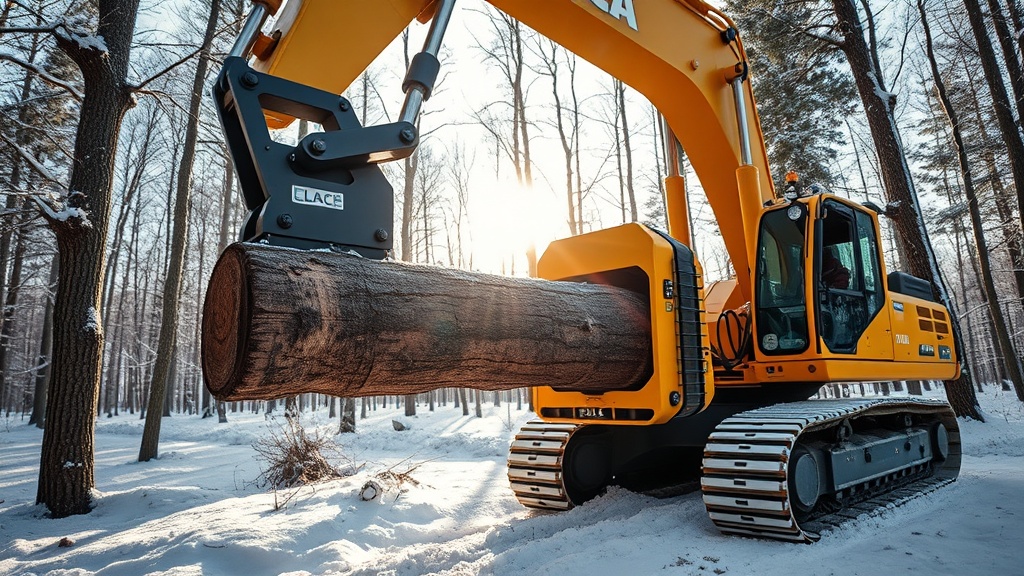
Winter presents a critical window for oak removal, primarily due to the dormant season’s reduced risk of oak wilt transmission, a fatal fungal disease spread by sap-feeding beetles active in warmer months. The ArborClear Tree Shear Attachment excels in this context, providing a clean, hydraulic cut that minimizes bark tearing and stress on the tree, which is vital for preventing disease entry. By leveraging the shear’s precision, professionals can remove problem oaks efficiently while adhering to local quarantine regulations that often mandate winter-only cutting in oak-prone regions.
The attachment’s robust design, typically compatible with excavators ranging from 10 to 25 tonnes, allows operators to shear through oak trunks up to 600 mm in diameter in seconds. This capability eliminates the need for chainsaw felling in many scenarios, reducing ground worker exposure to falling limbs and hazardous kickback. In winter, when oak bark is more brittle and frozen ground complicates traditional saw work, the shear’s clean break reduces splintering and root plate upheaval, simplifying both removal and site restoration.
How Does the ArborClear Shear Improve Safety During Winter Oak Work?
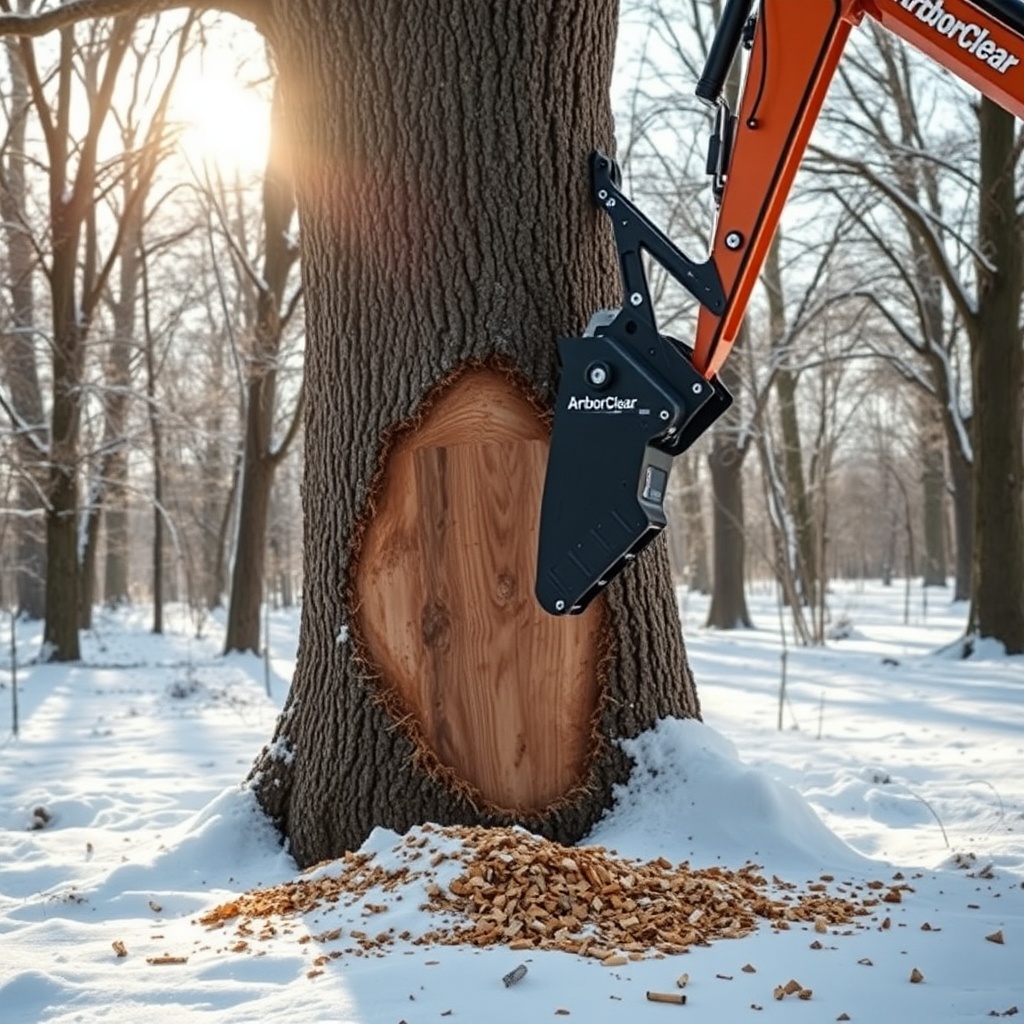
Winter oak removals pose unique safety challenges: frozen ground increases the risk of machine instability, brittle branches can snap unexpectedly, and reduced daylight limits operation windows. The ArborClear Tree Shear Attachment addresses these by enabling remote, ground-based cutting from the excavator cab, keeping the operator out of the felling zone. Its dual-acting blades close evenly, preventing the trunk from twisting or splitting unpredictably—a common hazard with oaks that have internal decay or lean.
Additionally, the shear’s ability to hold the cut tree until the operator releases it reduces uncontrolled falls. In winter, where snow cover can hide root swell or ground debris, this control is invaluable. The attachment also minimizes the need for climbing or bucket work on icy trunks, as many oaks can be sectioned from below using a combination of vertical and horizontal cuts. For limb management on dense oak canopies, see our guide on ArborClear Tree Shear Attachment: Limb Management in Dense Forests, which details techniques for processing heavy laterals safely.
What Specific Removal Techniques Work Best for Winter Oaks?
Mastering winter oak removal with the ArborClear Tree Shear Attachment involves adapting standard felling cuts to the tree’s dormant physiology. Below is a table outlining severity-based removal scenarios and recommended shear techniques:
| Oak Condition | Severity Level | Recommended Technique | Shear Cycle Time (approx.) |
|---|---|---|---|
| Healthy, upright oak (diameter < 400 mm) | Low | Single horizontal shear cut at ground level; felling direction controlled by slight excavator tilt. | 3-5 seconds |
| Leaning oak (15-30° lean) with canopy imbalance | Medium | Partial shear cut on the lean side (80% depth), then finish cut from opposite side to control fall. | 6-8 seconds |
| Dead or decayed oak with hollow trunk | High | Shear at multiple heights (1 m and 0.3 m) to reduce collapse risk; use shear’s hold capacity to lower sections. | 8-12 seconds per cut |
| Oak with heavy limb ice loading | Critical | Sequential limb removal using shear’s gripping feature before trunk cut; avoid full-width trunk shear until limbs are shed. | 12-18 seconds per limb |
For advanced cut planning, refer to ArborClear Tree Shear Attachment: Advanced Tree Felling Techniques for Professionals, which covers notch and back-cut variations that work in concert with the shear’s hydraulic forces. During winter, ensure the shear blades are kept warm during prolonged operation, as frozen hydraulic fluid can slow closing speed, particularly in temperatures below -15°C. Pre-heating the hydraulic system for 5-10 minutes before intense use is recommended by most OEMs.
How Does the ArborClear Shear Reduce Oak Wilt Spread Risk?
Oak wilt, caused by the fungus Bretziella fagacearum, is a major threat to oaks in North America and parts of Europe. The disease spreads through root grafts between neighboring oaks and via insect vectors attracted to fresh sap. The ArborClear Tree Shear Attachment significantly reduces this risk in two ways. First, the clean, crushing cut seals the xylem vessels almost immediately, limiting sap flow that attracts beetles. Second, the shear’s rapid operation—often under 10 seconds per cut—means exposed wound time is minimized, which is critical during the dormant season when fungicide treatments are less effective.
Additionally, when removing infected oaks in winter, the shear allows operators to hold the cut tree and lower it directly into a chipper or burn pile without touching the ground, preventing fungal spore contact with soil. This technique, combined with proper stump treatment using a fungicide like thiabendazole, builds a comprehensive disease management protocol. For cost considerations of this approach versus hiring a specialist crew, explore ArborClear Tree Shear Attachment: Professional vs DIY Cost Analysis for Large Tree Removal.
What Are the Key Maintenance Steps for Winter Operation?
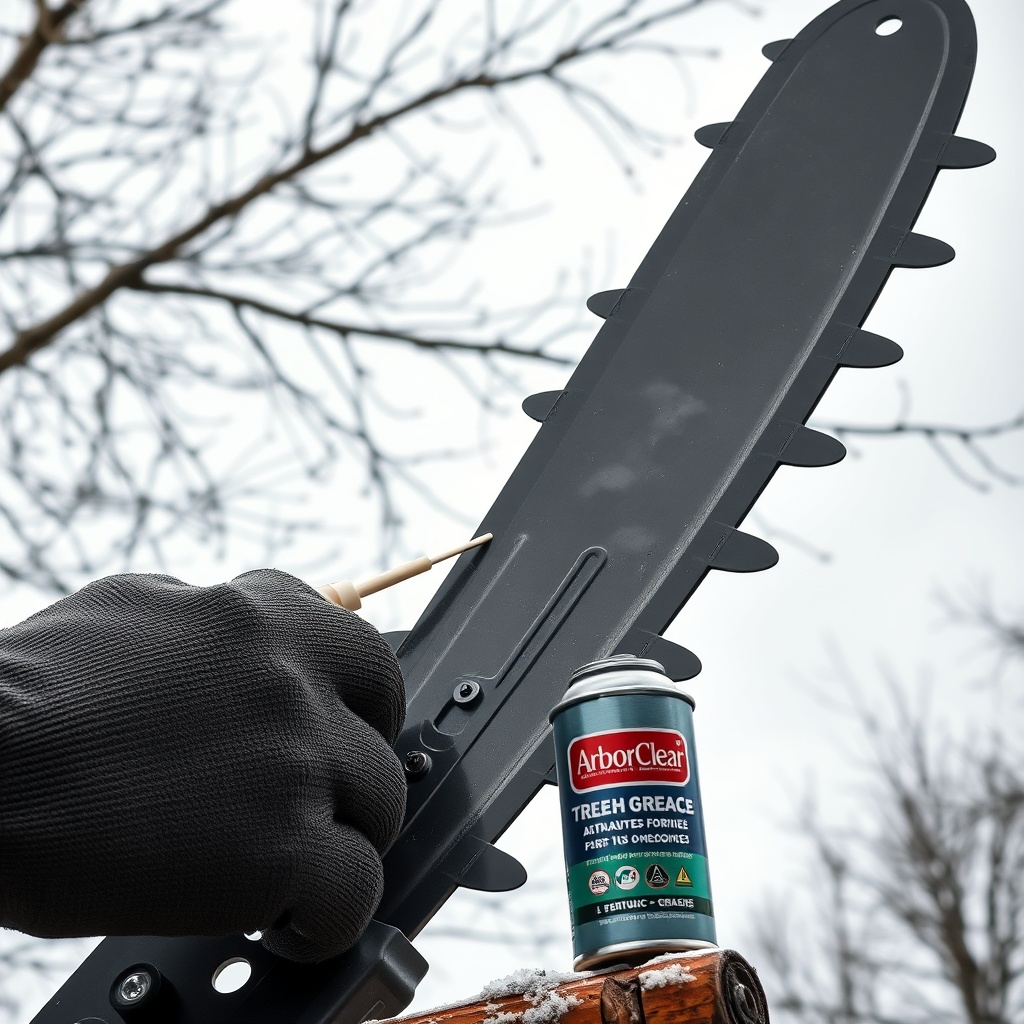
Winter conditions demand specific maintenance for the ArborClear Tree Shear Attachment to ensure reliability and longevity. Before each day’s use, inspect the shear’s pivot pins and blade edges for ice buildup, which can cause alignment issues. Lubricate all grease points with a winter-grade lithium grease (NLGI #1 or #2) that remains viscous at low temperatures. Hydraulic oil should be rated for conditions down to -30°C (e.g., ISO VG 32 or 46 with low pour point).
After each session, clean the shear blades of wet snow and oak sap residues, as these can freeze overnight and cause blade seizure. Store the attachment in a covered area or use an insulated tarp, and consider adding a heater to the excavator’s hydraulic reservoir if prolonged idling in sub-zero temperatures is expected. A detailed ArborClear Tree Shear Attachment Cost Analysis: Is It Worth the Investment for Professionals? will show that proper winter maintenance reduces long-term repair costs by up to 30%, making it a worthwhile investment for year-round operators.
What Do Owners Say About Winter Oak Performance?
Operators across the northern United States and Canada report high satisfaction with the ArborClear Tree Shear Attachment for winter oak removal. Greg T., an arborist in Minnesota, notes: “Before using the shear, we’d avoid oaks in January because frozen chainsaw chains and brittle limbs made it a nightmare. Now, I can cut an 18-inch red oak in seconds from the cab, and the stump is flush with the ground—no trip hazard left.”
In Michigan, a municipal forestry department supervisor, Laura K., shares: “We removed 40 oaks along a roadway last winter, all within a 2-week dormant season window to comply with oak wilt laws. The ArborClear shear let us work twice as fast as a chainsaw crew, and we saw zero beetle activity after the cuts. The return on our £42,000 investment was realized in under 18 months.” She adds that the attachment’s ability to handle both trunk and limb processing reduced the need for a separate knuckleboom loader. For a budget-conscious alternative, read about the ArborClear Tree Shear Attachment: A Budget-Friendly Alternative to Hiring Professionals, which outlines how smaller operators can justify the purchase through contract work.
Peter H., a logging contractor in Scotland, emphasizes durability: “We put the shear through five winters cutting mostly sessile oaks. The blades held their edge, and the frame never cracked, even when we hit an old fence post embedded in a trunk. It’s been more reliable than our previous hydraulic shears.” User feedback consistently highlights the shear’s ergonomic advantage: reduced physical fatigue and fewer cold-related injuries among ground crews, as fewer chainsaw cuts are needed.
Frequently Asked Questions
Q1: Can the ArborClear Tree Shear Attachment cut through frozen oak wood?
A1: Yes, it is designed to shear through frozen hardwood. The hydraulic force (typically 200-300 bar) is sufficient to cut through ice-bound oak. However, operator speed should be reduced to prevent blade shock—allow 1-2 extra seconds per 100 mm of diameter compared to summer cutting.
Q2: What excavator class is best for winter oak removal with this shear?
A2: For most oaks up to 500 mm diameter, an 18-20 tonne excavator is ideal. For larger oaks (600 mm+), a 25-tonne machine provides better stability on frozen ground and higher hydraulic flow (180-220 L/min) to maintain shear speed.
Q3: Do I need special hydraulics to operate the shear in winter?
A3: Yes, auxiliary hydraulics with a case drain line are required for most models. In extreme cold, a hydraulic oil heater is recommended to prevent viscosity-related slowdown. Many aftermarket kits are available for under £1,200.
Q4: How do I treat the stump after winter oak removal to prevent oak wilt?
A4: Immediately after shearing, apply a water-soluble or oil-based fungicide (e.g., propiconazole) to the stump surface. Use a spray or brush to reach all cracks. This seal is critical because the cut is still vulnerable to root graft transmission until the tree’s vascular system fully ceases activity in late winter.
Q5: Will the ArborClear shear work on English oaks (Quercus robur) that have a flared base?
A5: Yes, but extra care is needed. The flared root flare can exceed the shear’s jaw opening (usually 600-700 mm). In such cases, cut at a height of 30-50 cm above the flare, then use the shear to bite down and pull the root flare up for removal, minimizing soil disturbance.
Q6: Can I rent the ArborClear Tree Shear Attachment for a winter project?
A6: Rental availability varies. Many equipment yards in northern regions stock them during dormant season (November to March). Typical rental costs range from £350 to £600 per day, including a security deposit. Check with local dealers for pre-season bookings.