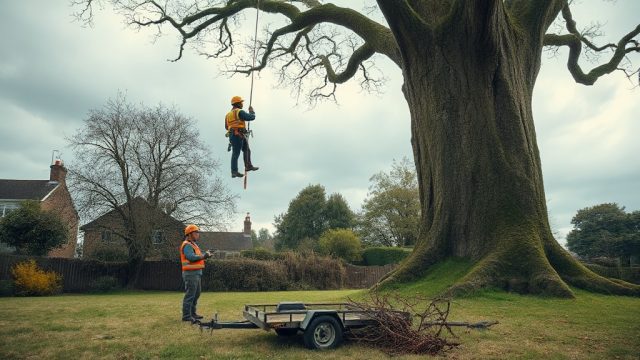
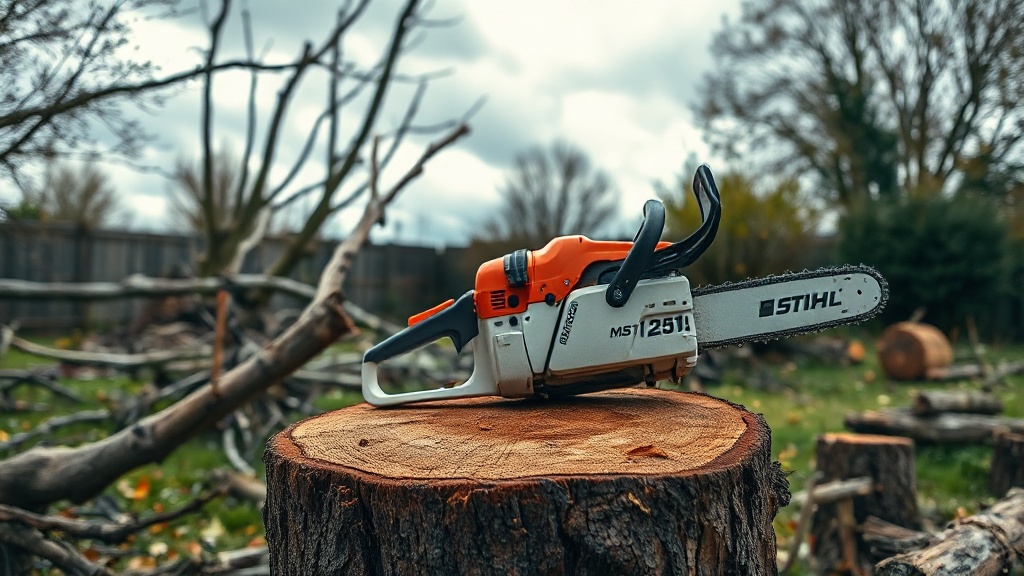
Introduction: Why the Stihl MS 251 Is the Go-To Saw for Storm-Damage Cleanup
When heavy winds tear through a property, the aftermath often leaves trees snapped, leaning, or completely uprooted. For homeowners and small arborist crews alike, the Stihl MS 251 has become the workhorse of choice for emergency tree services after such storms. This mid-range chainsaw combines enough power (2.8 kW / 3.8 hp) to handle limbs up to 18 inches in diameter with a weight of just 5.4 kg, making it manageable for hours of strenuous cleanup. In this article, we will walk through essential tips and techniques for using the Stihl MS 251 in emergency storm scenarios, from the moment you arrive on site to the final cut.
Whether you are a professional tree care operator or a determined homeowner facing a downed oak across your driveway, understanding how to leverage the MS 251’s features—like its pre-separation safety chain or the Easy2Start system—can save you time, money, and risk. For a deeper look at personal protection, refer to our guide on Stihl MS 251: Must-Have Safety Gear for Beginners.
How Do You Assess Wind-Damaged Trees Before Cutting With the Stihl MS 251?
Before pulling the starter cord, you must evaluate the tree’s condition and the surrounding hazards. Emergency tree removal after a heavy wind event is not like a routine pruning job. Wind-thrown trees often have tension on trunks and branches (called “spring poles”), and the root system may be partially or fully exposed. With the Stihl MS 251, you have the torque to cut through these compressed fibers, but a misjudged cut can release stored energy violently.
- Look for the root plate: If the tree is uprooted, the massive root ball can shift or roll once the trunk is cut. Stay clear of the uphill side.
- Identify lean direction: Use a hand level or a simple plumb line to determine the tree’s natural lean. The MS 251 is light enough to use one-handed for a quick estimate, but always use both hands for cutting.
- Check for snapped branches: “Hangers” or “widowmakers” in the canopy can fall during vibration. Clear the drop zone entirely.
- Listen for creaking: A tree under high tension will emit audible stress sounds. If you hear cracking, back away and reconsider the approach.
For particularly complex leaning trees, you may want to consult a professional. Our article on Professional vs DIY Tree Removal: Is It Worth It with Stihl MS 251? can help you decide whether to call in a team or proceed yourself.
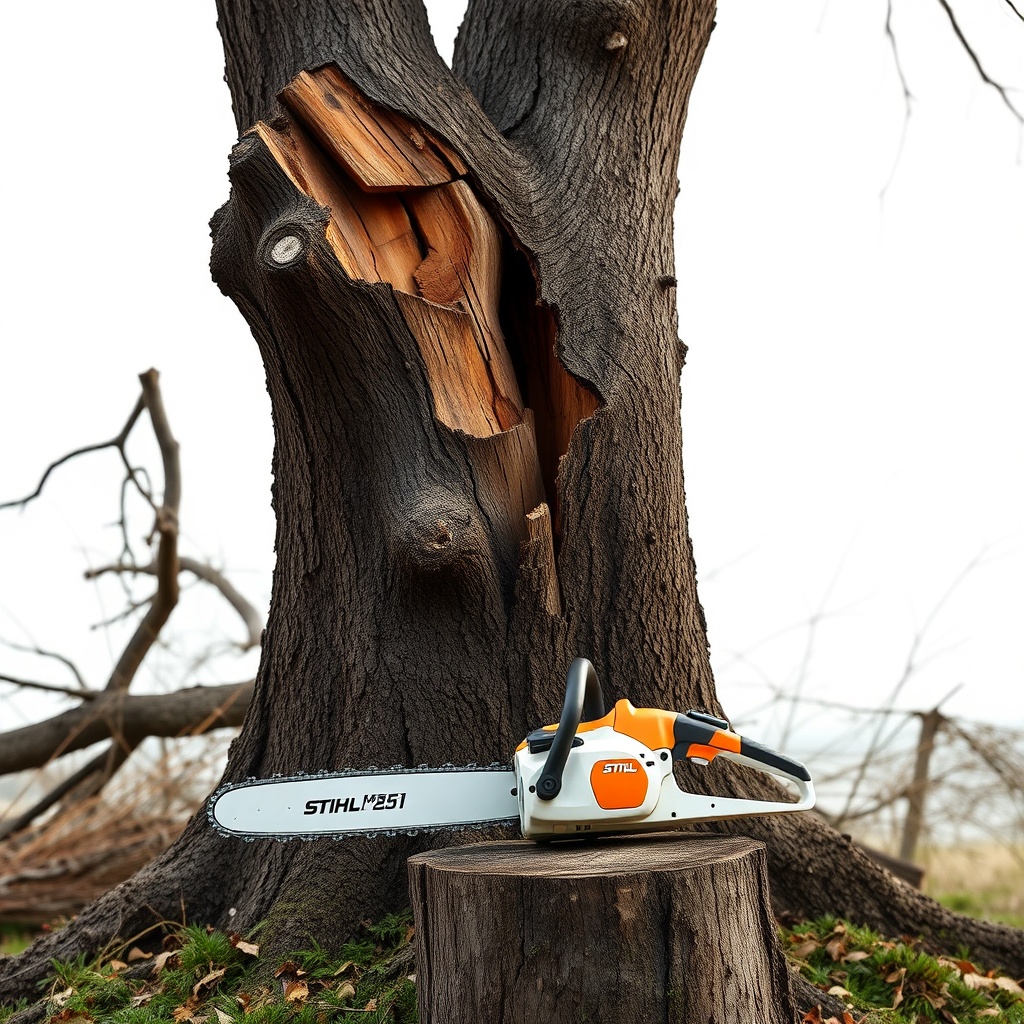
What Technique Should You Use for Storm-Damaged Branches With the MS 251?
For emergency clearance, speed matters, but precision prevents accidents. The Stihl MS 251’s 45 cm bar (standard) is ideal for branches up to 12 inches thick. For larger storm-torn limbs, you will use the three-step cut method to avoid pinching the bar.
- Undercut: Make a shallow cut on the underside of the branch, about one-third of the diameter. This prevents the bark from peeling and the branch from snapping prematurely.
- Top cut: Position the saw slightly beyond the undercut (2–5 cm outward) and cut downward. The branch should break cleanly without binding the bar.
- Final flush cut: Remove the stub with a straight cut near the trunk, but avoid cutting into the collar (swollen base) if you plan to save the tree.
Because wind-damaged branches often have splintered ends, the chain may encounter embedded dirt or grit. The MS 251’s oiler delivers 20 ml per minute at idle and up to 40 ml under load, ensuring adequate lubrication even in muddy conditions. If you are dealing with multiple downed trees in a single afternoon, consider rotating chains or carrying a spare pre-sharpened bar and chain set—the MS 251 accepts the same 3/8” Picco chain as many Stihl consumer models.
How to Handle Storm-Damaged Tree Trunks That Are Under Tension?
Tensioned trunks—whether bent from wind or partially uprooted—are among the most dangerous cutting scenarios. The Stihl MS 251 has enough power to make a single pass through a 16-inch trunk, but you must plan the cut. Use the **compression cut** technique for wood under load on the side that is compressed (the side facing the direction of fall).
| Scenario | Tension Type | Bar Length Needed | Risk Level | Cost Range (GBP) | Recommended Action |
|---|---|---|---|---|---|
| Snapped limb, no ground contact | Low (gravity only) | 35–40 cm | Low | £150–£300 | Standard three-step cut |
| Upright but leaning trunk (25°) | Moderate (bending stress) | 45 cm (standard) | Medium | £250–£500 | Compression cut with felling wedge |
| Uprooted tree, trunk on ground | High (released tension potential) | 45–50 cm | High | £400–£800 | Use professional techniques or contact arborist |
| Spring pole (bent sapling/branch) | Extreme (stored energy) | 35 cm | Extreme | N/A (avoid) | Do not cut alone; seek expert advice |
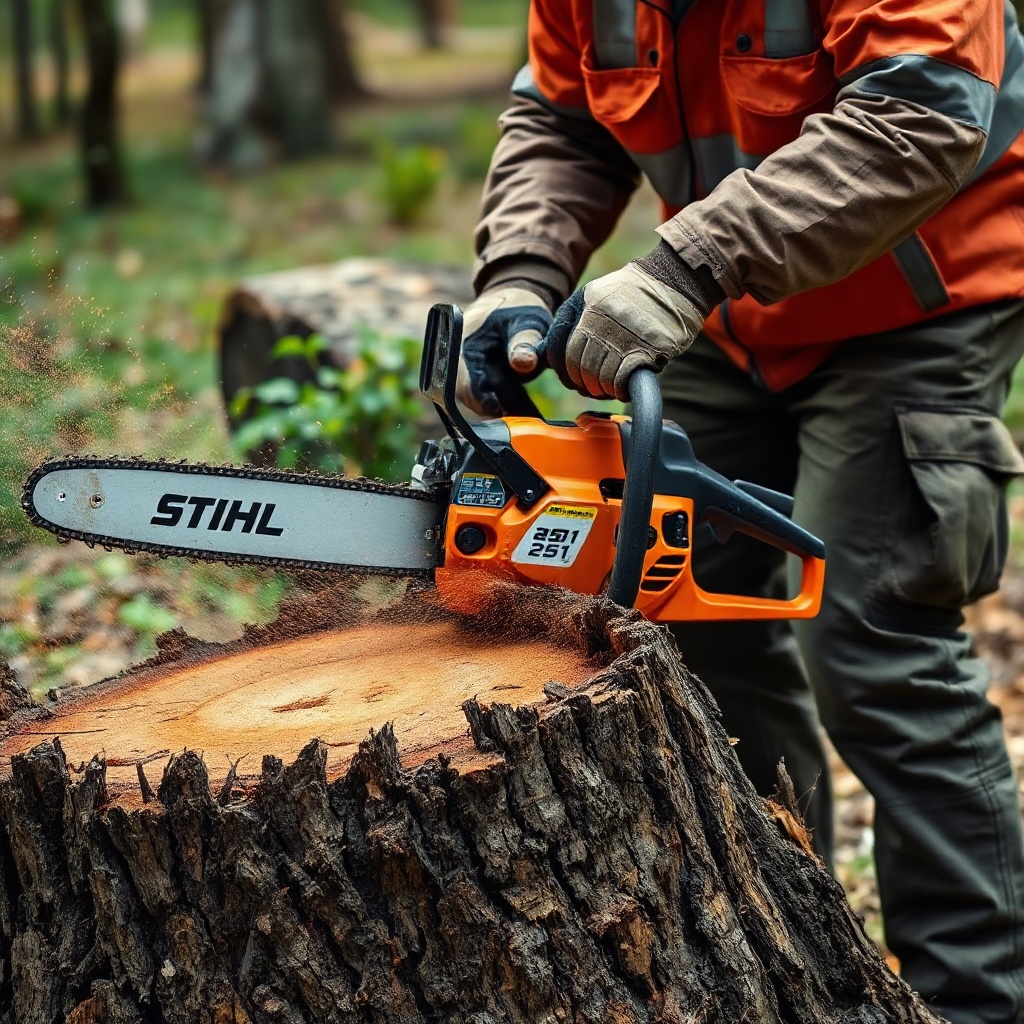
For the compression cut, place the spiked bumper of the MS 251 against the trunk on the compressed side (the side opposite the lean). Open the throttle fully and let the saw do the work—do not force it. If the chain binds, stop immediately, release the chain brake, and consider making a relieving cut with a shorter bar on the tension side. The MS 251’s anti-vibration system (AVS) helps reduce fatigue during these prolonged cuts.
What Are the Best Practices for Branch Lifting and Clearing With the MS 251?
After heavy wind, you are not just cutting—you are also moving debris. The Stihl MS 251 weighs just 5.4 kg (without bar and chain), so you can maneuver it to cut branches that are still attached but hanging. Yet the weight advantage also makes it easier to use as a clearing tool for limbed trunks. However, never use the saw as a lever or pry bar. Instead, use the following approach:
Limbing With the MS 251
- Stand on the opposite side of the trunk from the branch you are cutting. This places the trunk as a shield if the branch springs back.
- Keep the saw at full speed before contacting the wood to avoid kickback. The MS 251 has a chain brake that activates via inertia—this is your last defense.
- Cut from the underside of limbs that are pinched (compressed against the ground) to avoid binding the bar.
Stacking and Logging
Once branches are cut into manageable sections (typically 60–100 cm lengths), you can stack them for chipping or firewood. The MS 251’s power is sufficient for cross-cutting logs up to 30 cm in diameter. For larger storm debris, you may need to use a wedge technique—cut a notch, then drive a plastic or aluminum wedge in to widen the kerf. This prevents the bar from getting pinched. If you plan to grind stumps afterward, read our guide on Choosing the Right Chainsaw for Stump Grinding.
Stihl MS 251 Costs and Running Expenses During Emergency Tree Services
When you are facing a downed tree after a storm, the cost of emergency removal can vary widely. The Stihl MS 251 itself retails for approximately £320 to £420 (depending on the bar length and package). After a heavy wind event, some dealers offer discounts on forestry equipment, but demand often drives prices high. Here are typical costs:
- Chainsaw purchase: £320–£420 (MS 251 with 45 cm bar)
- Chain replacement (every 5-10 storm cuts): £15–£25 per chain
- Fuel per hour: 0.3 litres of mixed fuel (50:1) at £1.50/L = £0.45/hour
- Bar oil per hour: 0.15 litres at £3.00/L = £0.45/hour
- Emergency arborist callout (if DIY is not safe): £150–£350 first hour, plus £75–£150 per additional hour
For a true cost-of-ownership comparison, see our analysis of Stihl MS 251 vs Husqvarna 450: Cost of Ownership. In many cases, a homeowner using the MS 251 for storm cleanup saves £200–£400 on the first major event, recouping the saw’s price quickly.
What Do Owners Say About the Stihl MS 251 for Emergency Wind Damage Cleanup?
Across UK forestry forums and online reviews, the Stihl MS 251 receives strong marks for its balance of power and portability. Owner feedback often highlights the following points:
- “It starts every time after a storm, even if it’s been sitting in the shed for months.” The Easy2Start system reduces pull force by 50% compared to earlier models, a genuine advantage when you are exhausted after a long cleanup.
- “The MS 251 handled a 20-inch oak limb that was pinched under another tree. I had to cut it from an awkward angle, but the saw never bogged down.” Owners note that the engine torque lets the saw pull through heavy cuts where smaller saws would stall.
- “The antivibration is a game-changer for a full day of cutting. My hands were numb after using my old saw, but the MS 251 barely vibrates.” The AVS system reduces vibration at the handles by up to 70%, which is critical when cutting for hours after a storm.
- “I had to cut a leaning tree that was under tension, and the MS 251 never kicked back on me. The chain brake is very responsive.” While no saw is kickback-proof, proper use of the MS 251’s low-kickback chain and chain brake gives owners confidence.
- “The only downside is that the standard bar is a bit short for very large trunks. I bought a 50 cm bar for felling, but for limbing and storm cleanup, 45 cm is perfect.” Many experienced users recommend having a second bar in a different length for versatility.
For winter storm conditions, including icy limbs, see our dedicated guide on Stihl MS 251: Winter Tree Removal Tips for Icy Conditions.
Frequently Asked Questions About Stihl MS 251 Emergency Tree Services After Heavy Wind
1. Can the Stihl MS 251 cut through a 24-inch diameter oak tree?
Technically yes, but not in a single pass. The standard bar is 45 cm (18 inches), so you will need to cut from both sides. The MS 251’s power (2.8 kW) is sufficient, but you must use a wedge to prevent binding. For trunks over 20 inches, many operators prefer to use a winch or mechanical advantage system.
2. Is the MS 251 suitable for DIY emergency tree removal after a storm?
Yes, for branches and smaller trunks (up to 18 inches). However, for trees that are leaning on structures, uprooted, or under extreme tension, professional arborist services are strongly recommended. The MS 251 is a powerful tool, but safety depends on the user’s judgment.
3. What type of chain oil should I use in the MS 251 for storm cleanup?
Stihl recommends a biodegradable bar and chain oil (ISO VG 100) for environmental reasons, especially when debris will be chipped. Mineral-based oil is acceptable, but in cold weather (below 5°C), switch to winter-grade oil to maintain flow.
4. How often should I sharpen the chain after cutting storm-damaged wood?
Check the chain after every 2–3 fuel tanks (about 30–45 minutes of cutting). Storm wood often contains embedded dirt, nails, or fencing, which dulls a chain rapidly. Carry a round file and a guide for field sharpening.
5. What is the maximum bar length I can use on a Stihl MS 251?
Stihl officially supports bar lengths from 35 cm to 50 cm. A 50 cm bar is useful for cutting around thick storm debris but increases the risk of kickback and adds weight (0.3 kg). For most emergency cleanups, the standard 45 cm bar provides the best balance.
6. Does the Stihl MS 251 require a special fueling procedure after storage?
Yes. If the saw has been unused for more than 30 days, drain the fuel and bar oil. Use fresh mixed fuel (50:1, Stihl HP Ultra or equivalent). Running stale fuel on a storm day can cause hard starts and poor performance. The Easy2Start system works best with fresh fuel.