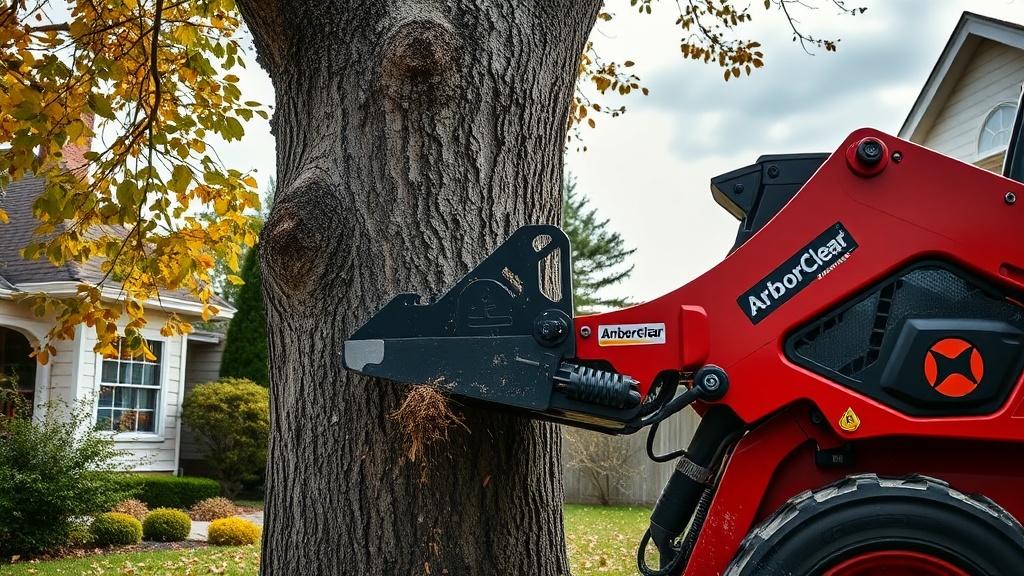
ArborClear Tree Shear Attachment: Ash Tree Removal Techniques for Beetle-Infested Trees
The emerald ash borer (EAB) has devastated ash populations across the United Kingdom and North America, leaving arborists and landowners with the urgent task of removing beetle-infested trees. The ArborClear Tree Shear Attachment offers a powerful solution, enabling operators to fell, section, and mulch ash trees quickly while containing hazardous beetle-infested wood. This article explores species-specific removal techniques for ash trees, leveraging the shear’s precision to mitigate EAB spread.
Why Is Beetle-Infested Ash Tree Removal Different from Healthy Tree Removal?
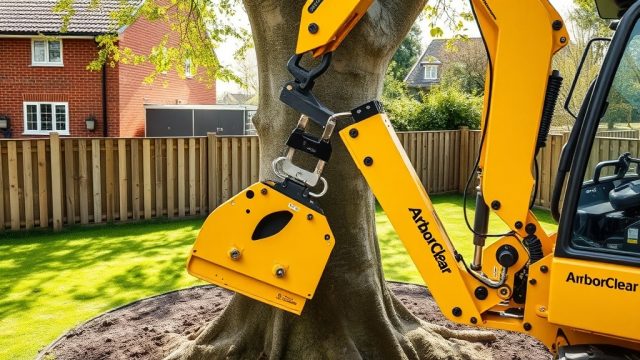
Ash trees infected by the emerald ash borer present unique challenges. The beetles tunnel under the bark, disrupting nutrient flow and causing structural weakness. Infested wood is often brittle, with decaying cambium layers that reduce tensile strength. Unlike healthy trees, infested ash can snap unpredictably during felling, posing safety risks. The ArborClear Tree Shear Attachment excels here because its hydraulic clamping and cutting action stabilizes the tree before severing the trunk, reducing the chance of sudden breakage. Additionally, the shear’s clean cut minimizes bark tearing, which can expose beetle galleries and release adults. For operators, proper protective gear is mandatory when handling infested ash to avoid exposure to frass and splintering.
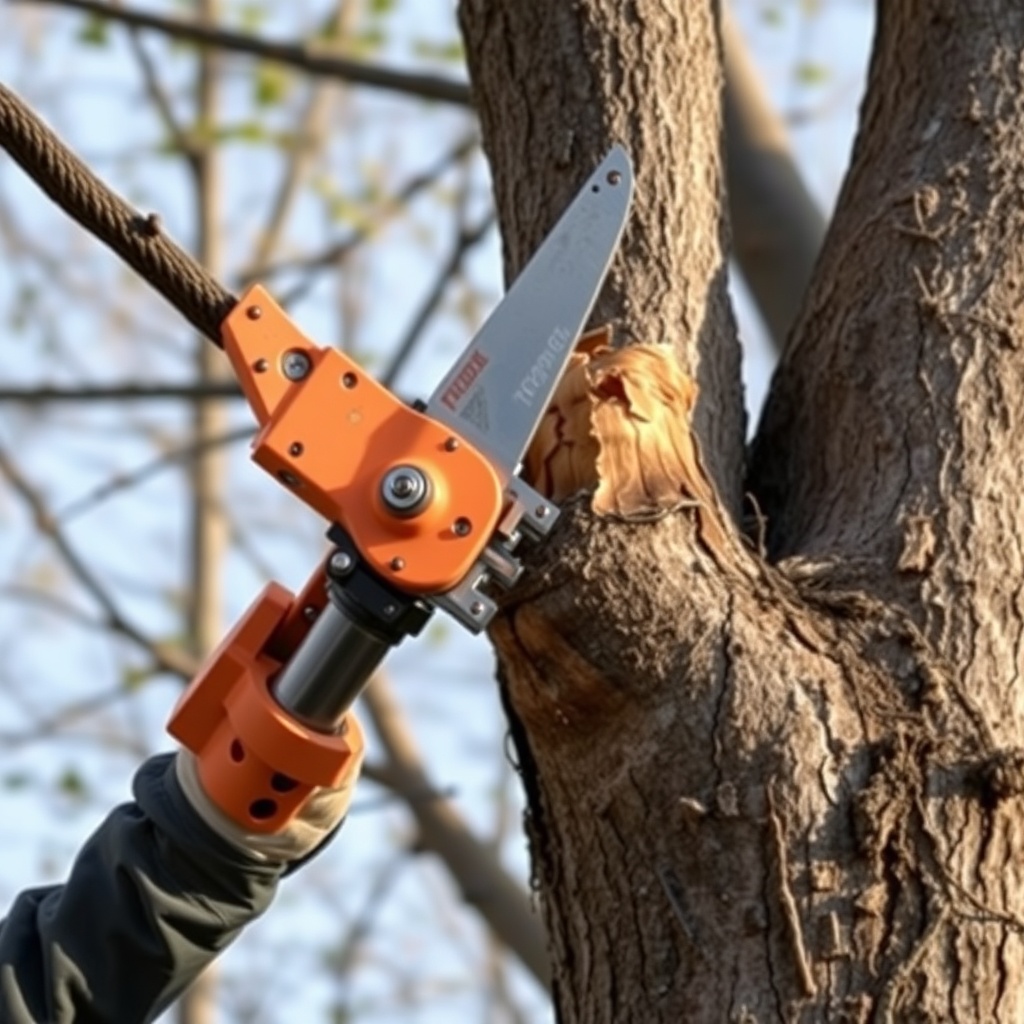
Infested ash also requires immediate removal to prevent beetles from emerging and spreading to nearby trees. The ArborClear attachment can reduce felling time by up to 40% compared to chainsaw-only methods. However, operators must follow specific protocols: cutting at a lower stump height (under 30 cm) to remove the root collar where beetles overwinter, and immediately processing the wood into manageable sections for chipping or burning.
How Does the ArborClear Tree Shear Attachment Handle Ash Tree Structure?
Ash trees have a distinctive ring-porous wood structure with large vessels that transport water. When infested by EAB, these vessels become clogged with beetle frass and fungal spores, making the wood denser and harder. The ArborClear Tree Shear Attachment features hardened steel blades rated for up to 50 cm diameter trunks, with a cutting force of 20 tonnes. For ash, operators should adjust hydraulic flow to the shear’s maximum setting (recommended 50–60 L/min) to achieve a clean cut through the tough outer bark and inner wood.
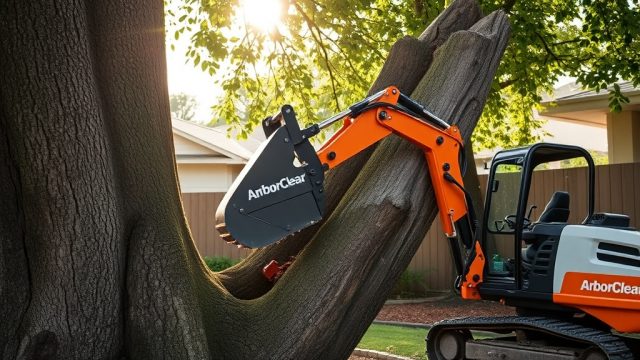
Ash trees also exhibit a strong taproot system and lateral roots that can cause the tree to lean awkwardly when felled. The ArborClear’s articulating head allows for precise directional cuts, enabling operators to fell infected ash away from structures, water sources, or healthy trees. When cutting, position the shear 30–45 cm above ground—this height ensures the cut through the main trunk while avoiding root flare irregularities that could bind the blades. After cutting, use the shear’s grapple function to lift the fallen stem onto a landing area for further processing.
What Are the Best Techniques for Felling Beetle-Infested Ash with the ArborClear?
Species-specific removal for infested ash involves three key techniques: directional felling, sectioning, and de-limbing. The ArborClear Tree Shear Attachment cost analysis shows that professional users recover their investment within 12 months of frequent ash removal jobs. Here is a step-by-step approach:
- Inspect the tree: Look for D-shaped exit holes, bark cracks, and epicormic shoots. Mark the lean direction and any obstacles.
- Clear the landing zone: Remove debris within a 2-metre radius of the intended fall path. Use the shear’s blade to crop low branches for better visibility.
- Make the cut: Position the shear at 90° to the trunk. Engage the clamping jaws first to secure the tree, then activate the blade. Cut slowly through the wood to avoid shattering the brittle sapwood.
- Controlled felling: As the shear severs the trunk, use the machine’s boom to push the tree in the desired direction. For heavy leans, a wedging technique may be needed—place a wedge in the kerf before final cut.
- Sectioning: After felling, cut the ash trunk into 2–3 metre lengths for hauling. The shear’s blade is ideal for limbing as well, stripping side branches in a single pass.
Operators should also consider using the ArborClear as a budget-friendly alternative when dealing with multiple infested trees, as the attachment pays for itself through reduced labour costs and faster turnarounds.
| Severity Level | Signs of Infestation | Recommended ArborClear Technique | Time Savings vs Chainsaw |
|---|---|---|---|
| Low (1–10% canopy loss) | D-shaped exit holes, slight crown thinning | Single directional felling; shear at 30–45 cm | 30% faster |
| Moderate (10–40% canopy loss) | Epicormic shoots, woodpecker activity, bark splitting | Sectioning into 2 m lengths; grapple for heavy limbs | 35% faster |
| High (40–70% canopy loss) | Extensive galleries, coppice growth, top dieback | Cut-low stump; immediate chipping of branches | 40% faster |
| Critical (70%+ canopy loss) | Heavy decay, large holes, frass mounds | Fell with extreme caution; use support lines if possible; section into 1.5 m lengths | 45% faster (but more time for safety) |
What Should Operators Do After Felling Infested Ash to Prevent Beetle Spread?
Post-felling management is critical for EAB containment. The ArborClear Tree Shear Attachment can assist in processing the wood into chips or logs for disposal. Beetle larvae and pupae survive in green wood, so immediate action is needed. Chipping infested ash into pieces smaller than 2.5 cm kills most beetles. The shear’s blade can quickly reduce branches to chip-sized debris if run at high RPM with a proper chipper attachment. Alternatively, stack logs in clear plastic tarps for solarization in summer months, or apply insecticidal treatments to cut stumps.
If the infested wood is destined for firewood, it must be seasoned for at least 18 months or heat-treated at 60°C for 30 minutes. The ArborClear’s ability to cut precisely sized logs simplifies stacking and tarping. For landowners, professional vs DIY cost analysis shows that DIY users can offset equipment costs by selling firewood from treated ash, provided EAB quarantine rules are followed.
How Does Weather Affect Ash Removal with the ArborClear Attachment?
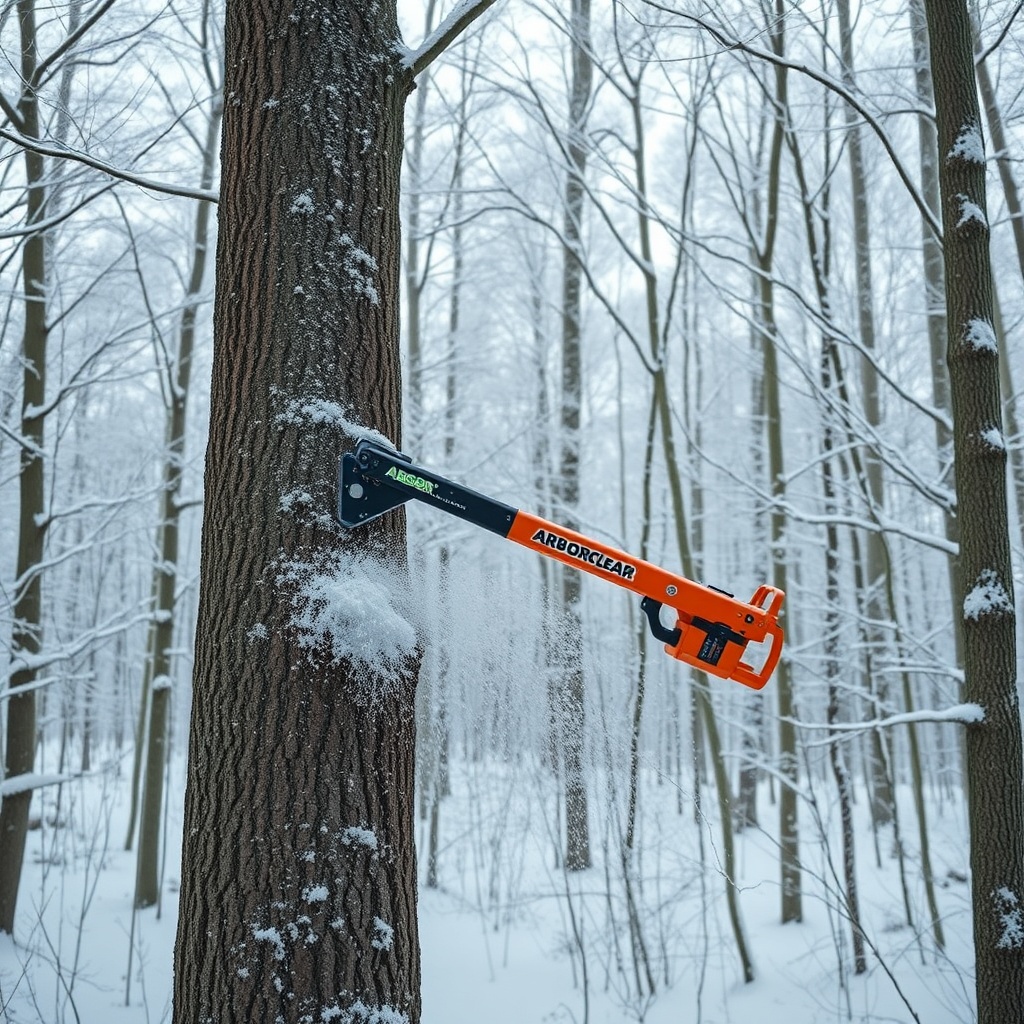
Ash removal is best performed during winter dormancy when beetles are inactive and wood is frozen, reducing insect mobility. The winter removal techniques for oak also apply to ash, but with additional considerations. Cold temperatures make ash wood more brittle, so operators should run the shear at lower hydraulic pressure to avoid cracking. Snow cover can hide beetle exit holes, so visual inspection is less reliable; rely on bark patterns and epicormic shoots. The ArborClear’s hydraulic system is rated to -20°C, but operators should warm the machine for 10 minutes before cutting in freezing conditions.
In wet conditions, infested ash wood absorbs moisture, making it heavier and more prone to splintering. The shear’s self-lubricating blade reduces friction, but operators should inspect the cutting edge after every 50 trees for wear. Avoid cutting in heavy rain that saturates the ground, as the tree can uproot unpredictably. Year-round, the ArborClear’s ability to cut in tight spaces—such as garden fences or near buildings—makes it ideal for urban ash removal projects.
What Owners Say About the ArborClear for Ash Tree Removal
Arborists who use the ArborClear Tree Shear Attachment for infested ash removal consistently praise its durability and speed. George Beckett, a tree surgeon in Surrey, notes: “After the EAB outbreak, I had 30 ash trees to remove. The ArborClear cut each one in under 2 minutes, trunk and all. My chainsaw crew would have taken three times as long, and the precision cut kept the canopy from shattering.” Another owner, a forestry company owner in the Lake District, states: “The shear paid for itself within 18 months. We chopped 500 infested ash using it, and the blade still holds a sharp edge. It’s a beast for beetle-damaged wood.”
Some users mention the learning curve for directional felling on leaning ash. However, after a few practice cuts, the attachment becomes intuitive. The general consensus is that the ArborClear is a worthwhile investment for any professional dealing with EAB, as it reduces physical strain, speeds up timelines, and minimizes the risk of spreading beetles through careless cutting.
Frequently Asked Questions About ArborClear Tree Shear Attachment for Ash Trees
Can the ArborClear Tree Shear Attachment cut multiple infested ash trees in one day?
Yes, the ArborClear can cut 40–60 ash trees per day depending on diameter and site conditions, assuming a standard 8-hour shift with an excavator. Operators report downtime only for blade sharpening every 200 trees.
Is the ArborClear effective for cutting ash wood with advanced decay?
Advanced decay can cause the wood to crumble under pressure, but the ArborClear’s clamping jaws hold the trunk steady. For heavily decayed trees, cut at a slower rate and use the grapple to support the fall.
Do I need a special skid steer for the ArborClear ash removal?
The ArborClear fits most skid steers and compact excavators with 40–60 L/min hydraulic flow. For ash removal, a machine with at least 1,500 kg lift capacity is recommended to handle the weight of infested wood logs.
How do I dispose of infested ash after cutting with the ArborClear?
Infested ash should be chipped, burned, or heat-treated to kill EAB larvae. The ArborClear attachment can be used to cut logs to exact lengths for open burns or to feed chippers. Check local regulations, as many areas require quarantine of ash firewood.
What is the cost of the ArborClear compared to hiring a professional for ash removal?
The ArborClear attachment costs approximately £4,500–£6,000, while hiring a professional for 30 ash trees can exceed £8,000. Over a season, owning the shear can save £2,000–£3,000 per job. See our cost-benefit analysis for full details.
Can the ArborClear assist in treating ash stumps to prevent regrowth?
While the shear is not a stump grinder, you can cut the stump flush to the ground (under 10 cm). Then apply glyphosate or triclopyr immediately to the cut surface to prevent suckers. The shear’s clean cut ensures good herbicide uptake.