Introduction: The Stihl MS 251 in Post-Wildfire Scenarios
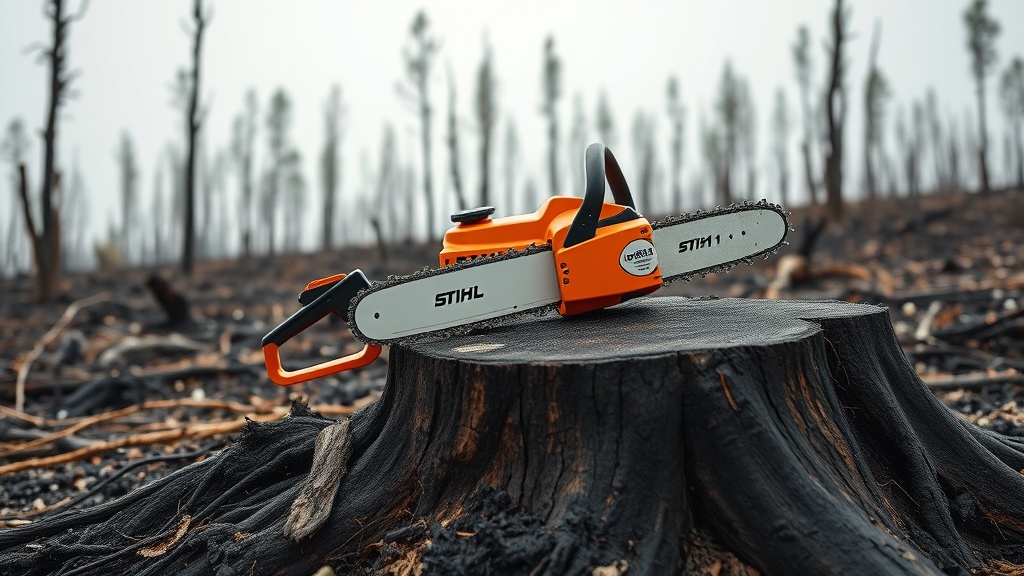
Wildfires leave behind a dangerous landscape of scorched, weakened trees that pose immediate risks to property and life. The Stihl MS 251 chainsaw stands as a reliable tool for homeowners and arborists tackling post-fire tree removal, offering a balance of power and manoeuvrability essential for navigating uneven terrain. This article provides a comprehensive guide on assessing and safely removing burned trees using the MS 251 after a wildfire, emphasising safety protocols and proper technique.
How Does the Stihl MS 251 Perform on Burned Wood?
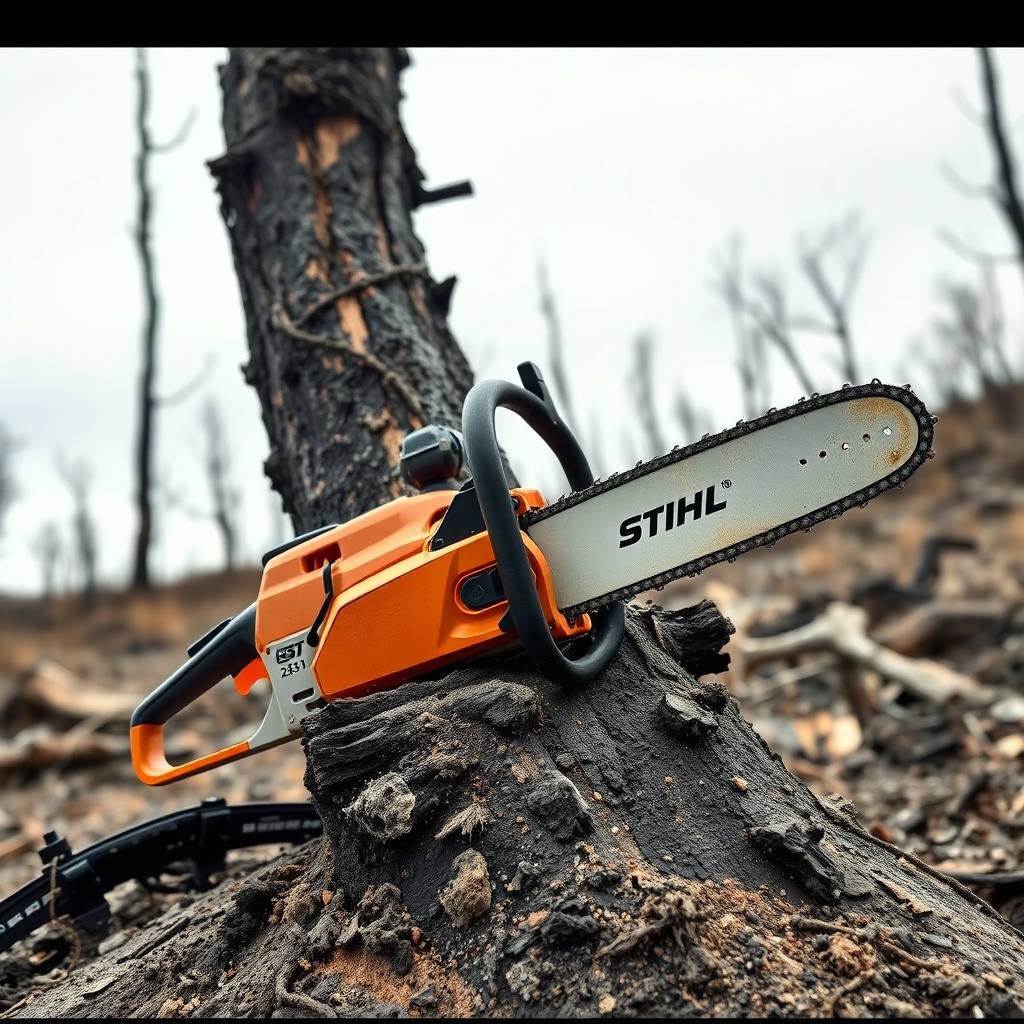
Burned trees present unique challenges: charred bark is brittle, internal cracks are common, and the wood often holds hidden ash pockets that dull chainsaws rapidly. The Stihl MS 251, with its 45.4 cc engine and 2.6 kW power output, delivers sufficient torque to cut through fire-hardened oak and pine, though chain sharpness becomes critical. Users report that the MS 251’s low-vibration handle and 16-inch bar handle charred trunks effectively, but frequent chain maintenance is unavoidable. The saw’s air filtration system, featuring a pre-separator, helps reduce dust intake from ash-laden environments, prolonging engine life during extended use. For properties with larger diameter trees, the MS 251 may require multiple passes on trunks exceeding 30 cm, but for typical post-fire removal of leaning or snapped trees, it excels. Always ensure the chain is sharpened at least every two tankfuls when cutting burned wood, as dull chains overheat and cause kickback.
| Specification | Value | Post-Fire Relevance |
|---|---|---|
| Engine displacement | 45.4 cc | Adequate for medium-sized burned trunks |
| Bar length (recommended) | 16 inches (40 cm) | Balances reach and control on brittle branches |
| Weight (without bar/chain) | 4.6 kg | Light enough for steady handling on ash-covered ground |
| Oil capacity | 0.22 L | Sufficient for 30 minutes of cutting; refill frequently |
| Chain type | 3/8″ Picco | Low-kickback design reduces risk on unstable wood |
How to Assess a Burned Tree Before Cutting with the MS 251?
Before starting the MS 251, a thorough assessment prevents catastrophic collapse. Burned trees often have compromised root systems—roots may be burnt underground, weakening anchorage. Look for these signs: deep vertical cracks in the trunk, extensive charring at the base (charring more than 50% circumference indicates severe internal damage), and leaning angles greater than 15 degrees from vertical. Use a telescopic pole to probe the trunk for soft spots; if the pole sinks more than 5 cm into the bark, the wood is structurally unsound. Also, check for hanging limbs (widowmakers) that could drop with vibration from the saw. Mark the tree’s lean direction with spray paint and ensure you have a clear escape route at a 45-degree angle away from the fall path. If the tree is deeply rooted in rocky soil and partially burnt, consider consulting a professional because the Stihl MS 251 may not handle heavy tension. For further guidance on safe handling, read our article on Stihl MS 251 Safety Gear for Chainsaw Operators to ensure you are protected during assessment and cutting.
What Is the Cutting Sequence for Dangerously Leaning Burned Trees?
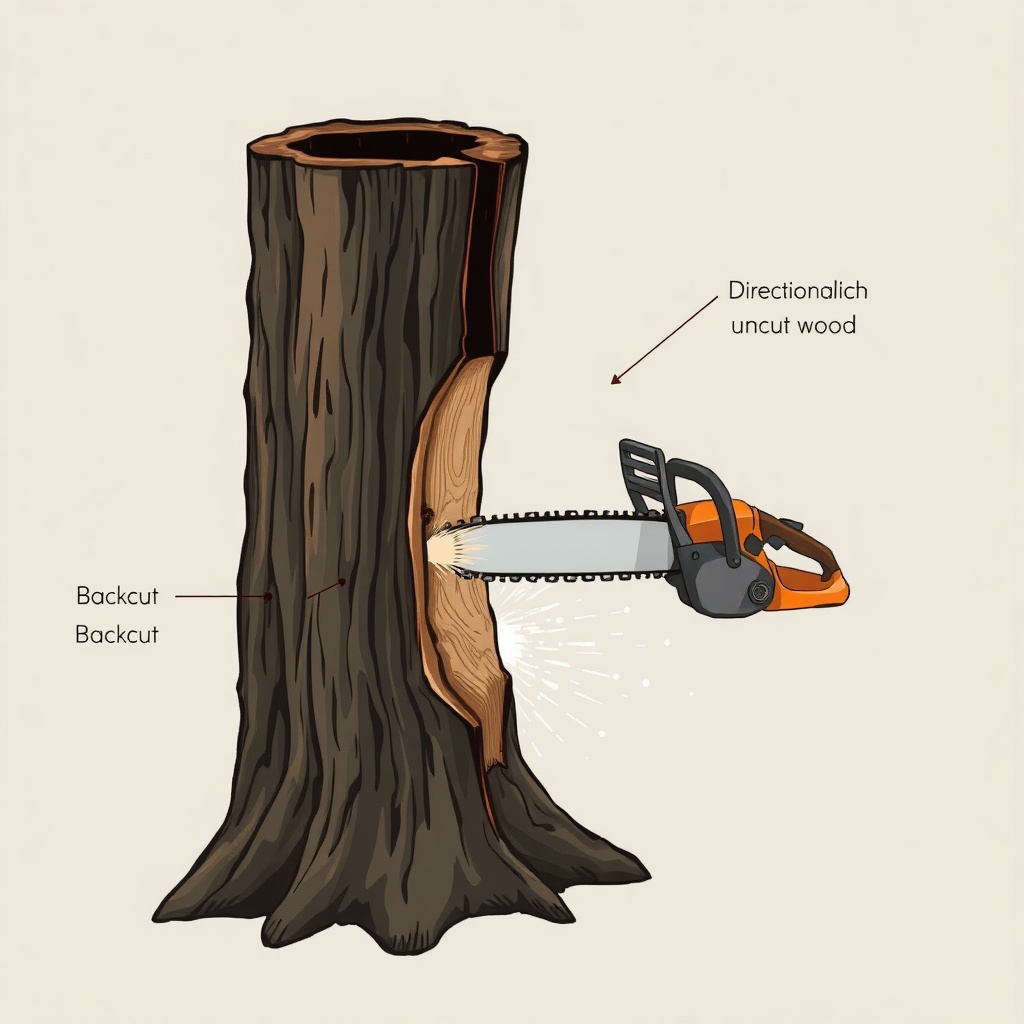
Cutting burned trees that lean dangerously requires a precise notch and backcut technique to control fall direction. Start by making a directional notch on the side facing the intended fall direction—cut at a 70-degree angle downward to about one-third of the trunk diameter. Then make a horizontal cut from the bottom of the notch to meet the angled cut, removing the wedge. On a burned tree, watch for sawdust colour: white or grey sawdust indicates dry rot from fire damage, and the notch’s wood might splinter. Next, position the Stihl MS 251 for the backcut, on the opposite side of the notch, 5 cm higher than the notch bottom. For a burned tree with tension (bent trunk), start the backcut but leave a 2–3 cm hinge of uncut wood; the hinge guides the tree as it falls. If the tree begins to split or crack during backcutting, stop immediately and retreat along your escape path. Wait 60 seconds after the tree falls before approaching—ash and embers can reignite. After felling, use the MS 251 to section the trunk into manageable lengths (1–1.5 m) for removal, cutting slightly upward to prevent the bar from pinching. For tips on working in slippery, burnt debris, see Stihl MS 251 Emergency Tree Removal After Heavy Wind Damage: Tips and Techniques, as the principles overlap.
Should You Use the Stihl MS 251 for Stump Grinding After Wildfire?
After removing the above-ground portions of burned trees, stumps often remain—some with burnt roots that become trip hazards. The Stihl MS 251 is not designed for stump grinding; that task is best left to a dedicated stump grinder. However, you can use the MS 251 to cut the stump as low to the ground as possible, removing above-grade material to reduce fire fuel. For this, fit a 16-inch bar and cut through the stump just below the soil level, if the wood is still solid. Burnt stumps are brittle and may fragment; wear heavy-duty gloves and eye protection. For deeper stump removal, rent a grinder or hire a professional; our guide on Stihl MS 251 for Stump Grinding After Tree Removal: Techniques and Safety covers using the saw for ancillary cuts but clarifies its limitations. After cutting, remove all wood chips and debris to prevent them from becoming firebrands during future dry spells.
What Safety Gear Is Essential for the Stihl MS 251 in Burn Zones?
Post-wildfire environments amplify standard hazards: hot ash can reignite, smoke reduces visibility, and unstable ground conceals embers. For operators of the MS 251, minimum gear includes: a hard hat with face shield and ear muffs (to protect from falling charred branches); chainsaw-resistant chaps or pants (to guard against accidental contact with a chain that may snag on brittle wood); heavy leather gloves with cuffs; and steel-toed boots with heat-resistant soles. Additionally, wear a N95 respirator or half-mask with P100 filters to avoid inhaling ash particles—standard dust masks are insufficient. Always carry a fire extinguisher rated for Class A and B fires, and keep a mobile phone in a sealed bag. Never cut alone; have a spotter who watches for sudden tree movement or spreading ash fires. For a full checklist of recommended gear, read Stihl MS 251: Essential Safety Gear for Post-Storm Cleanup, which includes gear relevant to ash and debris conditions. Also, see Professional vs DIY Tree Removal: Is It Worth It with Stihl MS 251? to decide if hiring an arborist with experience in burned trees is safer for your situation.
What Owners Say About the Stihl MS 251 for Burned Tree Work?
Owners of the Stihl MS 251 who have used it after wildfires consistently highlight its durability under extreme conditions. John M., a homeowner in California, says: “After the 2023 fire, I used my MS 251 to clear four acres of charred oaks. The saw started every time despite ash in the air, but I had to sharpen the chain after every three cuts—charcoal dust is brutal on metal.” Another owner, Sarah L., notes: “The MS 251’s anti-vibration system saved my arms during a full day of cutting. Still, I’d recommend a longer bar for larger trunks.” Some criticisms include that the plastic housing can warp slightly if left too close to residual heat from smouldering stumps, and the oiler adjustment screw may clog with ash. Overall, owners affirm that the MS 251 is a capable but high-maintenance partner for post-fire cleanup. For wintertime conditions where ice and burned wood combine, refer to Stihl MS 251: Winter Tree Removal Tips for Icy Conditions for additional precautions.
Frequently Asked Questions
Q: Can the Stihl MS 251 cut through 40 cm burned pine trunks?
A: Yes, with a sharp chain and steady technique, the MS 251 can cut through 40 cm trunks in one pass if you use a 16-inch bar and maintain chain tension. For larger sizes, make partial cuts from both sides.
Q: How often should I clean the air filter when cutting burned wood?
A: Clean the air filter every tank of fuel—after about 15–20 minutes of cutting—since ash and carbon particles clog it quickly. Use compressed air or a brush; never tap it against a hard surface.
Q: Is it safe to cut a burned tree that is still smouldering?
A: No. Wait until the trunk is cool to the touch (below 40°C) and has no visible smoke. Cutting smouldering wood can release hot gases and cause the saw to spark, igniting residual sawdust.
Q: What chain type works best for fire-damaged trees?
A: A full-chisel chain (e.g., Stihl RS) cuts faster through charred wood but dulls faster than semi-chisel (e.g., Stihl RM). For burned wood, semi-chisel offers better durability and reduced kickback.
Q: Can I use the Stihl MS 251 on sloped terrain after a wildfire?
A: Yes, but watch your footing—ash-covered slopes are slippery. Use a cutting stance with feet shoulder-width apart, and only cut uphill of your position to avoid rolling logs.
Q: What is the average cost to replace a burned-out Stihl MS 251 chain?
A: A new Stihl 3/8″ Picco chain costs around £30–£40 GBP (or €35–€45 EUR). For heavy use on burned wood, replace chains every 2–3 days of full-time cutting to maintain performance.